These notes were written by the person who submitted this item. Appraiser.AI has not verified them, and the AI's identification and estimate may rely on them.
AI Estimated Value
Not an official valuation
$60 - $90
AI estimate as of September 3, 2025 · verify with a professional before acting
AI-Generated · Verify before acting
Everything on this page is generated by AI for informational purposes only. AI can make mistakes — the AI may misidentify items or misattribute them (artist, maker, brand, designer, origin, era). This is not an official valuation and should not be used for insurance, sale, tax, estate, legal, or lending purposes — or any decision requiring a certified appraisal. It is not an authoritative claim about any person, brand, or rights holder — do not share or rely on it as a factual statement about a third party. Always consult qualified professionals before making financial decisions.
This analysis also relies on unverified notes provided by the user, which may be incomplete or inaccurate and could affect the result.
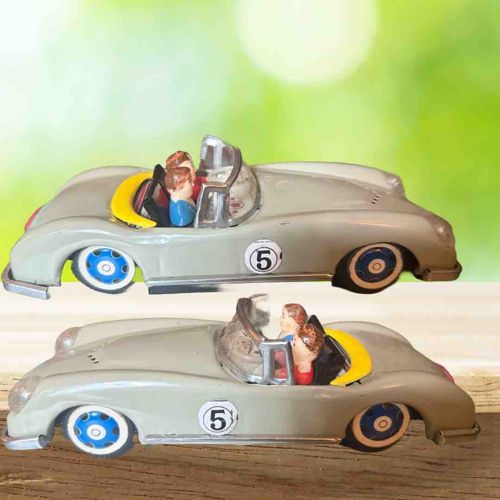
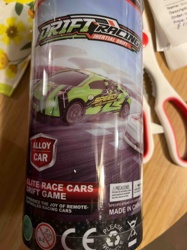
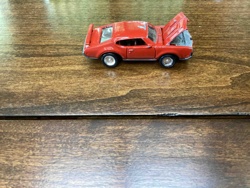
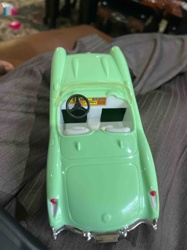
This item is a decorative representation of a classic open-top sports car, likely modeled after a vintage Porsche 356 Speedster, presented in two identical views. The car is a light, somewhat muted grey color, suggesting an aged or retro aesthetic. It features a streamlined body typical of 1950s sports cars, with prominent, rounded fenders and integrated headlights. The front bumper appears to be chrome or a similar polished metal, extending across the width of the vehicle. Each side of the car bears a white circular race number '5'. The wheels are distinct, featuring white sidewalls, blue centers, and what appear to be black tires. The blue centers have a silver or metallic hubcap detail. The car is an open-top roadster, and seated within are two stylized figures, likely representing a male and female. The figures are hand-painted with discernible details such as hair color (reddish-brown), facial features, and clothing (blue and red accents). A bright yellow element, possibly a scarf or part of the interior, is visible behind the figures. The overall construction appears to be of a sturdy material, possibly resin, ceramic, or a heavy plastic, given its solid and somewhat irregular form that suggests molding rather than precision manufacturing. There are visible signs of handcrafted details, particularly in the painting of the figures and the slight imperfections in the car's body suggesting a more artistic or decorative piece rather than a precise scale model. The finish has a slight sheen but does not appear overly glossy. There are no obvious visible condition issues like chips or cracks, and the paintwork seems largely intact, suggesting it is well-preserved or relatively new. The craftsmanship indicates a decorative item, possibly a souvenir or a collectible, designed to evoke a nostalgic feeling of classic racing. Based on the context provided, it is described as a 'friction racing car,' implying it might have a friction motor mechanism, further defining it as a toy, though its primary appearance here leans towards a decorative object.
AI Appraisal Report
Upon examining the images of this vintage-style Porsche 356 Speedster friction racing car, my assessment is that it is a contemporary decorative or collectible toy rather than a period-authentic antique. The overall form is a charming, stylized representation of the classic sports car. The condition appears to be very good to excellent, with intact paintwork and no visible chips or significant damage. The hand-painted nature of the figures and the molded construction suggest modern, mass-produced decorative manufacturing, likely from Asia, intended to evoke a nostalgic aesthetic.
The market for such items is driven by decorative appeal rather than collectibility as a vintage toy. Similar new or recent production 'vintage-style' tin, resin, or plastic friction cars of this size and quality are readily available. Comparable items, often sold as decorative objects or retro-style toys, typically retail in the $50 to $100 range. The value of this piece is therefore in its decorative quality and nostalgic charm.
A significant factor limiting value is its likely modern origin. An authentic, period friction car from a known manufacturer of the 1950s or 60s would command a much higher price. Without physical inspection, I cannot confirm the material, manufacturer's markings (or lack thereof), or test the friction motor's functionality. A full authentication would require in-person examination to locate any maker's marks, analyze the material composition (e.g., tin lithograph vs. resin), and confirm the age of the components and paint.