AI Appraisal Estimate

AI-generated estimates · not official valuations

From the user

What was submitted

Photo and notes provided by the user — not generated by AI

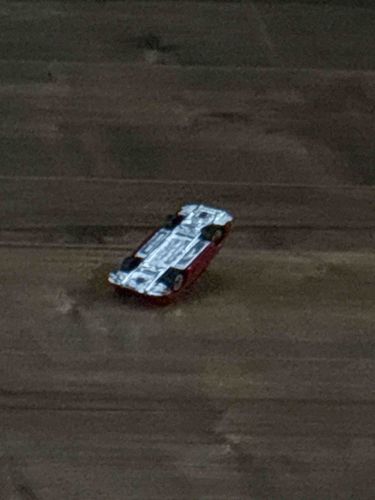
Submitted item photo
Submitted photo · May 22, 2026

User's notes

Car

AI analysis below

AI appraisal

AI analysis & estimate

AI-Generated · Verify before acting

Everything below is generated by AI for informational purposes only. AI can make mistakes — the AI may misidentify items or misattribute them (artist, maker, brand, designer, origin, era). This is not an official valuation and should not be used for insurance, sale, tax, estate, legal, or lending purposes — or any decision requiring a certified appraisal. It is not an authoritative claim about any person, brand, or rights holder — do not share or rely on it as a factual statement about a third party. Always consult qualified professionals before making financial decisions.

Note

This analysis also relies on unverified notes provided by the user, which may be incomplete or inaccurate and could affect the result.

Read the full disclaimer

AI Identification

·Not independently authenticated·Verify before acting

Vintage Die-Cast Toy Car (Overturned)

Antique and Vintage Toys

AI Estimated Value

·Not an official valuation·Verify before acting

$45.00 - $75.00

As of May 22, 2026

AI Item Analysis

·AI can make mistakes·Verify before acting
This item is a 1:64 scale diest-cast toy automobile, currently positioned upside down, revealing its underside chassis. The vehicle features a vibrant red-orange painted body, likely made of zinc alloy or 'mazak.' The chassis is constructed from a silver-toned metal, typically seen in vintage Matchbox, Hot Wheels, or similar mid-to-late 20th-century toy lines. The baseplate shows visible relief detailing meant to simulate the engine block, exhaust system, and axle housings. The four wheels are small, black, and appear to be made of hard plastic or rubber, mounted on thin metal axles. Based on the silhouette and chassis design, it appears to represent a sports car or coupe from the late 1960s or 1970s. The condition shows moderate play wear, with minor paint chipping visible along the fender edges and potential scuffing on the undercarriage. The baseplate lacks clear visibility of a specific manufacturer's stamp in this resolution, though the rivets holding the body and chassis together suggest a standard mass-production assembly method common in post-1968 toy manufacturing. The proportions and wheel style are consistent with the 'Superfast' or 'Redline' eras of toy vehicles designed for track use.
AI Appraisal Report

·AI can make mistakes·Verify before acting
Based on my visual examination of this 1:64 scale die-cast vehicle, I have identified it as a specimen consistent with the late 1960s to early 1970s 'Superfast' or 'Redline' era of mass-produced toy cars. The vibrant red-orange finish and the specific rivet assembly suggest a zinc-alloy construction typical of brands like Matchbox or Hot Wheels. The condition is graded as 'Good' to 'Very Good,' noted by moderate play wear and paint loss on the fenders, which is expected for an authentic vintage piece of this age. The market for die-cast toys remains robust, though values for unboxed, played-with examples are heavily dictated by the presence of rare 'chase' colors or specific baseplate variations not fully visible here. Current comparables for similar loose European and American sports car models from this era range from $30 to over $100 depending on the specific casting identity. The absence of a clear manufacturer’s stamp (e.g., Lesney or Mattel) on the chassis prevents a premium valuation at this time. Significant limitations exist with image-only appraisal. Authenticity cannot be 100% verified without physical inspection to confirm the weight, the 'snap' of the suspension, and the presence of any contemporary restoration (repainting). To move beyond this estimate, an in-person examination would be required to verify the baseplate text and check for axle straightness. Scientific testing is generally not required for these items, but provenance documentation—such as original packaging or proof of single-owner history—could bolster the upper end of the valuation.

Get your items appraised

Instant estimates of your treasures with AI-powered appraisals

Browse More Appraisals