AI identification & appraisal estimate

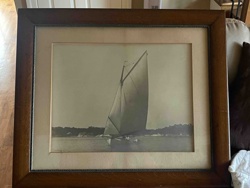
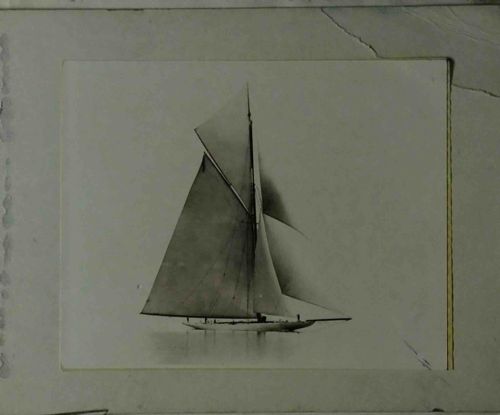
Gaff-Rigged Racing Yacht Monochrome Print

Submitted photo of Gaff-Rigged Racing Yacht Monochrome Print
Photo submitted by the user — not generated by AI

User's notes

Unknown artist, unspecified print size 1974 x 1638

These notes were written by the person who submitted this item. Appraiser.AI has not verified them, and the AI's identification and estimate may rely on them.

AI Estimated Value

Not an official valuation

$450.00 - $850.00

AI estimate as of March 7, 2026 · verify with a professional before acting

AI-Generated · Verify before acting

Everything on this page is generated by AI for informational purposes only. AI can make mistakes — the AI may misidentify items or misattribute them (artist, maker, brand, designer, origin, era). This is not an official valuation and should not be used for insurance, sale, tax, estate, legal, or lending purposes — or any decision requiring a certified appraisal. It is not an authoritative claim about any person, brand, or rights holder — do not share or rely on it as a factual statement about a third party. Always consult qualified professionals before making financial decisions.

This analysis also relies on unverified notes provided by the user, which may be incomplete or inaccurate and could affect the result.

Read the full disclaimer

AI Item Analysis

This item is a monochrome photographic print or lithograph depicting a gaff-rigged racing yacht on calm water. The composition is centered, showing the vessel in broadside profile with its large mainsail and headsails fully deployed. The artwork is characterized by a high-contrast, sepia or aged silver gelatin tone, typical of marine photography from the late 19th to early 20th centuries. The rigging is fine and detailed, suggesting high-quality equipment utilized for yacht racing during the 'Golden Age of Sail.' The boat features a long, low hull and a prominent bowsprit, indicative of turn-of-the-century design. Regarding condition, the piece is mounted on a larger backing board that shows significant signs of age and wear. There is visible foxing, staining, and several pronounced creases or tears in the upper right quadrant of the mounting board. The print itself appears to have some slight silvering or fading consistent with age, and a notable diagonal blemish or scratch is present in the lower right corner. No visible artist signature or maker's mark is present on the front, though the style is reminiscent of renowned marine photographers like Nathaniel Stebbins or the Rosenfeld Collection. The craftsmanship of the original image captures a serene, mirror-like reflection of the hull in the water, indicating a sophisticated lens and a skilled photographer.

AI Appraisal Report

Upon my examination of this monochrome marine work, I have identified it as a significant example of early 20th-century yachting photography, likely a silver gelatin or high-quality lithographic print. The composition, featuring a gaff-rigged racing yacht in a 'mirror' reflection, demonstrates the sophisticated technical skill associated with the Golden Age of Sail. While the style strongly suggests the influence of Beken of Cowes or Nathaniel Stebbins, the absence of a visible signature necessitates a 'School of' or 'Attributed to' classification. The item's value is heavily impacted by its condition. My visual analysis reveals substantial foxing, staining, and structural failure (tears/creases) on the mounting board. Furthermore, the silvering observed in the lower right and potential fading indicate environmental stress. In the current market, the demand for classic nautical imagery remains steady among maritime collectors; however, condition issues generally reduce the value by 40-60% compared to pristine, signed examples. Comparables for authenticated, signed Rosenfeld or Stebbins prints of this size often reach $1,500–$3,000. Given the lack of provenance and the noted damage, this estimate reflects its current state as a decorative historical artifact. Limitations: This appraisal is based strictly on visual digital evidence. A physical inspection is required to determine the substrate (paper type) and confirm if the 'blemish' is a scratch on the emulsion or a tear in the paper. Professional authentication would require examining the verso for photographer stamps and performing a microscopic analysis of the grain structure to differentiate between a period original and a later photogravure or digital reproduction.

Keep exploring

More fine art / marine photography appraisals

Get your items appraised

Instant AI-powered appraisal estimates from a photo

Browse More Appraisals