AI Appraisal Estimate

AI-generated estimates · not official valuations

From the user

What was submitted

Photo and notes provided by the user — not generated by AI

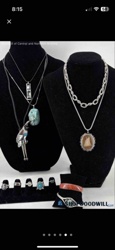
Submitted item photo
Submitted photo · June 20, 2026

User's notes

No additional notes provided.

AI analysis below

AI appraisal

AI analysis & estimate

AI-Generated · Verify before acting

Everything below is generated by AI for informational purposes only. AI can make mistakes — the AI may misidentify items or misattribute them (artist, maker, brand, designer, origin, era). This is not an official valuation and should not be used for insurance, sale, tax, estate, legal, or lending purposes — or any decision requiring a certified appraisal. It is not an authoritative claim about any person, brand, or rights holder — do not share or rely on it as a factual statement about a third party. Always consult qualified professionals before making financial decisions.

Read the full disclaimer

AI Identification

·Not independently authenticated·Verify before acting

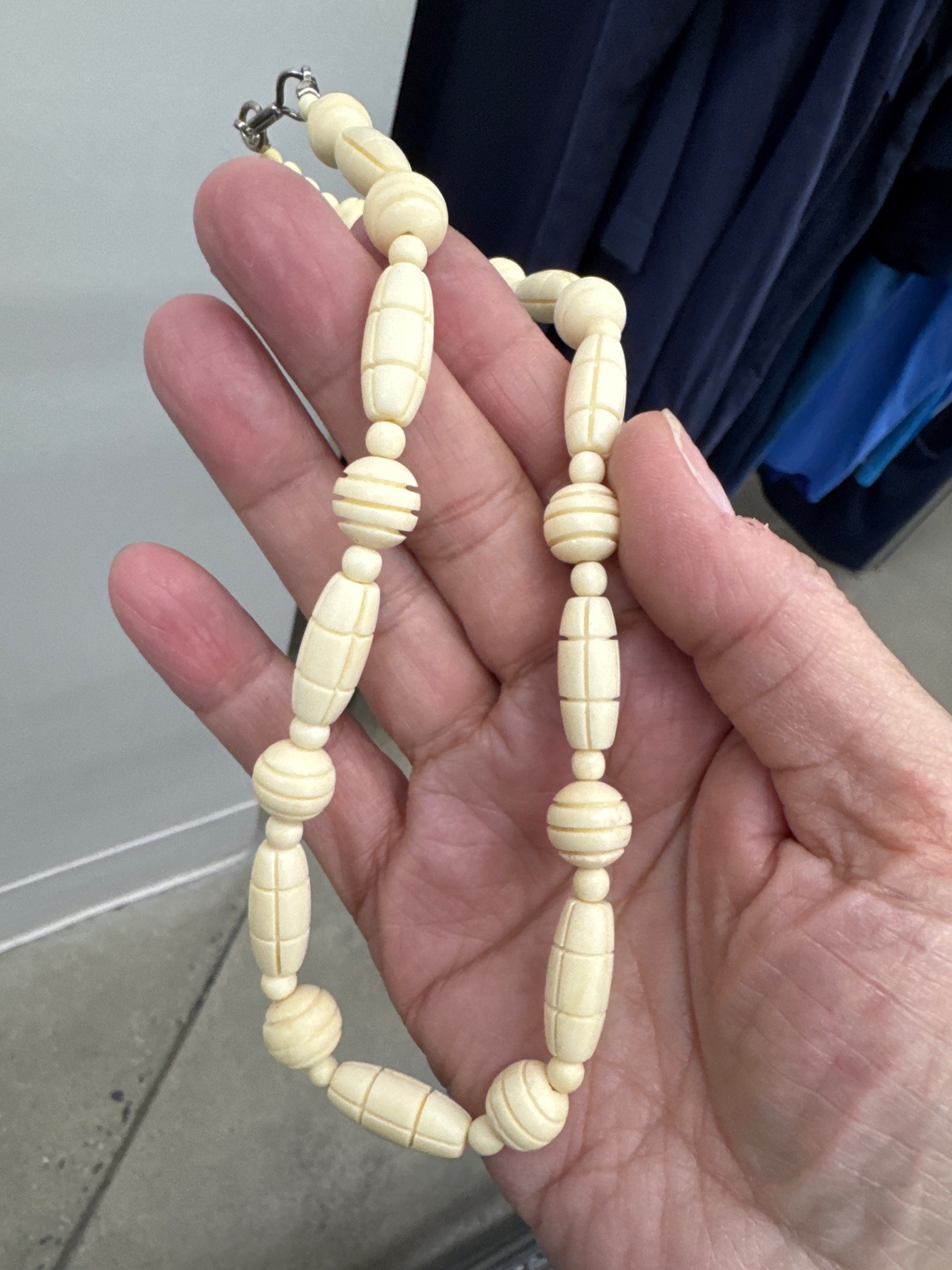
Vintage Carved Faux Ivory or Celluloid Beaded Necklace

Vintage Jewelry

AI Estimated Value

·Not an official valuation·Verify before acting

$65.00 - $95.00

As of June 20, 2026

AI Item Analysis

·AI can make mistakes·Verify before acting
This is a vintage single-strand beaded necklace featuring an alternating sequence of carved cream-colored beads. The materials appear to be an early semi-synthetic plastic, such as celluloid, French ivory, or casein, designed to mimic the appearance of natural elephant ivory. The necklace consists of three distinct bead shapes: elongated capsules with vertical and horizontal cross-hatch carvings, round flattened beads with horizontal grooves, and small smooth spherical spacer beads. The beads possess a matte to semi-gloss finish with a warm off-white or yellowish patina consistent with age. Notable features include the precision of the geometric carvings and the traditional silver-toned metal spring ring clasp assembly. Upon close inspection, the item shows various levels of surface wear, including slight discoloration in the recessed carved areas and minor surface scratches, but no major cracks or chips are visible. There are no apparent maker's marks or hallmarks on the beads or the clasp. Based on the style of the carvings and the hardware, this piece likely dates from the 1930s to the 1950s Art Deco or Mid-Century period. The uniform color and lack of Schreger lines suggest a synthetic origin rather than genuine ivory, though the craftsmanship remains of high quality for collectible costume jewelry.
AI Appraisal Report

·AI can make mistakes·Verify before acting
I have carefully examined the provided images of this vintage beaded necklace. The item appears to be a high-quality example of early 20th-century celluloid or 'French Ivory,' meticulously crafted to simulate the grain and tone of natural organic material. The geometric cross-hatch carvings and capsule shapes are characteristic of the Art Deco influence persisting into the 1940s. The presence of a standard spring ring clasp and the lack of Schreger lines—which are unique to genuine proboscidean ivory—confirm this as a collectible synthetic piece. The condition is excellent for its age, with a desirable aged patina and minor oxidation in the recesses indicating periodic wear but no structural failure. The market for mid-century 'faux ivory' remains steady among costume jewelry collectors, though it lacks the high premium associated with signed pieces from makers like Miriam Haskell. Value is driven by the complexity of the carvings rather than material rarity. Limitations: This appraisal is based solely on digital visual inspection. A physical examination is required to definitively distinguish between celluloid, casein, or early thermoset plastics through 'hot needle' or chemical testing (which could damage the item) or by observing specific thermal conductivity. I cannot verify the integrity of the internal stringing; if the silk or nylon cord is brittle, the necklace may require professional restringing, which would marginally impact immediate resale value. Identification of the specific plastic polymer would require a spectroscopic analysis for absolute certainty.

Get your items appraised

Instant estimates of your treasures with AI-powered appraisals

Browse More Appraisals