These notes were written by the person who submitted this item. Appraiser.AI has not verified them, and the AI's identification and estimate may rely on them.
AI Estimated Value
Not an official valuation
$125-250
AI estimate as of July 3, 2025 · verify with a professional before acting
AI-Generated · Verify before acting
Everything on this page is generated by AI for informational purposes only. AI can make mistakes — the AI may misidentify items or misattribute them (artist, maker, brand, designer, origin, era). This is not an official valuation and should not be used for insurance, sale, tax, estate, legal, or lending purposes — or any decision requiring a certified appraisal. It is not an authoritative claim about any person, brand, or rights holder — do not share or rely on it as a factual statement about a third party. Always consult qualified professionals before making financial decisions.
This analysis also relies on unverified notes provided by the user, which may be incomplete or inaccurate and could affect the result.
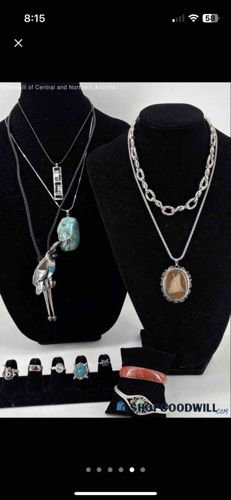
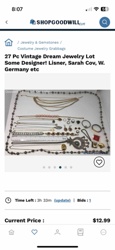
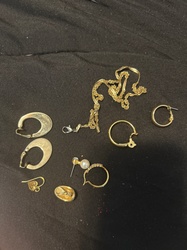
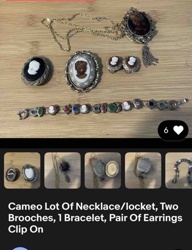
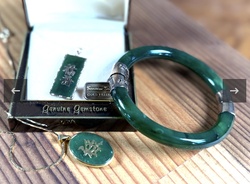
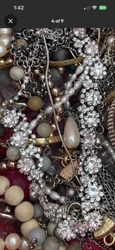
This lot consists of 11 pieces of vintage jewelry, displayed on black velvet busts and a ring holder. The collection includes a variety of necklaces, rings, and a bracelet. On the left, a black velvet bust displays three necklaces: one features a vertical rectangular pendant with what appears to be a geometric or tribal design; another has a rough, unpolished turquoise-like stone pendant; and the third, a bolo tie-style piece, showcases a detailed silver-toned bird-like figure with blue accents, possibly enamel or stone inlay. The bird figure appears to be a stylized rendition. On the right, a second black velvet bust holds two necklaces: an upper, heavier chain necklace with interlocking oval links, likely silver or silver-plated, and a lower, longer chain necklace with an oval pendant featuring a carved or molded light brown, earthy-toned image, possibly a cameo or intaglio made from shell or stone, set within a decorative silver-toned bezel. The condition of the metal chains appears to be good with some signs of light wear and tarnishing consistent with age. Below the busts, a black velvet ring display holds five rings. While specific details are difficult to discern from the image, they appear to feature various stones and metal settings, including what looks like another turquoise-like stone on one, and possibly geometric or patterned designs on others. One ring has a dark, possibly onyx or obsidian, stone, another appears to have a cluster of smaller clear stones, and a third has a single larger blue or greenish stone. To the right of the rings, a vibrant orange-red graduated stone or shell bracelet is visible, along with a silver-toned brooch or pendant shaped like a feather or leaf, adorned with small blue and green stones, again possibly turquoise or similar natural stones. The overall condition of the pieces suggests they are vintage, with expected wear and patina. The pieces exhibit varied craftsmanship, from more rustic, natural stone aesthetics to intricate metalwork. The quantity and variety suggest a collection possibly from the mid to late 20th century, consistent with a vintage classification.
AI Appraisal Report
Upon visual examination of this 11-piece vintage jewelry collection, I observe a diverse assortment of styles and materials, likely dating from the mid to late 20th century. The pieces appear to be in good vintage condition, exhibiting expected wear and patina, with no obvious signs of significant damage. The collection includes several items that appear to be Southwestern or Native American-inspired, featuring silver-toned metalwork and turquoise-like stones, such as the bolo tie-style necklace with a bird motif and several of the rings. The value of such pieces is heavily dependent on the artist, the quality of the materials (e.g., sterling silver vs. silver-plate, genuine turquoise vs. imitation), and the craftsmanship, none of which can be confirmed from images alone.
The current market shows consistent demand for authentic vintage Southwestern jewelry, but the value for costume or silver-plated pieces is considerably lower. Without maker's marks or material stamps (e.g., 'Sterling' or '925'), I must assume these are well-crafted costume pieces. The orange-red graduated bracelet, potentially spiny oyster shell or coral, and the carved cameo-like pendant are also interesting examples, but their value hinges on material authenticity.
A significant limitation of this appraisal is the inability to perform physical tests. Full authentication would require in-person examination to test metals for silver content, identify stones using gemological tools, and inspect for any maker's marks or hallmarks. Provenance documentation would also substantially increase value if any pieces are from notable artisans.