AI identification & appraisal estimate

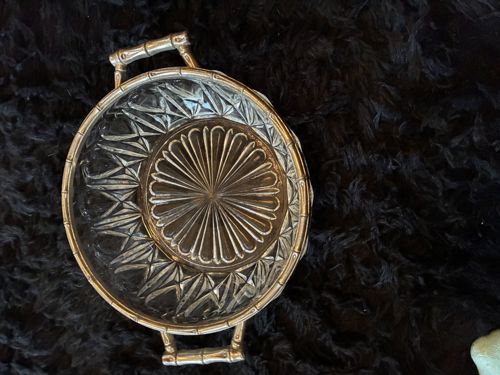
Vintage Italian Faux-Bamboo Silver-Plated and Pressed Glass Serving Dish

Submitted photo of Vintage Italian Faux-Bamboo Silver-Plated and Pressed Glass Serving Dish
Photo submitted by the user — not generated by AI

User's notes

Silver plated Italy

These notes were written by the person who submitted this item. Appraiser.AI has not verified them, and the AI's identification and estimate may rely on them.

AI Estimated Value

Not an official valuation

$125 - $175

AI estimate as of January 11, 2026 · verify with a professional before acting

AI-Generated · Verify before acting

Everything on this page is generated by AI for informational purposes only. AI can make mistakes — the AI may misidentify items or misattribute them (artist, maker, brand, designer, origin, era). This is not an official valuation and should not be used for insurance, sale, tax, estate, legal, or lending purposes — or any decision requiring a certified appraisal. It is not an authoritative claim about any person, brand, or rights holder — do not share or rely on it as a factual statement about a third party. Always consult qualified professionals before making financial decisions.

This analysis also relies on unverified notes provided by the user, which may be incomplete or inaccurate and could affect the result.

Read the full disclaimer

AI Item Analysis

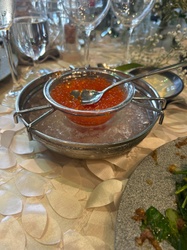
This is a vintage circular serving dish or nut bowl featuring a clear pressed glass insert housed within a silver-plated metal frame. The frame is designed in a Hollywood Regency 'faux-bamboo' style, characterized by textured nodes and a tubular structure that mimics natural bamboo stalks. It includes two integrated bracket-style handles similarly styled in the bamboo motif. The glass insert features a detailed sunburst or starburst pattern on the base with faceted, diamond-cut geometric patterns radiating up the sides to create a reflective, crystalline effect. The silver-plating exhibits a warm patina with visible tarnishing in the crevices of the bamboo joints and along the rim, which is consistent with its age and Italian origin. The metal shows minor surface wear and oxidation, while the glass appears structurally sound without significant chips or cracks visible. Based on the craftsmanship and Hollywood Regency aesthetic, this piece likely dates from the mid-to-late 20th century (circa 1960s-1970s). The combination of the rigid geometric glass and the organic metallic frame provides a high-quality decorative contrast typical of high-end Italian mid-century hollowware.
AI Appraisal Report

I have carefully examined the provided images and descriptions of this Italian-origin silver-plated and pressed glass serving dish. The piece is a quintessential example of Hollywood Regency design from the 1960s or 1970s. The 'faux-bamboo' metalwork is characteristic of high-end Italian boutique manufacturing from this era, likely produced by firms such as those found in the Florence or Milan silver-working regions. Condition-wise, the glass insert is in excellent state, which is critical as finding replacements for specific starburst-patterned pressed glass is difficult. The silver plating shows a natural, aged patina with oxidation (tarnish) in the crevices of the bamboo nodes. This is desirable as it confirms the 'faux' texture, though some minor pitting may be present beneath the tarnish. The 'Italy' hallmark confirms its geographic origin, a factor that bolsters value in the vintage market compared to unsigned contemporary reproductions. While this aesthetic is currently popular among interior designers, the market for silver-plated items is softer than solid sterling. The value is driven by the 'Hollywood Regency' style rather than metal weight. Comparable items at boutique antique malls typically list between $150 and $225, with auction realizations slightly lower. Limitations: My assessment is based solely on digital images. A physical inspection is required to check for 'flea bites' on the glass rim, the integrity of the silver plating (to ensure it hasn't worn down to the base metal, or 'bleeding'), and to verify the specific maker's mark via loupe. A full authentication would require professional polishing to check for underlying metal damage and provenance documentation to confirm the specific manufacturer.

Keep exploring

More vintage tableware and serveware appraisals

Get your items appraised

Instant AI-powered appraisal estimates from a photo

Browse More Appraisals