These notes were written by the person who submitted this item. Appraiser.AI has not verified them, and the AI's identification and estimate may rely on them.
AI Estimated Value
Not an official valuation
$1,000 - $1,800
AI estimate as of November 2, 2025 · verify with a professional before acting
AI-Generated · Verify before acting
Everything on this page is generated by AI for informational purposes only. AI can make mistakes — the AI may misidentify items or misattribute them (artist, maker, brand, designer, origin, era). This is not an official valuation and should not be used for insurance, sale, tax, estate, legal, or lending purposes — or any decision requiring a certified appraisal. It is not an authoritative claim about any person, brand, or rights holder — do not share or rely on it as a factual statement about a third party. Always consult qualified professionals before making financial decisions.
This analysis also relies on unverified notes provided by the user, which may be incomplete or inaccurate and could affect the result.
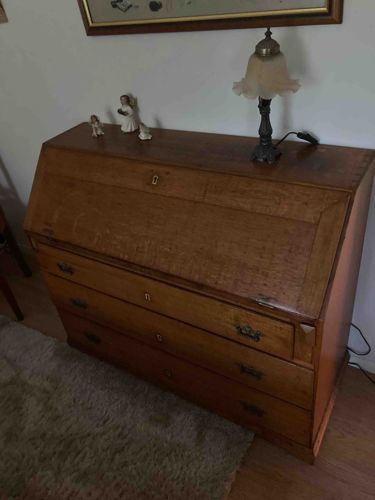
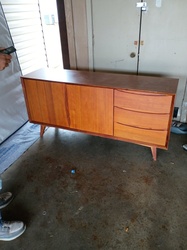
This item is an antique slant-front bureau desk, also known as a secretary desk, constructed primarily of wood, likely a hardwood such as oak or mahogany, given its warm, medium-brown finish and visible grain. The desk features a hinged, sloping lid that, when opened, would typically reveal a fitted interior with small drawers, pigeonholes, and a writing surface. The visible side of the lid shows a keyhole, indicating it was designed to be lockable, suggesting the contents within were meant to be secured. Below the slant front, there are three full-width drawers stacked vertically, each fitted with what appear to be ornate, possibly brass or bronze, bail pull handles and corresponding keyholes. The hardware exhibits signs of age and patina. The overall construction appears solid, with clean lines typical of furniture from the mid-to-late 19th century, aligning with the approximately 150-year age context provided. Visible condition issues include some surface wear, minor scratches, and abrasions consistent with regular use over a long period. There's a noticeable lighter patch or area of discoloration on the top right corner of the slant lid, possibly from sun exposure or repeated contact. The finish appears original, showcasing the natural wood color, though it may have been re-waxed or polished over time. The craftsmanship seems robust, indicative of traditional furniture making techniques. The base of the desk is simple and sturdy, providing a solid foundation. The presence of a molded edge around the top of the slant front adds a subtle decorative touch.
AI Appraisal Report
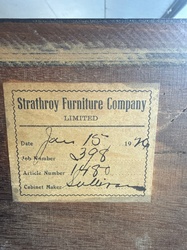
Based on my visual examination of the provided image, this antique slant-front bureau desk, with an approximate age of 150 years (mid-to-late 19th century origin), exhibits characteristics consistent with authentic period furniture. The visible wood appears to be a hardwood, likely oak or mahogany, indicated by its grain and warm medium-brown finish. The construction details, such as the hinged sloping lid, fitted interior (though not fully visible), and stacked drawers with period-appropriate bail pull hardware and keyholes, support its authenticity. The hardware's patina is a positive sign of age.
Condition-wise, the desk shows expected wear for its age, including surface scratches, abrasions, and a noticeable lighter patch on the top right of the slant lid, likely from sun exposure. This wear is consistent with regular use but does not detract significantly from its aesthetic appeal. The finish appears original, though it may have seen re-waxing or polishing over time. The overall robust craftsmanship indicates quality construction.
Market conditions for antique furniture, particularly functional pieces like secretary desks, remain stable but value is heavily influenced by condition and wood type. Desks of this style from the mid-to-late 19th century are relatively common, thus rarity is not a significant value driver. However, good condition, original hardware, and solid construction enhance its desirability. The lockable lid and multiple drawers add to its functionality and appeal.
My valuation of $1,000 - $1,800 reflects its good, unrestored condition, apparent quality, and functional design. This figure is based on sales of comparable period slant-front desks in similar condition. Major factors impacting value include the wood species (mahogany would command higher prices than oak), the condition of the fitted interior, and any structural repairs or restorations.
It is crucial to note the limitations of an image-based appraisal. I cannot definitively verify the wood species, internal construction, or assess the full extent of any repairs or original finish without a physical examination. An in-person inspection would allow me to check for wood soundness, joint integrity, internal drawer construction (e.g., dovetails), and to chemically analyze the finish if provenance documentation is unavailable for full authentication.