AI estimate as of October 5, 2025 · verify with a professional before acting
AI-Generated · Verify before acting
Everything on this page is generated by AI for informational purposes only. AI can make mistakes — the AI may misidentify items or misattribute them (artist, maker, brand, designer, origin, era). This is not an official valuation and should not be used for insurance, sale, tax, estate, legal, or lending purposes — or any decision requiring a certified appraisal. It is not an authoritative claim about any person, brand, or rights holder — do not share or rely on it as a factual statement about a third party. Always consult qualified professionals before making financial decisions.
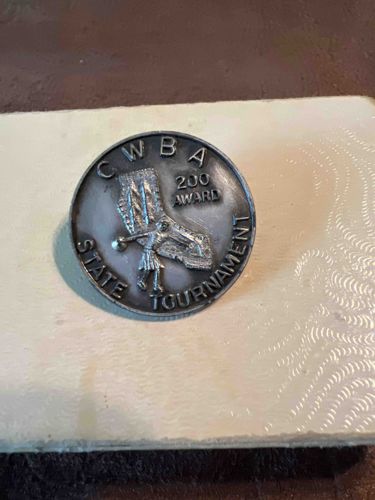
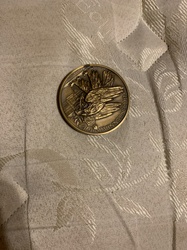
This item is a circular, silver-toned metal pin, likely made of a base metal alloy such as pewter, nickel silver, or a plated material, given its subdued metallic luster and visible areas of darker patina. The pin measures approximately 1-1.5 inches in diameter and features a raised design on its obverse side. The central motif depicts a stylized figure in a dynamic pose, possibly an athlete, holding what appears to be a bowling pin and ball, or some other sporting equipment. The detailing on the figure and equipment is quite intricate, suggesting a die-struck or cast manufacturing process. Surrounding the central image, along the top circumference, are the embossed letters "CWBA", and directly below this, '200 AWARD' is inscribed in two lines. The bottom circumference features the words 'STATE TOURNAMENT' in a larger, curved font. The lettering and imagery show good definition, indicating fair to good quality craftsmanship. The overall condition of the pin suggests moderate age and use; there is a visible dark patina, especially in the recessed areas, which contributes to the item's antique or vintage appearance. This patina is consistent with natural oxidation over time and does not necessarily indicate damage, but rather an aged aesthetic. There are no obvious signs of significant wear, deep scratches, or repairs visible in the provided image. The edges appear smooth and well-finished. The reverse side, not visible in the image, would typically feature a pin mechanism for attachment. Based on the style of lettering, the material appearance, and the '200 Award' text, it likely dates from the mid to late 20th century. It is a commemorative award, likely for an achievement in a bowling or similar state-level tournament organized by an association identified as 'CWBA'.
AI Appraisal Report
Upon visual examination of the provided image, this CWBA 200 Award State Tournament pin appears to be a genuine commemorative item, likely from the mid to late 20th century. The pin is constructed from a silver-toned base metal, such as pewter or nickel silver, and exhibits a die-struck or cast design. Its condition is fair to good, with moderate patina and no significant signs of damage, which is consistent for an item of its likely age and purpose. The central motif, likely related to bowling, and surrounding text are well-defined. My appraisal is based on market conditions for similar, non-precious metal athletic and association award pins. The market for such items is generally limited to niche collectors of bowling memorabilia or ephemera from the specific association (CWBA). Comparable state-level tournament award pins from this era typically sell in the $5 to $15 range online and at specialty shows. Rarity is a moderate factor; while specific to a '200' score at a state tournament, many such awards were likely produced. The primary factor limiting the value is the base metal composition and the niche collector demand. Without a physical inspection, I cannot definitively confirm the metal content or the presence of any maker's marks on the reverse, which could modestly influence value. Full authentication would require non-destructive X-ray fluorescence (XRF) testing to identify the specific metal alloy and an in-person examination of the pin's reverse for manufacturer identification.