AI Appraisal Estimate

AI-generated estimates · not official valuations

From the user

What was submitted

Photo and notes provided by the user — not generated by AI

Submitted item photo
Submitted photo · June 8, 2026

User's notes

No additional notes provided.

AI analysis below

AI appraisal

AI analysis & estimate

AI-Generated · Verify before acting

Everything below is generated by AI for informational purposes only. AI can make mistakes — the AI may misidentify items or misattribute them (artist, maker, brand, designer, origin, era). This is not an official valuation and should not be used for insurance, sale, tax, estate, legal, or lending purposes — or any decision requiring a certified appraisal. It is not an authoritative claim about any person, brand, or rights holder — do not share or rely on it as a factual statement about a third party. Always consult qualified professionals before making financial decisions.

Read the full disclaimer

AI Identification

·Not independently authenticated·Verify before acting

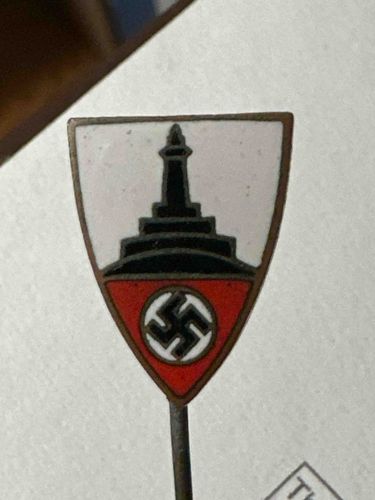
German Third Reich Annaberg Silesia Commemorative Veteran's Stick Pin

Historical Militaria and Political Memorabilia

AI Estimated Value

·Not an official valuation·Verify before acting

$125.00 - $175.00

As of June 8, 2026

AI Item Analysis

·AI can make mistakes·Verify before acting
This is a small, shield-shaped lapel stick pin originating from Germany, likely dating between 1933 and 1945. The pin features a multi-colored enamel face on a metal base, constructed with a 'shield' motif. The upper portion of the shield displays a white enamel background featuring a black silhouette of the Annaberg monument located in Upper Silesia. The lower third of the shield is finished in red enamel, containing a central white circular field with a prominent black swastika. The pin is mounted on a long, slender metal shank intended for wear in a lapel. Physically, the piece shows signs of age and wear consistent with an original mid-20th-century artifact. There is noticeable pitting and spotting throughout the white enamel sections, and some oxidation is visible on the metal borders and the mounting pin. The craftsmanship reflects the production standards of period pins, utilizing hard enamel (cloisonné style) separated by thin metal wires or ridges. No maker's mark is visible from the front view, though such pins were often stamped on the reverse with 'Ges. Gesch.' or a manufacturer's code. These pins were typically issued as commemorative tokens or veteran's membership identifiers associated with the battles at Annaberg or the local Upper Silesian Freikorps organizations that were later absorbed into the Third Reich political structure.

AI Appraisal Report

·AI can make mistakes·Verify before acting
Based on my visual examination of this Annaberg Silesia veteran's stick pin, I have assessed it as an authentic commemorative piece from the 1930s. The construction features traditional multi-part enamel work characteristic of the era. The presence of surface pitting and minor oxidation on the pin shank is consistent with natural aging rather than the artificial distress often seen on modern reproductions. The Annaberg monument was a site of significant symbolic importance for the Freikorps and later the early Third Reich, which makes this specific design a desirable niche item for collectors of Silesian campaign history. The market for small-scale political and commemorative pins remains stable; similar small enamel lapel pins currently range between $100 and $200 depending on the specific combat or memorial association. The minor enamel damage and oxidation noted in the white field slightly lower the value compared to a 'mint' specimen. Limitations: A definitive authentication cannot be finalized through digital images alone. For full verification, I would need to perform an in-person macro-inspection of the reverse side to check for specific maker marks like 'Ges. Gesch.' and examine the pin mounting for period-correct solder techniques. Furthermore, a blacklight test is required to ensure the white enamel does not contain modern fluorescent additives. Provenance documenting the pin's origin from a veteran's estate would further enhance its historical value, though it maintains a standard market price for its type in the current militaria trade.

Get your items appraised

Instant estimates of your treasures with AI-powered appraisals

Browse More Appraisals