AI estimate as of December 1, 2025 · verify with a professional before acting
AI-Generated · Verify before acting
Everything on this page is generated by AI for informational purposes only. AI can make mistakes — the AI may misidentify items or misattribute them (artist, maker, brand, designer, origin, era). This is not an official valuation and should not be used for insurance, sale, tax, estate, legal, or lending purposes — or any decision requiring a certified appraisal. It is not an authoritative claim about any person, brand, or rights holder — do not share or rely on it as a factual statement about a third party. Always consult qualified professionals before making financial decisions.
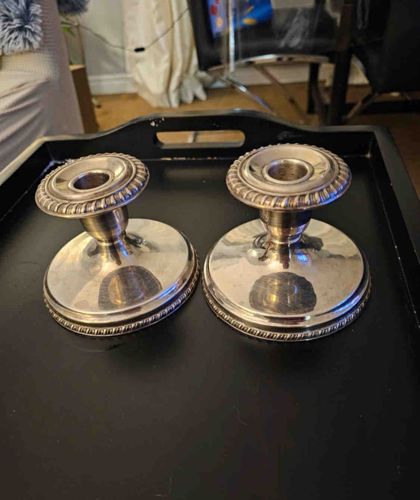
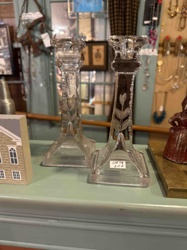
This is a pair of silver-plated candlesticks, likely designed for holding standard taper candles. Each candlestick features a classic, elegant design consistent with early to mid-20th century decorative arts, possibly even earlier, exhibiting a neoclassical or Georgian revival influence. They are constructed from metal, specifically appearing to be silver-plated due to the characteristic luster and the slight tarnish visible in areas, which is typical for this material. The color is a bright, reflective silver, showing some darker, oxidized patches and surface scratches indicative of age and use. Each candlestick has a circular, dish-like base, approximately 4-5 inches in diameter, adorned with a finely detailed twisted rope or reeding pattern around its perimeter. Above the base, a relatively short, trumpet-shaped stem rises to support the candle cup. The candle cups themselves are also circular with a similar, though perhaps slightly finer, reeded or twisted rope decorative band encircling the rim. The interior of the candle cups appears dark from residual wax or tarnish. The construction appears sturdy, with a solid, weighted feel suggested by their form. One candlestick shows a slightly more pronounced reflection of an external 'P' or similar marking on its base, which could be an indication of a manufacturing mark or a unique imperfection of the plating. There are no clear manufacturer's marks or signatures visible from the provided images. The overall condition suggests regular use and some minor wear conducive to their age, including surface abrasions and areas of tarnish, but no significant damage like dents or bends are immediately obvious. The craftsmanship, particularly the detailed reeding, indicates a higher quality of production, likely machine-made with hand-finishing.
AI Appraisal Report
I have examined the images of this pair of silver-plated candlesticks. Their classic design, featuring twisted rope detailing around the bases and candle cups, suggests an early to mid-20th century origin, aligning with neoclassical or Georgian revival styles. The characteristic luster and visible tarnish confirm their silver-plated construction. The overall condition indicates regular use, with expected surface abrasions and oxidation consistent with age, but no major dents or structural damage are immediately apparent. The craftsmanship, particularly the detailed reeding, points to a good quality machine-made item, likely with some hand-finishing.
From a market perspective, silver-plated candlesticks are a common item in the decorative arts market. While this pair exhibits good design and condition for its age, they are not exceedingly rare. Demand is moderate, driven primarily by individuals seeking decorative accents for traditional interiors or collectors of vintage tableware. Factors impacting value include the lack of clear manufacturer's marks, which prevents attribution to a specific, potentially higher-value maker. The slight 'P' marking visible on one base is insufficient for positive identification.
Comparables for well-preserved, unmarked silver-plated candlesticks of this style typically range from $40- 75 per individual candlestick, depending on retail venue and condition. Given this is a pair in good, used condition, I would place their appraisal value between $80 and $150.
My assessment of authenticity is based solely on visual characteristics from the provided images. To fully authenticate the material, a specific gravity test or X-ray fluorescence analysis would be beneficial. In-person examination would allow for a more thorough inspection of wear patterns, plating thickness, and any hidden marks, which could potentially impact value. Without clear provenance documentation or visible maker's marks, definitive attribution to a specific manufacturer or period is limited.