AI estimate as of July 11, 2025 · verify with a professional before acting
AI-Generated · Verify before acting
Everything on this page is generated by AI for informational purposes only. AI can make mistakes — the AI may misidentify items or misattribute them (artist, maker, brand, designer, origin, era). This is not an official valuation and should not be used for insurance, sale, tax, estate, legal, or lending purposes — or any decision requiring a certified appraisal. It is not an authoritative claim about any person, brand, or rights holder — do not share or rely on it as a factual statement about a third party. Always consult qualified professionals before making financial decisions.
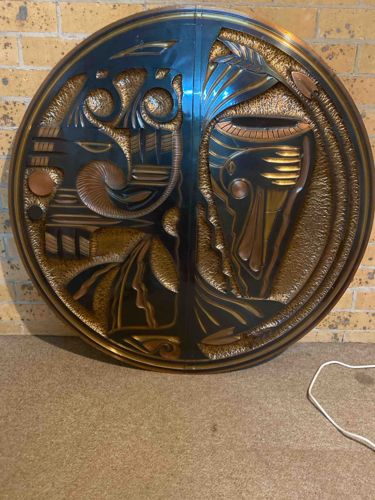
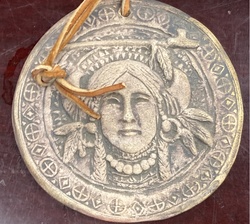
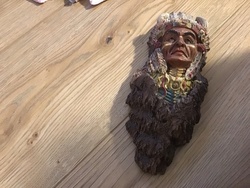
This is a large, circular decorative wall plaque or relief sculpture, crafted from what appears to be a combination of metals, likely copper, brass, and possibly bronze or a dark patinated metal, mounted on a solid back. The piece exhibits a complex, multi-layered design with a strong Art Deco influence, possibly dating from the mid-20th century. The surface features intricate raised and recessed areas, creating significant depth and texture. The color palette is dominated by dark, almost black backgrounds accented with coppery browns and brighter golden hues, highlighting the metallic nature of the materials. The design is abstract but incorporates biomorphic and geometric forms, suggestive of natural elements and stylized faces or figures. On the left side, there are swirling, organic shapes resembling vines or tendrils, along with more structured, stacked horizontal lines and circular motifs. The right side features a prominent, stylized profile of what looks like a human face or mask, with clear delineation of an eye socket, nose, and mouth area, surrounded by textured, leaf-like patterns. The craftsmanship appears to be of high quality, with precise detailing in the embossed and hammered areas. There is visible patina consistent with age, contributing to its aesthetic. Some areas show variations in sheen, indicating different metallic finishes or patination techniques. No obvious damage such as dents or significant scratches are discernible from the image, but the dark background makes it difficult to assess minor surface imperfections. A white electrical cord is visible at the bottom right, suggesting it might be an illuminated piece, possibly with backlighting or integrated lighting elements, although the light sources themselves are not visible. The overall condition appears good, with desirable age-appropriate patina. The construction seems robust, indicating a substantial and well-made object.
AI Appraisal Report
Based on my visual examination of the provided image, this large Art Deco Style Metal Wall Sculpture/Plaque presents as a well-crafted and visually striking piece. The multi-layered design, incorporating biomorphic and geometric forms, along with what appears to be a stylized human profile, is highly characteristic of the Art Deco period, likely mid-20th century. The perceived use of copper, brass, and dark patinated metals, combined with intricate raised and recessed detailing, speaks to quality craftsmanship. The visible patina is consistent with age and enhances the aesthetic, indicating good overall condition. No overt damage such as dents or significant scratches are apparent, though minor surface imperfections are difficult to ascertain from an image alone. The presence of a white electrical cord suggests it may have been illuminated, a feature that, if functional, would add to its desirability.
From a market perspective, decorative objects from the Art Deco period, especially those with depth and skilled metalwork, consistently attract collector interest. Comparables would include works by artists known for metal bas-reliefs or wall art from the 1930s-1960s, though specific attribution without a signature or maker's mark is impossible here. Demand for unique, substantial decorative arts with a strong design aesthetic generally remains stable. Its large size and specific stylistic elements could make for a niche market but also enhance its focal point appeal. The primary factors impacting value are its aesthetic appeal, apparent age-appropriate condition, and the quality of execution. Rarity is hard to determine without specific maker information.
Limitations for authenticity verification from an image are significant. I cannot confirm the materials definitively, inspect the reverse for maker's marks or construction details, or assess the depth and texture firsthand. A physical examination would be crucial to confirm the metal composition, assess the true condition (including any repairs or original lighting functionality), and search for any hidden signatures. Provenance documentation, if available, would provide invaluable context regarding its origin and history, further substantiating its authenticity and potentially its attribution. Scientific testing of materials or patination might be required for full authentication if questions arose regarding its age or origin.