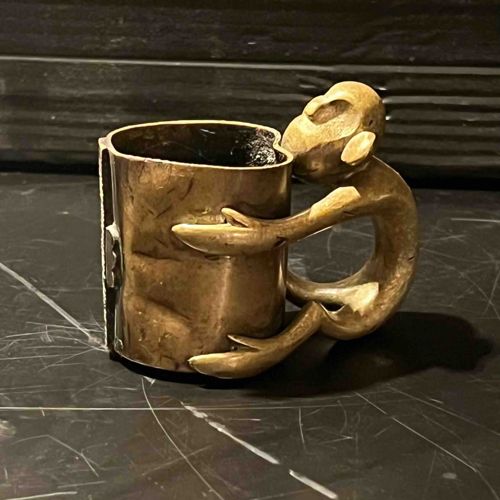
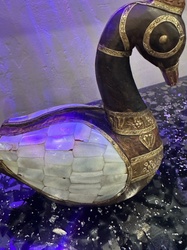
Antique metal small brass cup with monkey handle / Made in Austria / Width: 2.5 inches / height: 1.5 inches / length: 1.5 inches
These notes were written by the person who submitted this item. Appraiser.AI has not verified them, and the AI's identification and estimate may rely on them.
AI Estimated Value
Not an official valuation
$100 - $150
AI estimate as of August 13, 2025 · verify with a professional before acting
AI-Generated · Verify before acting
Everything on this page is generated by AI for informational purposes only. AI can make mistakes — the AI may misidentify items or misattribute them (artist, maker, brand, designer, origin, era). This is not an official valuation and should not be used for insurance, sale, tax, estate, legal, or lending purposes — or any decision requiring a certified appraisal. It is not an authoritative claim about any person, brand, or rights holder — do not share or rely on it as a factual statement about a third party. Always consult qualified professionals before making financial decisions.
This analysis also relies on unverified notes provided by the user, which may be incomplete or inaccurate and could affect the result.
This item is an antique small brass cup featuring a figural monkey handle, likely of Austrian origin as indicated by the context. The cup itself is cylindrical with a slight, irregular texture on its exterior, suggesting a handcrafted or perhaps cast finish rather than a perfectly smooth, machined surface. It measures approximately 2.5 inches in width, 1.5 inches in height, and 1.5 inches in length. The brass material exhibits a rich, aged golden-brown patina, consistent with an antique metallic object. Distinctive wear and tarnishing are visible, particularly within the cup's interior, which appears darkened and possibly contains residual matter. The most prominent feature is the monkey figure, which forms the handle. The monkey is depicted in a crouching or sitting posture, with its arms wrapped around the body of the cup and its head tilted towards the rim, as if about to drink or observe the contents. The monkey's form is simplified but expressive, with noticeable details like ears, a prominent snout/nose area, and defined limbs ending in hands and feet that grip the vessel. There are no clearly visible maker's marks or signatures in the provided image, but the craftsmanship, especially of the monkey figure, suggests a skilled artisan. The piece shows signs of age, including surface scratches and darkening of the brass, which contribute to its antique character. The connection to Austria suggests a possible turn-of-the-century (late 19th to early 20th century) or Art Nouveau period influence, given the popularity of whimsical and animalistic designs during those times. The small size indicates it may have served as a shot glass, thimble holder, desk accessory, or a purely decorative novelty item. The quality of the casting appears good, with solid construction, though the exact method of attachment of the monkey to the cup is not entirely clear from the single image.
AI Appraisal Report
Upon examination of the images and provided details, this small brass cup with a figural monkey handle presents as a charming Austrian decorative object, likely dating to the late 19th or early 20th century. The piece exhibits a consistent and convincing dark patina, along with signs of age-appropriate wear and tarnish, which supports its antiquity. The whimsical monkey motif is characteristic of the Vienna Bronze style, often associated with makers like Franz Bergmann, though no maker's mark is visible. The casting of the monkey appears well-executed, adding to its appeal. Without physical inspection, I cannot confirm the exact brass alloy, method of construction, or definitively authenticate the 'Made in Austria' mark. Full authentication would require in-person examination to search for hidden foundry marks and assess the object's weight and construction details. The market for small, high-quality Austrian bronzes and whimsical animal-themed antiques is steady. Comparable unmarked, small-scale Austrian bronze novelties from this period typically sell in the $75 to $200 range at auction and in retail settings. While visually appealing, the lack of a discernible maker's mark significantly limits its value, preventing it from reaching the higher prices commanded by signed pieces from renowned workshops. Its primary value lies in its decorative and novelty appeal.