AI estimate as of July 31, 2025 · verify with a professional before acting
AI-Generated · Verify before acting
Everything on this page is generated by AI for informational purposes only. AI can make mistakes — the AI may misidentify items or misattribute them (artist, maker, brand, designer, origin, era). This is not an official valuation and should not be used for insurance, sale, tax, estate, legal, or lending purposes — or any decision requiring a certified appraisal. It is not an authoritative claim about any person, brand, or rights holder — do not share or rely on it as a factual statement about a third party. Always consult qualified professionals before making financial decisions.
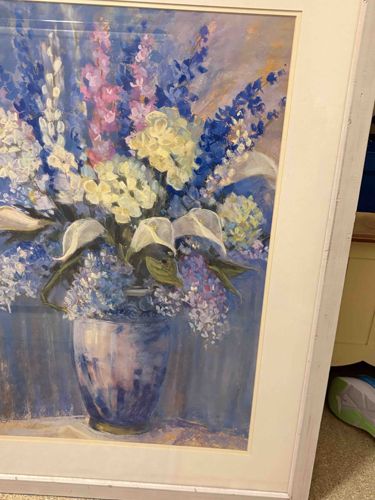
The item is a framed piece of artwork, likely a print or giclée, depicting a vibrant floral still life. The composition features a generous, overflowing bouquet of various flowers arranged in a blue and white patterned vase. Dominant colors in the floral arrangement include shades of blue (ranging from light sky blue to indigo), lavender, soft pinks, and pale yellows, suggesting a variety of blooms such as hydrangeas, lilacs, and delphiniums or lupines. The background is a wash of muted blues and purples, creating a soft, dreamlike atmosphere that emphasizes the bouquet. The style appears to be impressionistic or post-impressionistic, characterized by visible brushstrokes and a focus on light and color rather than sharp detail. The artwork is housed within a white or off-white mat board, which acts as a border between the image and the frame. The frame itself is a rustic, distressed white or light-colored wood, showing signs of wear and possibly some chipping or scuffing, particularly visible on the right vertical edge. The overall condition of the artwork within the frame appears good, with no obvious tears, creases, or discoloration visible from the image. However, the presence of glass or acrylic glazing is implied by reflections, which can sometimes obscure minor imperfections or dust. The craftsmanship of the framing seems standard, designed to complement the soft aesthetic of the artwork. Dating is challenging without a signature or specific markings, but the aesthetic suggests a late 20th-century to early 21st-century production.
AI Appraisal Report
Upon visual examination of the provided image, I assess this framed floral still life print to be in good overall condition. The print itself shows no apparent tears, creases, or significant discoloration. The matting appears clean. The distressed white frame, while intentionally rustic, exhibits typical wear consistent with its style, including scuffs and chips that contribute to its aesthetic rather than detract from its value. The presence of reflections suggests glazing, which protects the artwork but limits a thorough surface inspection for minor imperfections like dust or subtle scratching.
From the image alone, authenticity cannot be definitively determined regarding whether this is an original print, a giclée, or a mass-produced reproduction. The impressionistic style and subject matter are popular in the decorative art market. This piece likely falls into the category of framed decorative art, often found in home furnishing stores or online retailers. Market conditions for such items are robust, driven by interior design trends. Comparables in this category, assuming it is a print or giclée, typically retail between $75 and $250. Demand is steady for visually appealing, well-framed art that complements various decors, but rarity is low for reproductions.
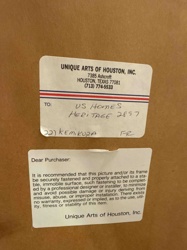
Key factors impacting value are its decorative appeal, condition, and framing quality. The primary limitation in authentication is the lack of physical examination. To verify authenticity (e.g., distinguishing an artist's original print from a giclée or commercial reproduction), an in-person inspection would be crucial to examine print medium, paper quality, edition numbering, and signatures. Provenance documentation (e.g., purchase receipts, artist's certificates) and potentially scientific testing (for ink type or age) would be needed for a full and conclusive authentication.