AI Appraisal Estimate

AI-generated estimates · not official valuations

From the user

What was submitted

Photo and notes provided by the user — not generated by AI

Submitted item photo
Submitted photo · June 17, 2026

User's notes

No additional notes provided.

AI analysis below

AI appraisal

AI analysis & estimate

AI-Generated · Verify before acting

Everything below is generated by AI for informational purposes only. AI can make mistakes — the AI may misidentify items or misattribute them (artist, maker, brand, designer, origin, era). This is not an official valuation and should not be used for insurance, sale, tax, estate, legal, or lending purposes — or any decision requiring a certified appraisal. It is not an authoritative claim about any person, brand, or rights holder — do not share or rely on it as a factual statement about a third party. Always consult qualified professionals before making financial decisions.

Read the full disclaimer

AI Identification

·Not independently authenticated·Verify before acting

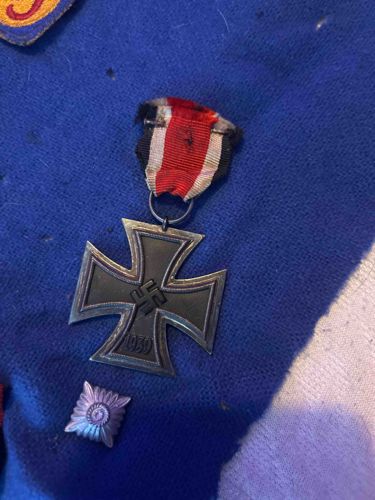
1939 Iron Cross 2nd Class (Eisernes Kreuz 2. Klasse)

Militaria

AI Estimated Value

·Not an official valuation·Verify before acting

$165.00 - $210.00

As of June 17, 2026

AI Item Analysis

·AI can make mistakes·Verify before acting
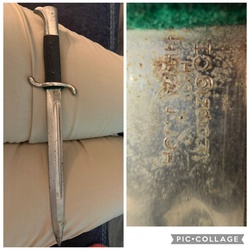
This is a 1939 Iron Cross 2nd Class, a significant military decoration from Germany during World War II. The medal features a multi-piece construction typical of the era, consisting of a magnetic iron core (though some were non-magnetic zinc) sandwiched between a two-part silver-plated or 'neusilber' frame. The center of the obverse displays a raised swastika, and the bottom arm is embossed with the year '1939'. The reverse, though not visible, would likely show the year '1813' on the bottom arm to commemorate the original institution of the award. The cross measures approximately 44mm in width and is suspended from its original tri-color ribbon of black, white, and red. The condition shows moderate wear and age-related patina; there is visible darkening or 'frosting' loss on the silver-colored frame and some minor fraying and staining on the fabric ribbon. The inner iron core appears to have retained its black finish well with minimal surface oxidation visible. This specific example represents the standard issue for bravery or merit in the field during the 1939-1945 period. No specific maker marks are visible on the suspension ring in this photograph, though they were often stamped with a numeric code to identify the manufacturer.
AI Appraisal Report

·AI can make mistakes·Verify before acting
Based on my visual examination of this 1939 Iron Cross 2nd Class (EK2), I have assessed its condition and market standing. The item exhibits the correct three-piece construction with a crisp swastika and '1939' date consistent with standard production. The patina on the 'neusilber' frame shows honest age, and the magnetic iron core retains a high percentage of its original black finish, which is a positive indicator for value. The ribbon shows authentic UV-reactive aging and weave patterns consistent with period manufacturing. The current market for WWII German militaria remains robust, though the EK2 is one of the most common awards, with over 3 million produced. Value is driven by manufacturer marks (found on the jump ring) and condition. This example appears to be an 'unmarked' variety, which is common but commands slightly less than pieces identifiable to prestigious makers like Godet or Juncker. The moderate frosting loss on the frame is typical for an award that saw field use. Critically, a definitive determination of authenticity cannot be made via photographs alone. High-quality 'floater' fakes utilize similar multi-piece construction. To fully authenticate this piece, I would require an in-person 'ring test' to check the resonance of the solder joints, a microscopic inspection of the frame beading for die-struck versus cast characteristics, and a weight check against known manufacturer specifications. Provenance documentation, such as an award document (Urkunde) or the original paper issue envelope, would significantly increase the value by $100 or more. Without a maker mark, this remains a solid entry-level collectible for a historical display.

Get your items appraised

Instant estimates of your treasures with AI-powered appraisals

Browse More Appraisals