AI Appraisal Estimate

AI-generated estimates · not official valuations

From the user

What was submitted

Photo and notes provided by the user — not generated by AI

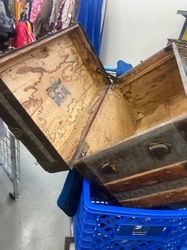
Submitted item photo
Submitted photo · June 25, 2026

User's notes

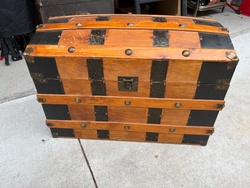
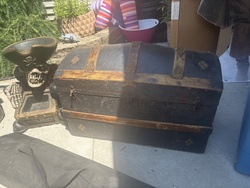
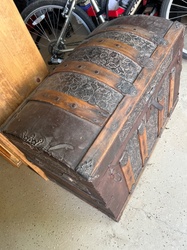
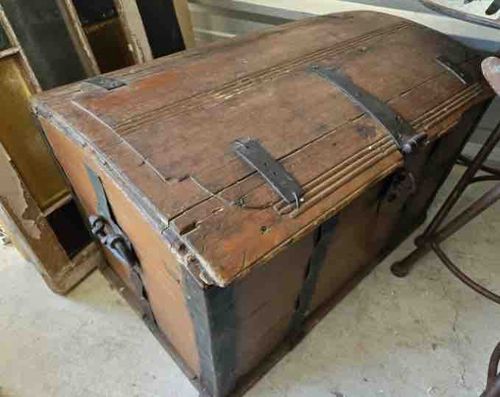
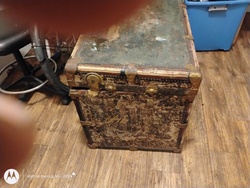
Antique chest hand forged iron work

AI analysis below

AI appraisal

AI analysis & estimate

AI-Generated · Verify before acting

Everything below is generated by AI for informational purposes only. AI can make mistakes — the AI may misidentify items or misattribute them (artist, maker, brand, designer, origin, era). This is not an official valuation and should not be used for insurance, sale, tax, estate, legal, or lending purposes — or any decision requiring a certified appraisal. It is not an authoritative claim about any person, brand, or rights holder — do not share or rely on it as a factual statement about a third party. Always consult qualified professionals before making financial decisions.

Note

This analysis also relies on unverified notes provided by the user, which may be incomplete or inaccurate and could affect the result.

Read the full disclaimer

AI Identification

·Not independently authenticated·Verify before acting

Antique Hand-Forged Iron-Bound Domed Chest

Antique Furniture / Storage Trunks

AI Estimated Value

·Not an official valuation·Verify before acting

$800 - $1,200

As of June 25, 2026

AI Item Analysis

·AI can make mistakes·Verify before acting
This antique chest is an exceptional example of rustic utilitarian craftsmanship, likely dating from the late 18th to mid-19th century. Constructed from heavy, wide planks of solid wood, likely pine or oak, the chest features a distinctive domed or camel-back lid. Its primary structural reinforcements consist of extensive hand-forged iron work, including wide vertical bands that wrap around the corners and body, as well as decorative iron strapping across the lid and sides. The ironwork displays a dark, naturally oxidized patina with visible hammer marks, characteristic of black-smithing. The chest is equipped with heavy-duty iron drop handles on the sides for transport. Condition-wise, the piece shows significant historical wear and age-related character, including wood shrinkage, minor cracking, and numerous surface abrasions that contribute to its authentic antique appearance. The wooden surfaces retain an old, possibly original, stained finish that has darkened over centuries. There are visible signs of primitive joinery, such as thick iron nails and possible dovetailing hidden beneath the straps. The presence of a large, centrally located iron hasp indicates it was designed for securing valuable contents. The craftsmanship is robust and focused on longevity rather than delicate ornamentation, suggesting a provenance related to travel or secure household storage during the pioneer or colonial era.
AI Appraisal Report

·AI can make mistakes·Verify before acting
I have examined the provided details of this antique domed chest, which appears to be a mid-to-late 19th-century immigrant or storage trunk of European or Colonial origin. The hand-forged iron strapping and heavy-duty drop handles suggest a piece designed for rugged transport. The oxidation on the ironwork is consistent with centuries of natural aging, and the wood shrinkage indicates authentic timber seasoning. Structurally, the chest remains robust despite visible surface abrasions and historical wear, which many collectors believe add to its rustic aesthetic. In the current market, authentic hand-forged chests are in steady demand for use as coffee tables or statement storage pieces. Comparable sales for chests of similar size and condition typically fall within the $800 to $1,200 range, with premium values reached for pieces retaining original interior lids or specific geographic provenance. Factors limiting the value include the common nature of pine construction compared to rare hardwoods and the lack of a visible maker's mark. It is important to note that while the visual evidence strongly suggests authenticity, I cannot definitively confirm the age of the wood or the metallic composition via digital images. A full authentication would require an in-person physical examination to check for modern machine-cut nails hidden beneath the ironwork, a dendrochronology test on the wood planks for precise dating, and any available provenance documentation to trace its lineage back to the 18th or 19th century.

Get your items appraised

Instant estimates of your treasures with AI-powered appraisals

Browse More Appraisals