AI Appraisal Estimate

AI-generated estimates · not official valuations

From the user

What was submitted

Photo and notes provided by the user — not generated by AI

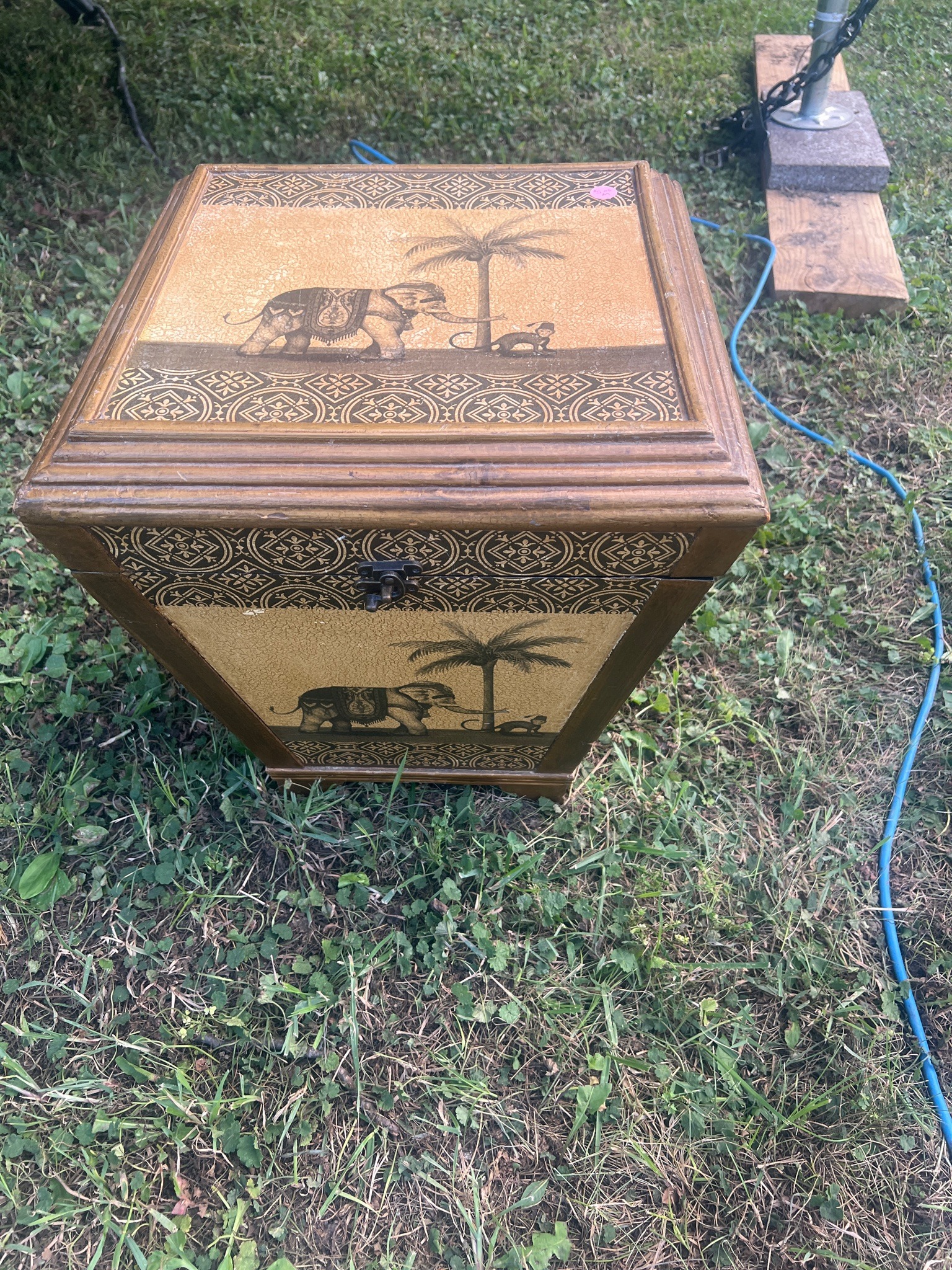
Submitted item photo
Submitted photo · July 22, 2026

User's notes

No additional notes provided.

AI analysis below

AI appraisal

AI analysis & estimate

AI-Generated · Verify before acting

Everything below is generated by AI for informational purposes only. AI can make mistakes — the AI may misidentify items or misattribute them (artist, maker, brand, designer, origin, era). This is not an official valuation and should not be used for insurance, sale, tax, estate, legal, or lending purposes — or any decision requiring a certified appraisal. It is not an authoritative claim about any person, brand, or rights holder — do not share or rely on it as a factual statement about a third party. Always consult qualified professionals before making financial decisions.

Read the full disclaimer

AI Identification

·Not independently authenticated·Verify before acting

Tapered decorative storage chest in the Anglo-Indian / Colonial Revival style

Furniture and Decorative Trunks

AI Estimated Value

·Not an official valuation·Verify before acting

$40.00 - $85.00

As of July 22, 2026

AI Item Analysis

·AI can make mistakes·Verify before acting
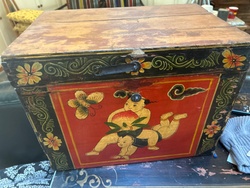
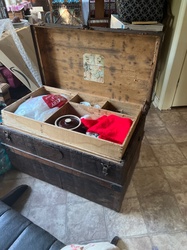
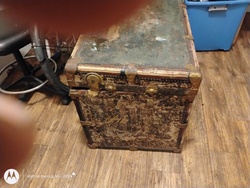
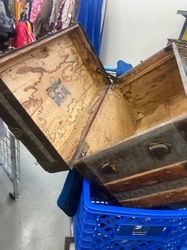
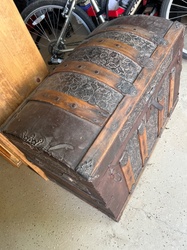
This item is a four-sided decorative storage box or small chest with a tapered profile. Stylistically, the piece is consistent with Anglo-Indian or Colonial Revival decorative arts, featuring imagery often associated with the 'British Raj' aesthetic. The exterior panels appear to be covered in a textured material, possibly paper or a thin wood veneer, printed with safari-themed lithography. The primary illustration depicts a caparisoned elephant standing before a palm tree with a smaller animal, possibly a monkey or dog, in the foreground. This central scene is bordered by intricate, repetitive geometric and floral diaper-pattern motifs. The construction appears to be wood or a wood-composite material, finished with dark-stained mitered trim pieces. A small metal latch or swing-clasp is mounted on the front. Visible condition issues include scuffing and finish loss along the mitered edges and corners, as well as minor surface abrasions on the printed panels. There are no visible maker's marks or signatures in the photograph, so any specific manufacturer attribution remains a hypothesis. The craftsmanship appears to be consistent with mass-produced decorative home accents from the late 20th century.
AI Appraisal Report

·AI can make mistakes·Verify before acting
Based on my visual review of the image, I have evaluated this tapered storage chest as a contemporary decorative home accent consistent with the Colonial Revival or 'British Raj' aesthetic. While the imagery of the caparisoned elephant and diaper-pattern borders is evocative of 19th-century Anglo-Indian design, the construction suggests a mass-produced item likely dating from the late 20th century. Based on what I can see, the materials appear to be a printed veneer or card over a wood-composite core, rather than a hand-painted antique or high-end solid wood piece. The visible finish loss on the mitered trim and surface abrasions on the panels suggest typical wear for a utilitarian decorative object. I cannot verify from a photo whether the panels are paper or wood-based, nor can I confirm the density of the internal frame. The current market for decorative trunks of this type is stable, driven largely by the 'eclectic traveler' interior design trend. The estimated value reflects its appeal as a functional décor piece. However, if this were to be identified as a hand-crafted 19th-century export chest rather than a modern reproduction, the value could increase significantly. Conversely, should the structure be found to be cardboard-based upon physical inspection, the retail value would sit at the lower end of the range. To confirm a more specific origin, an in-person examination of the joinery and a search for internal stamps or manufacturer labels would be required. In the absence of provenance or a maker’s mark, this remains a stylistic hypothesis.

Get your items appraised

Instant estimates of your treasures with AI-powered appraisals

Browse More Appraisals