AI Appraisal Estimate

AI-generated estimates · not official valuations

From the user

What was submitted

Photo and notes provided by the user — not generated by AI

Submitted item photo
Submitted photo · June 6, 2026

User's notes

30 years

AI analysis below

AI appraisal

AI analysis & estimate

AI-Generated · Verify before acting

Everything below is generated by AI for informational purposes only. AI can make mistakes — the AI may misidentify items or misattribute them (artist, maker, brand, designer, origin, era). This is not an official valuation and should not be used for insurance, sale, tax, estate, legal, or lending purposes — or any decision requiring a certified appraisal. It is not an authoritative claim about any person, brand, or rights holder — do not share or rely on it as a factual statement about a third party. Always consult qualified professionals before making financial decisions.

Note

This analysis also relies on unverified notes provided by the user, which may be incomplete or inaccurate and could affect the result.

Read the full disclaimer

AI Identification

·Not independently authenticated·Verify before acting

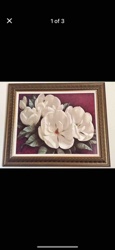
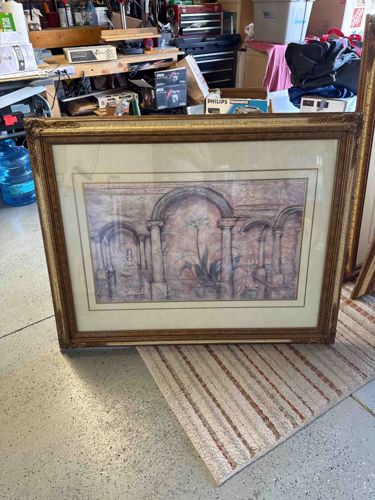
Framed Classical Architectural Landscape Print with Botanical Central Motif

Wall Art & Home Decor

AI Estimated Value

·Not an official valuation·Verify before acting

$150 - $250

As of June 6, 2026

AI Item Analysis

·AI can make mistakes·Verify before acting
This is a large-scale, decorative matted print housed in an ornate wood frame, exhibiting a transitional aesthetic popular in the 1990s. The artwork features a composition of classical Romanesque or Tuscan arched colonnades in a muted, earth-toned palette of sienna, ochre, and taupe. Centered within the foreground arch is a singular, tall botanical specimen, likely a lily or agapanthus, which softens the rigid architectural lines. The print is professionally mounted with a double-matting system, decorative inset border lines, and protected behind glass. The frame itself is of substantial construction, featuring a gilded metallic finish with heavy decorative molding at the corners and along the perimeter, imitating traditional plaster-on-wood techniques from the late 20th century. Based on the provided context of 30 years and the visible style, this is a commercial decor piece manufactured in the early-to-mid 1990s. The condition appears stable with minor surface wear to the frame corners and light dusting, though the matting shows no visible signs of significant foxing or water damage. The craftsmanship is typical of high-end home furnishings retailers of the era, focusing on monumental scale and traditional European motifs to suit spacious interior foyers or dining rooms.

AI Appraisal Report

·AI can make mistakes·Verify before acting
I have examined the digital representations of this framed architectural print, dating it to approximately 1994. The piece is a classic example of high-end 'transitional' commercial decor from the late 20th century, utilizing Romanesque motifs and a botanical center to appeal to the Neo-Traditionalism movement. The condition appears 'Good' to 'Very Good' for its age, with professional double-matting and glass protection having prevented significant environmental damage like foxing or acid burning. The substantial gilded wood frame shows expected minor abrasions. The current market for large-scale 1990s wall decor is functional rather than collectible. While well-crafted, this is a mass-produced offset lithograph/print rather than a unique work of fine art. Its value is driven primarily by its decorative utility and the high replacement cost of the framing itself rather than rarity. Similar pieces frequently sell at estate auctions and upscale consignment shops within the $150 to $250 range. Limitations: This appraisal is based solely on visual inspection of images. A physical examination is required to verify the substrate material (paper vs. canvas board) and to inspect the reverse for manufacturer labels or artist signatures hidden under the dust cover. I cannot definitively test for UV protection on the glass or the PH-neutrality of the mats without in-person testing. Provenance documentation, such as a gallery receipt or manufacturer invoice, would provide a more precise valuation of its original retail placement.

Get your items appraised

Instant estimates of your treasures with AI-powered appraisals

Browse More Appraisals