Early-to-Mid 19th Century Painted Pine Decorative Storage Box
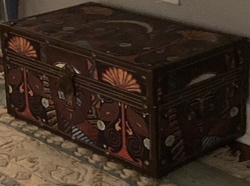
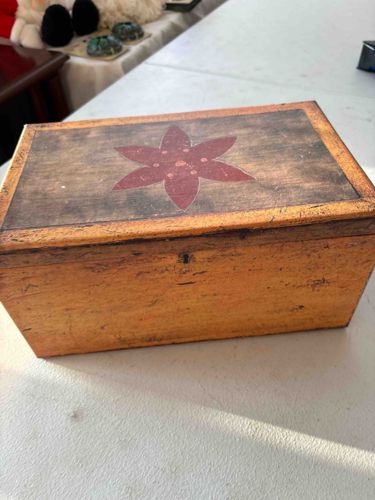
This rectangular wooden box is a significant example of American or European folk-art furniture, likely dating from the early-to-mid 19th century. Constructed primarily from pine, the box features a warm, honey-toned base paint with significant distressing and patina. The lid is the primary focus, showcasing a hand-painted six-petaled floral motif in a muted madder-red or burgundy pigment, centered within a darker, rectangular field that creates a faux-inlay or frame effect. The construction appears to be simple butt-joints or hidden dovetails, common for utilitarian storage boxes of this era. Condition issues are prominent but consistent with age, including extensive surface abrasions, localized paint loss, and several dark oxidation spots on the sides. A small notch on the front edge suggests the previous presence of a latch or lock mechanism that is currently missing. The overall craftsmanship reflects a rustic but deliberate aesthetic, typical of period pieces where local artisans decorated functional household objects to mimic more expensive veneered furniture. The interior is not visible, but the exterior suggests a storied history of use and natural aging.
AI-Generated Appraisal Disclaimer
Estimated Value
$450 - $700
Basic Information
Category
Antique Decorative Arts / Folk Art Furniture
Appraised On
December 19, 2025
Estimated Value
$450 - $700
Item Description
This rectangular wooden box is a significant example of American or European folk-art furniture, likely dating from the early-to-mid 19th century. Constructed primarily from pine, the box features a warm, honey-toned base paint with significant distressing and patina. The lid is the primary focus, showcasing a hand-painted six-petaled floral motif in a muted madder-red or burgundy pigment, centered within a darker, rectangular field that creates a faux-inlay or frame effect. The construction appears to be simple butt-joints or hidden dovetails, common for utilitarian storage boxes of this era. Condition issues are prominent but consistent with age, including extensive surface abrasions, localized paint loss, and several dark oxidation spots on the sides. A small notch on the front edge suggests the previous presence of a latch or lock mechanism that is currently missing. The overall craftsmanship reflects a rustic but deliberate aesthetic, typical of period pieces where local artisans decorated functional household objects to mimic more expensive veneered furniture. The interior is not visible, but the exterior suggests a storied history of use and natural aging.
Get Your Items Appraised
Instant estimates of your treasures with AI-powered instant appraisals