AI identification & appraisal estimate

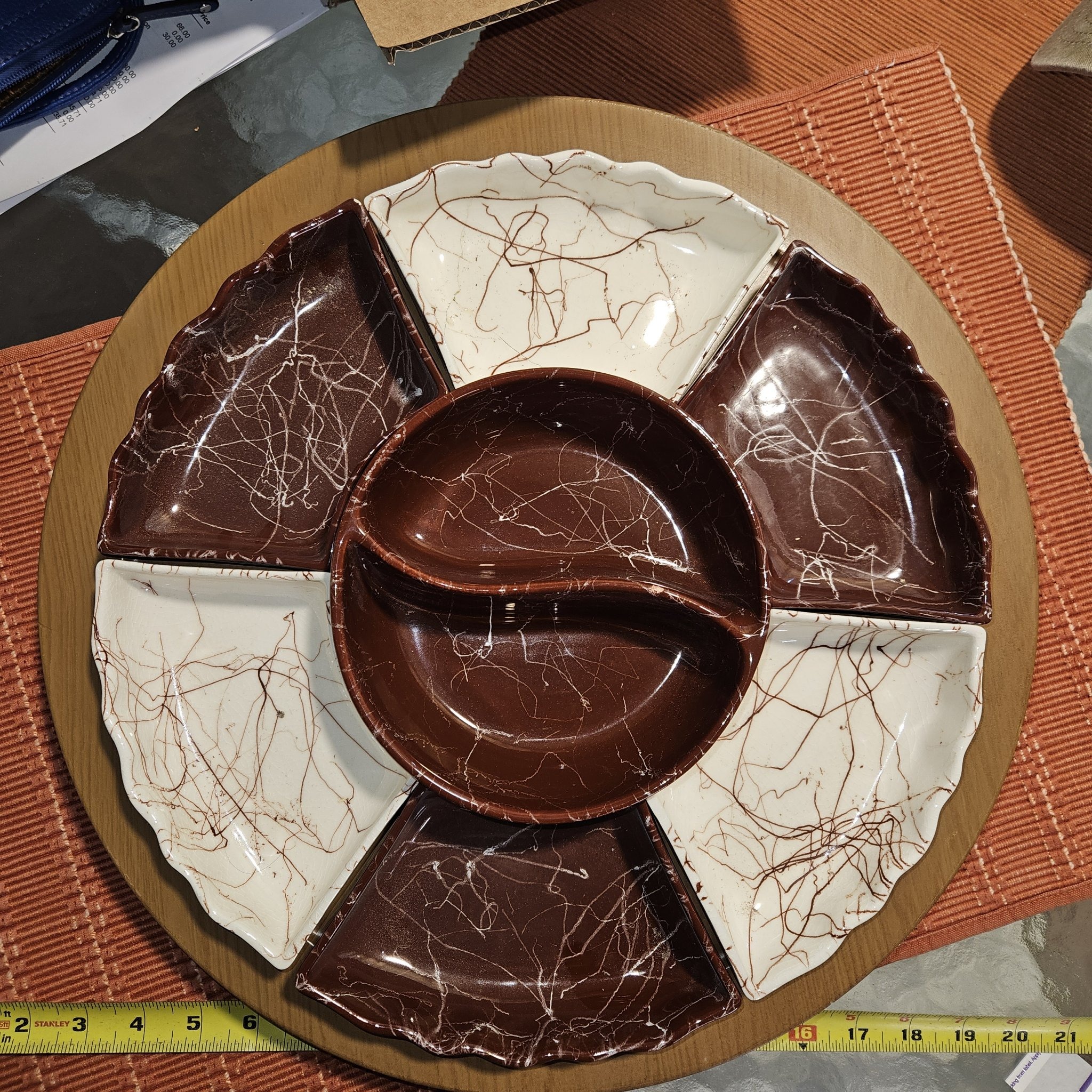
Rotating ceramic and wood server

Submitted photo of Rotating ceramic and wood server
Photo submitted by the user — not generated by AI

User's notes

Lazy Susan server. Material: wood & ceramic

These notes were written by the person who submitted this item. Appraiser.AI has not verified them, and the AI's identification and estimate may rely on them.

AI Estimated Value

Not an official valuation

$40-$80

AI estimate as of November 20, 2026 · verify with a professional before acting

AI-Generated · Verify before acting

Everything on this page is generated by AI for informational purposes only. AI can make mistakes — the AI may misidentify items or misattribute them (artist, maker, brand, designer, origin, era). This is not an official valuation and should not be used for insurance, sale, tax, estate, legal, or lending purposes — or any decision requiring a certified appraisal. It is not an authoritative claim about any person, brand, or rights holder — do not share or rely on it as a factual statement about a third party. Always consult qualified professionals before making financial decisions.

This analysis also relies on unverified notes provided by the user, which may be incomplete or inaccurate and could affect the result.

Read the full disclaimer

AI Item Analysis

This item is a circular serving set featuring a rotating wooden base, commonly referred to as a Lazy Susan, paired with multiple removable ceramic dishes. The physical construction consists of a large, flat round wooden tray that supports a modular arrangement of glazed ceramic serving platters. The set includes four larger wedge-shaped or sector-shaped outer dishes with scalloped or fluted rims, alternating in color between dark brown and off-white, alongside a central circular bowl divided into two sections by an S-shaped divider. Each ceramic piece features a glossy glaze with a distinctive marbled or crackle-like abstract line pattern overlaid across the surface. The dark brown pieces feature light veining, while the off-white pieces feature darker brown or black veining, creating a contrasting decorative effect. There are no visible maker's marks, brand stamps, or signatures directly discernible in the image, so the identification relies entirely on visual observation of the item's form and materials. The user-supplied context identifies the item as a lazy Susan server made of wood and ceramic, an unverified claim that aligns well with the visual characteristics of the piece. The overall style suggests a mid-to-late 20th-century aesthetic, consistent with casual entertaining tableware popular during the 1970s through the 1990s. Visible condition appears clean and well-maintained with normal minor signs of handling but no catastrophic damage or repairs apparent from the overhead perspective. Craftsmanship indicators include uniform glaze application and precisely fitted modular ceramic sections designed to interlock closely on the wooden rotating platform.
AI Appraisal Report

Based on the visual evidence provided, I can evaluate this rotating ceramic and wood server, which the owner identifies as a Lazy Susan server made of wood and ceramic. Based on what I can see, the set features a circular wooden base supporting modular glazed ceramic dishes with a marbled or crackle-like abstract pattern in brown and off-white tones. I cannot verify from a photo whether the materials are of high-end manufacture or vintage vintage-store origin, as no maker's marks are discernible in the image. I would need physical inspection to confirm the quality of the wood, the ceramic density, and the presence of any subtle manufacturer stamps on the underside. Assuming the item aligns with typical mid-to-late 20th-century casual entertaining tableware, comparable sets generally trade within the $40 to $80 range depending on current demand for retro serveware. If physical inspection reveals the piece to be a modern reproduction or lacking the expected vintage quality, the value would likely drop toward the $20 to $35 range. Conversely, if a distinct mid-century designer or maker's mark were discovered upon handling, the potential value could rise modestly. To fully understand its market position, an in-person examination by a decorative arts specialist would be beneficial.

Keep exploring

More serveware appraisals

Get your items appraised

Instant AI-powered appraisal estimates from a photo

Browse More Appraisals