AI Appraisal Estimate

AI-generated estimates · not official valuations

From the user

What was submitted

Photo and notes provided by the user — not generated by AI

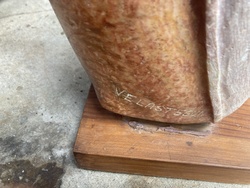
Submitted item photo
Submitted photo · June 21, 2026

User's notes

Unknown artist, untitled sculpture

AI analysis below

AI appraisal

AI analysis & estimate

AI-Generated · Verify before acting

Everything below is generated by AI for informational purposes only. AI can make mistakes — the AI may misidentify items or misattribute them (artist, maker, brand, designer, origin, era). This is not an official valuation and should not be used for insurance, sale, tax, estate, legal, or lending purposes — or any decision requiring a certified appraisal. It is not an authoritative claim about any person, brand, or rights holder — do not share or rely on it as a factual statement about a third party. Always consult qualified professionals before making financial decisions.

Note

This analysis also relies on unverified notes provided by the user, which may be incomplete or inaccurate and could affect the result.

Read the full disclaimer

AI Identification

·Not independently authenticated·Verify before acting

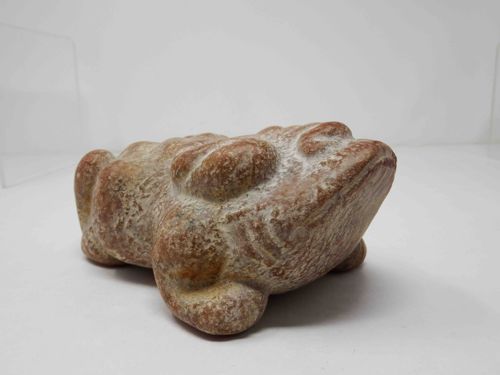
Carved Stone Zoomorphic Frog Sculpture

Fine Art - Sculpture

AI Estimated Value

·Not an official valuation·Verify before acting

$100 - $300

As of June 21, 2026

AI Item Analysis

·AI can make mistakes·Verify before acting
This is a hand-carved zoomorphic sculpture depicting a squatting frog or toad, rendered in a stylized, folk-art manner. The piece is crafted from a sedimentary or metamorphic stone, possibly soapstone or a variety of limestone, displaying a warm terracotta-red to ochre color palette with significant white veining and surface minerals. The form is characterized by rounded, bulbous volumes representing the eyes, limbs, and back, with minimalist incised lines defining the mouth and toes. The surface texture is matte and somewhat granular, showing evidence of hand-carving through slight irregularities in the curves. In terms of condition, there is prominent surface pitting and a chalky white patina consistent with natural weathering or long-term handling, which has softened the original tool marks. There are no visible maker's marks, signatures, or dates, suggesting an anonymous artisan. The style is reminiscent of Pre-Columbian or indigenous North American stone carving traditions, though without specific provenance, it is best described as an ethnographic or modern folk art piece of the 20th century. The craftsmanship shows a confident use of the natural stone's density to create a heavy, tactile object with a pleasingly organic aesthetic.
AI Appraisal Report

·AI can make mistakes·Verify before acting
Based on my examination of the digital images provided, this stone sculpture represents a stylized zoomorphic frog or toad, likely dating to the mid-to-late 20th century. The piece exhibits the characteristics of ethnographic folk art rather than an authentic antiquity. The material appears to be a soft sedimentary stone, possibly soapstone or a dense sandstone, characterized by significant white mineral veining and pitting. While the form loosely mimics Pre-Columbian aesthetics, the execution lacks the specific iconography and weathering patterns typically associated with ancient Mesoamerican artifacts. The surface displays a chalky white patina and softened edges, which suggests outdoor exposure or decorative aging rather than archaeological provenance. From a market perspective, this is a decorative object. Without a signature or provenance linking it to a known indigenous artisan or a specific historic collection, it falls into the broad category of 'collectible stone carving.' Similar anonymous zoomorphic carvings frequently appear in estate sales and mid-range auctions, often originating from Mexican or Southwestern tourist trade traditions. Value is driven primarily by its aesthetic appeal—specifically the pleasing, weighty organic form and the warm coloration of the stone—rather than historical significance. Demand for anonymous folk carvings is steady but generally capped at decorative price points. It is important to note the limitations of this appraisal. Validating antiquity versus modern reproduction is impossible without physical inspection to assess tool marks under magnification and mineral accretions. Definitive authentication would require localized analysis of the patina and provenance documentation, which is currently absent. Thus, I have valued this strictly as a vintage decorative folk art object.

Get your items appraised

Instant estimates of your treasures with AI-powered appraisals

Browse More Appraisals