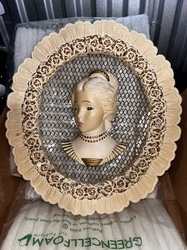
Giltwood Style Molded Picture Frame
This is a rectangular picture frame, likely constructed from a wood or composite core with a gilded finish. The frame features a multi-tiered molding design, transitioning from a smooth outer edge to a broad, stippled or textured central cove that creates a sparkling effect under direct light. This textured section is bordered by narrow, raised fillets and a deeper, smooth inner liner that leads to the rabbet. The finish appears to be a gold-tone metallic paint or leafing, with subtle artificial antiquing in the recesses to simulate depth and aged patina. The construction shows tight mitered corners, though subtle hairline gaps suggest natural wooden movement or aging. Based on the uniform texture and profile, the item likely dates to the late 20th century, following a traditional Baroque or Neoclassical revival style. The condition is generally fair to good, with minor cosmetic wear including small scratches and dust accumulation in the crevices, but no significant structural damage or large chips to the molding are visible. The craftsmanship suggests a high-quality decorative commercial piece rather than a bespoke hand-carved antique, indicated by the precise repetition of the stippled pattern.
AI-Generated Appraisal Disclaimer
Estimated Value
$150 - $250
Basic Information
Category
Home Decor / Art Accessories
Appraised On
February 16, 2026
Estimated Value
$150 - $250
Item Description
This is a rectangular picture frame, likely constructed from a wood or composite core with a gilded finish. The frame features a multi-tiered molding design, transitioning from a smooth outer edge to a broad, stippled or textured central cove that creates a sparkling effect under direct light. This textured section is bordered by narrow, raised fillets and a deeper, smooth inner liner that leads to the rabbet. The finish appears to be a gold-tone metallic paint or leafing, with subtle artificial antiquing in the recesses to simulate depth and aged patina. The construction shows tight mitered corners, though subtle hairline gaps suggest natural wooden movement or aging. Based on the uniform texture and profile, the item likely dates to the late 20th century, following a traditional Baroque or Neoclassical revival style. The condition is generally fair to good, with minor cosmetic wear including small scratches and dust accumulation in the crevices, but no significant structural damage or large chips to the molding are visible. The craftsmanship suggests a high-quality decorative commercial piece rather than a bespoke hand-carved antique, indicated by the precise repetition of the stippled pattern.
Related Tags
Get Your Items Appraised
Instant estimates of your treasures with AI-powered instant appraisals