AI identification & appraisal estimate

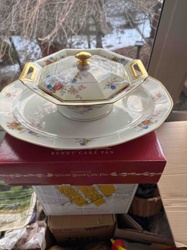
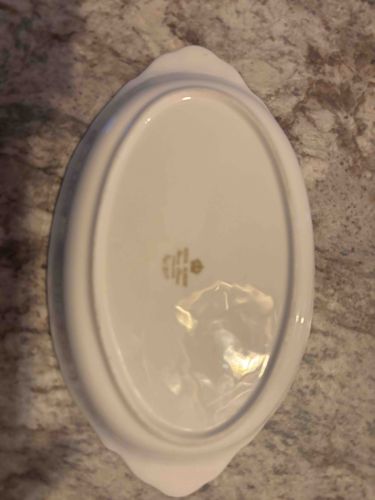
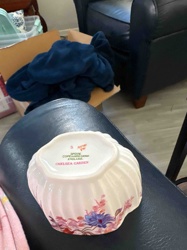
Royal Albert Bone China Oval Serving Dish

Submitted photo of Royal Albert Bone China Oval Serving Dish
Photo submitted by the user — not generated by AI

User's notes

Antique silk painting

These notes were written by the person who submitted this item. Appraiser.AI has not verified them, and the AI's identification and estimate may rely on them.

AI Estimated Value

Not an official valuation

$45.00 - $65.00

AI estimate as of March 21, 2026 · verify with a professional before acting

AI-Generated · Verify before acting

Everything on this page is generated by AI for informational purposes only. AI can make mistakes — the AI may misidentify items or misattribute them (artist, maker, brand, designer, origin, era). This is not an official valuation and should not be used for insurance, sale, tax, estate, legal, or lending purposes — or any decision requiring a certified appraisal. It is not an authoritative claim about any person, brand, or rights holder — do not share or rely on it as a factual statement about a third party. Always consult qualified professionals before making financial decisions.

This analysis also relies on unverified notes provided by the user, which may be incomplete or inaccurate and could affect the result.

Read the full disclaimer

AI Item Analysis

This item is an oval-shaped ceramic serving dish, likely a pickle dish or bread tray, crafted from fine white bone china. The piece features a shallow well with a gentle scalloped edge and integrated tab handles at each narrow end. While the front surface is not visible, the reverse displays a high-gloss glaze over a bright white body, characteristic of English fine china. The underside features a centralized gold or dark backstamp. Although the text is slightly blurred, it bears the hallmarks of Royal Albert fine bone china, typically indicating production in England. The construction shows high-quality craftsmanship with smooth transitions between the body and the integrated handles. Regarding condition, the glaze appears intact with no visible crazing, chips, or major cracks from the underside view. There is minimal shelf wear on the foot rim, suggesting the piece has been well-maintained. Based on the style and backstamp placement, this piece likely dates to the mid-to-late 20th century. Note: The user context provided mentioned an 'antique silk painting,' however, the image clearly depicts a ceramic dish, and this description pertains to the visual evidence provided in the photograph.
AI Appraisal Report

I have examined the digital images of the Royal Albert bone china serving dish. The piece is a classic oval 'pickle' or 'relish' dish, likely from the mid-to-late 20th century. Based on the visual evidence, the item exhibits the characteristic high-gloss glaze and translucent body of English fine bone china. The scalloped edges and integrated handles are consistent with Royal Albert’s production standards. The gold backstamp, while slightly blurred, serves as a primary indicator of authenticity, though I must note a significant discrepancy: the owner’s description refers to an 'antique silk painting,' which is clearly contradicted by the physical ceramic object provided for review. Regarding condition, the glaze appears vibrant with no visible crazing or structural chips, and the minimal shelf wear on the foot rim suggests 'Cabinet Quality' preservation. The market for Royal Albert remains steady but saturated, particularly for common white-bodied or popular floral patterns (like Old Country Roses). This specific shape is functional but common, which limits its rarity. Value is driven primarily by the pattern; if this is a rare discontinued motif, the value may lean toward the higher end of the range. Limitations: A definitive valuation via photography is limited by the inability to check for 'pings' (resonance) to identify internal fractures or to inspect the front pattern for scratch-wear. For full authentication and accurate valuation, an in-person inspection of the pattern name and a thorough tactile check for professional restorations are required. Provenance documentation would be necessary to substantiate any 'antique' claims, though functionally this remains a vintage collectible.

Keep exploring

More antique and vintage fine china appraisals

Get your items appraised

Instant AI-powered appraisal estimates from a photo

Browse More Appraisals