AI Appraisal Estimate

AI-generated estimates · not official valuations

From the user

What was submitted

Photo and notes provided by the user — not generated by AI

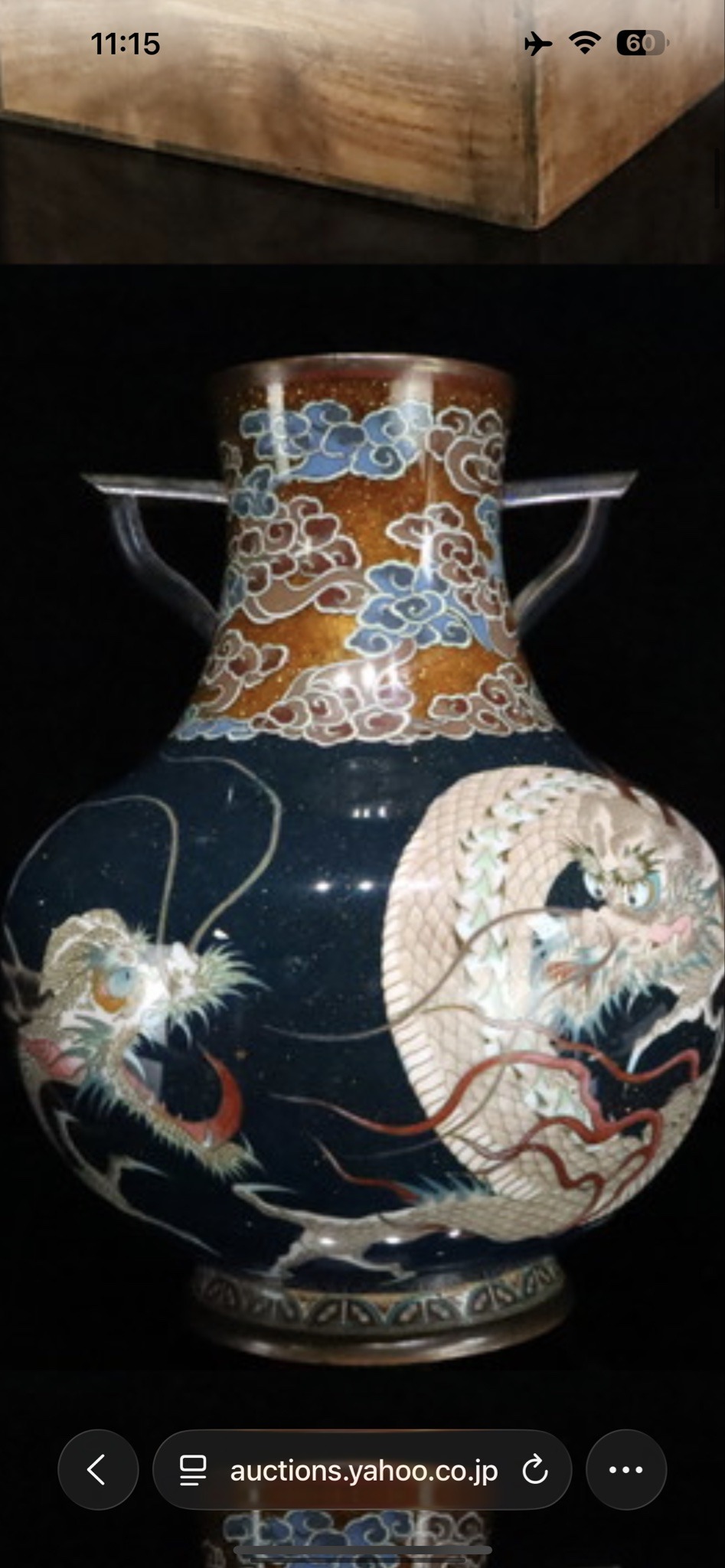
Submitted item photo
Submitted photo · June 23, 2026

User's notes

No additional notes provided.

AI analysis below

AI appraisal

AI analysis & estimate

AI-Generated · Verify before acting

Everything below is generated by AI for informational purposes only. AI can make mistakes — the AI may misidentify items or misattribute them (artist, maker, brand, designer, origin, era). This is not an official valuation and should not be used for insurance, sale, tax, estate, legal, or lending purposes — or any decision requiring a certified appraisal. It is not an authoritative claim about any person, brand, or rights holder — do not share or rely on it as a factual statement about a third party. Always consult qualified professionals before making financial decisions.

Read the full disclaimer

AI Identification

·Not independently authenticated·Verify before acting

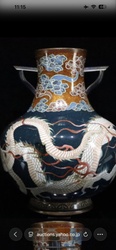
Baluster-form cloisonné enamel vase with dragon motif

Asian Decorative Arts

AI Estimated Value

·Not an official valuation·Verify before acting

$4,000 - $7,000

As of June 23, 2026

AI Item Analysis

·AI can make mistakes·Verify before acting
This decorative vessel is a baluster-form vase featuring a twin-handled design, stylistically consistent with Japanese cloisonné enamel work from the Meiji era (late 19th to early 20th century). The piece exhibits a bulbous body tapering into a wide neck, adorned with two silver-toned, angled handles. The central decorative scheme depicts a dynamic dragon with a long, coiled body and expressive white-scaled head against a midnight blue ground. The upper portion and neck feature a dense pattern of stylized clouds in various earth tones and blues over a gold-flecked aventurine (goldstone) background. The base is finished with a geometric diaper-pattern border. The craftsmanship appears significant, utilizing thin wirework (cloisons) to separate the intricate enamel colors. While the overall aesthetic is highly suggestive of the Namikawa Yasuyuki or Ando Cloisonné Company styles, there are no maker's marks visible in the provided image to verify such an attribution. Condition-wise, the surface appears to have a high-gloss finish typical of polished enamel, though fine surface scratches or internal pits might be present and remain unseen without physical inspection. The silver-colored rim and handles appear slightly tarnished, which is consistent with age. This identification remains a hypothesis based on visual stylistic traits alone.
AI Appraisal Report

·AI can make mistakes·Verify before acting
Based on my visual analysis of the provided image, I am evaluating this baluster-form cloisonné vase as a work potentially originating from the Japanese Meiji era. The piece displays a sophisticated dragon motif and aventurine enamel ground that reflect the high-caliber craftsmanship associated with renowned workshops such as Namikawa Yasuyuki or the Ando Cloisonné Company. However, I cannot verify the maker without physical inspection, as no marks are visible in the photo. My valuation is a hypothesis based on the assumption that this is a period-accurate Japanese piece. The value of $4,000 to $7,000 reflects the current market demand for fine late 19th-century Japanese enamels with complex wirework and clear, deep color fields. I can see what appears to be a high-gloss finish, but I cannot determine if there are internal hairlines, subsurface bruises, or repairs to the enamel, all of which would significantly decrease the value. Furthermore, the silver-toned mounts appear tarnished, which is typical for the age but requires testing to determine if they are solid silver or plated. To move beyond this working assumption, a physical examination by a specialist is required to look for microscopic pits, signature seals on the base plate, and to verify the weight and construction. If this item were later discovered to be a mid-20th-century reproduction or a less-refined example 'in the style of' the Meiji masters, the value would likely drop to the $300 - $600 range. Authentication and provenance documentation are essential to securing the high-end estimate in a competitive market environment.

Related Tags

Explore similar items and categories

Get your items appraised

Instant estimates of your treasures with AI-powered appraisals

Browse More Appraisals