AI estimate as of July 6, 2025 · verify with a professional before acting
AI-Generated · Verify before acting
Everything on this page is generated by AI for informational purposes only. AI can make mistakes — the AI may misidentify items or misattribute them (artist, maker, brand, designer, origin, era). This is not an official valuation and should not be used for insurance, sale, tax, estate, legal, or lending purposes — or any decision requiring a certified appraisal. It is not an authoritative claim about any person, brand, or rights holder — do not share or rely on it as a factual statement about a third party. Always consult qualified professionals before making financial decisions.
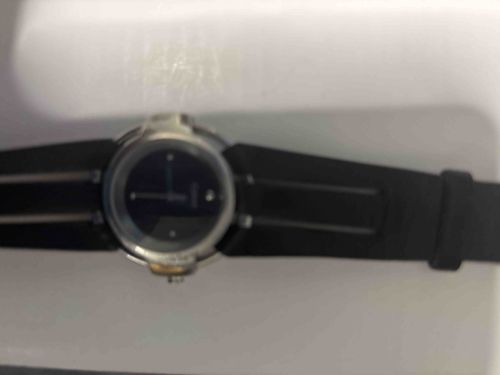
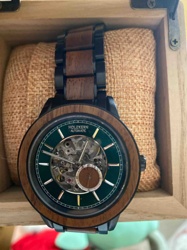
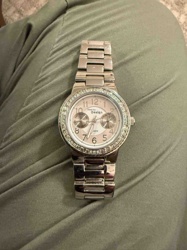
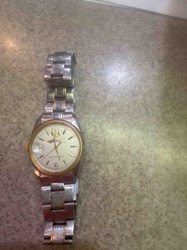
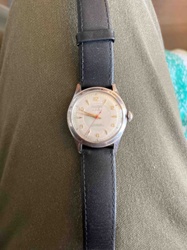
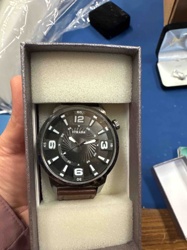
The item appears to be a modern wristwatch featuring a circular, metallic watch case, likely stainless steel, given its silver-tone finish. The watch face is dark, possibly black or a dark blue, with minimal markings – only two small, light-colored dots are faintly discernible at the 12 and 6 o'clock positions, and a very thin, light-colored line for one of the hands. The overall design emphasizes a minimalist aesthetic. The watch is attached to a wide, flat band that appears to be made of a dark material, most likely black rubber, silicone, or a similar synthetic material. The band has two prominent, horizontal recessed lines running along its length on both sides of the watch case, adding a subtle design element. The connection between the watch case and the band seems integrated, flowing seamlessly from the lugs. The image quality is low, making it difficult to assess detailed craftsmanship, maker's marks, or specific model identifiers. Due to the blurriness, it's impossible to see any brand names, serial numbers, or minute details on the dial or case back. There are no clear indications of significant wear, damage, or repairs, but the resolution prevents a thorough condition assessment. The style suggests it could be from the late 20th to early 21st century, focusing on contemporary, clean lines.
AI Appraisal Report
Based on my visual examination of the provided image, this Modern Minimalist Analog Wristwatch presents as a contemporary piece with a focus on sleek design. The circular metallic case, likely stainless steel, paired with a dark, minimally marked dial, embodies the minimalist aesthetic. The integrated wide, dark band, possibly rubber or silicone, with its subtle recessed lines, complements this design direction.
From the image quality, I can assess the condition as generally good, as there are no obvious signs of significant damage, heavy wear, or visible repairs. However, due to the low resolution and blurriness, it is impossible to determine minute scratches, dings, or material degradation that would impact value. Authenticity cannot be definitively verified from images alone. There are no visible brand markings, serial numbers, or unique identifiers. Without these, pinpointing the manufacturer or specific model is impossible, making a precise valuation challenging.
In terms of market conditions, minimalist watches are perennially popular, catering to a broad audience seeking understated elegance. However, this segment is also highly saturated, ranging from inexpensive fashion brands to high-end designer pieces. Without a brand identity, this watch falls into a generic category where demand is moderate for unbranded items. Rarity is unlikely given the generic minimalist style, and many similar designs exist across various price points.
Factors significantly impacting value here are primarily the unverified brand and lack of specific model information. If this were a piece by a recognized minimalist design house (e.g., Uniform Wares, Skagen, or even Muji), its value could multiply. As it stands, it’s closer to a generic modern timepiece.
For full authentication and a more precise valuation, an in-person examination is critical. This would allow for close inspection of the dial, case back, and movement for maker's marks, serial numbers, and material quality. Microscopic analysis could reveal finer details of craftsmanship. Provenance documentation, such as original purchase receipts or certificates of authenticity, would also be essential. Without these, the appraisal remains speculative.