AI identification & appraisal estimate

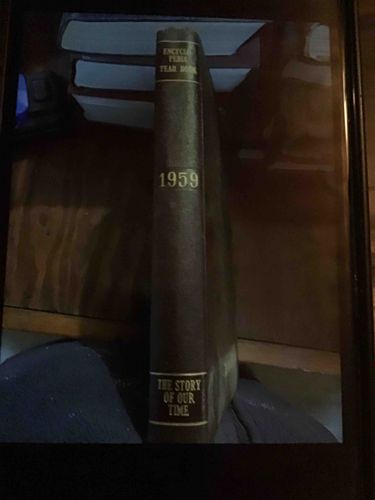
Encyclopaedia Year Book 1959: The Story of Our Time

Submitted photo of Encyclopaedia Year Book 1959: The Story of Our Time
Photo submitted by the user — not generated by AI

User's notes

In good condition

These notes were written by the person who submitted this item. Appraiser.AI has not verified them, and the AI's identification and estimate may rely on them.

AI Estimated Value

Not an official valuation

\u00a310-20

AI estimate as of June 16, 2025 · verify with a professional before acting

AI-Generated · Verify before acting

Everything on this page is generated by AI for informational purposes only. AI can make mistakes — the AI may misidentify items or misattribute them (artist, maker, brand, designer, origin, era). This is not an official valuation and should not be used for insurance, sale, tax, estate, legal, or lending purposes — or any decision requiring a certified appraisal. It is not an authoritative claim about any person, brand, or rights holder — do not share or rely on it as a factual statement about a third party. Always consult qualified professionals before making financial decisions.

This analysis also relies on unverified notes provided by the user, which may be incomplete or inaccurate and could affect the result.

Read the full disclaimer

AI Item Analysis

The item is a hardcover book, likely bound in a durable material such as cloth or faux leather, exhibiting a dark brown hue. The spine features prominent gilt lettering, indicating the title and publication year. The top of the spine reads "ENCYCLOPAEDIA YEAR BOOK", followed by the large numeral "1959" centered on the spine. At the bottom of the spine, in a rectangular box with a gilt border, the title "THE STORY OF OUR TIME" is printed in gilt lettering. The book appears to be of substantial thickness, suggesting it contains a significant amount of information. The cover is not visible in this image, but the spine appears to be in good condition with minimal visible wear or damage, consistent with the provided context of 'in good condition'. There are no discernible manufacturer's marks or signatures visible in the provided image. Based on the title and year, this is likely a historical chronicle or reference volume covering the events of 1959. The binding appears solid, with no apparent loose pages or broken sections of the spine. The gilt lettering, while likely tarnished with age, seems largely intact and readable. The style is typical of encyclopedic yearbooks from the mid-20th century.

AI Appraisal Report

Based on visual examination of the image, the Encyclopaedia Year Book 1959 appears to be a standard hardcover edition from the era. The spine, the only visible part, shows a dark binding with clear, albeit possibly tarnished, gilt lettering. The provided context states the book is in 'good condition'. Assuming this condition applies throughout, including the covers and interior pages, the book is relatively well-preserved for its age. Authenticity as a genuine 1959 printing is highly likely based on the title and year displayed on the spine. However, without physical inspection, I cannot verify the integrity of the binding, inspect for internal damage such as foxing, tears, or markings, or confirm the presence of any potential unique editions or printings. Encyclopaedia yearbooks from this period were mass-produced reference volumes. While they hold historical interest, they are not typically considered rare or highly sought after by collectors unless they possess a noteworthy feature or provenance. Current market conditions show similar yearbooks from the mid-20th century generally sell in the low to modest range. Comparable sales for similar encyclopaedia yearbooks in good condition typically fall within the \u00a35 to \u00a320 range, depending on the specific year and publisher. Demand is generally low, limited primarily to institutions or individuals seeking specific historical information related to that year. Factors impacting value would be the overall condition, any unique features not visible in the image (such as illustrations or maps), and confirmed lack of internal damage. For full authentication and a more precise valuation, a physical examination is necessary to assess the complete condition of the binding, covers, and interior pages, as well as to verify printing details and potentially any unique characteristics.

Keep exploring

More book appraisals

Get your items appraised

Instant AI-powered appraisal estimates from a photo

Browse More Appraisals