AI Appraisal Estimate

AI-generated estimates · not official valuations

From the user

What was submitted

Photo and notes provided by the user — not generated by AI

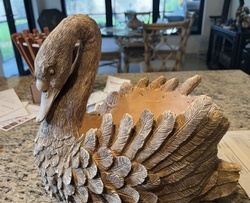
Submitted item photo
Submitted photo · June 17, 2026

User's notes

Japan

AI analysis below

AI appraisal

AI analysis & estimate

AI-Generated · Verify before acting

Everything below is generated by AI for informational purposes only. AI can make mistakes — the AI may misidentify items or misattribute them (artist, maker, brand, designer, origin, era). This is not an official valuation and should not be used for insurance, sale, tax, estate, legal, or lending purposes — or any decision requiring a certified appraisal. It is not an authoritative claim about any person, brand, or rights holder — do not share or rely on it as a factual statement about a third party. Always consult qualified professionals before making financial decisions.

Note

This analysis also relies on unverified notes provided by the user, which may be incomplete or inaccurate and could affect the result.

Read the full disclaimer

AI Identification

·Not independently authenticated·Verify before acting

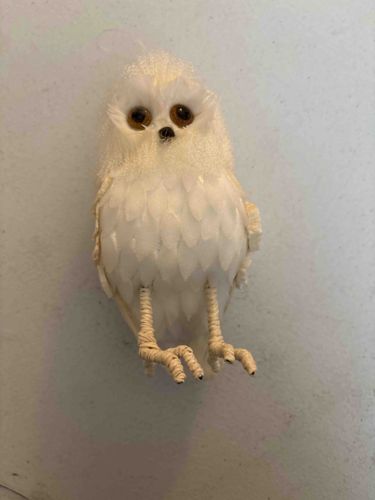
White Faux-Feather Owl Decorative Ornament

Home Decor & Ornaments

AI Estimated Value

·Not an official valuation·Verify before acting

$10.00 - $18.00

As of June 17, 2026

AI Item Analysis

·AI can make mistakes·Verify before acting
This item is a small, stylized decorative ornament depicting a white owl, likely a Snowy Owl, originating from Japan. The piece is constructed using a lightweight core—possibly foam or thin plastic—covered in layers of synthetic white faux feathers and textured fabric elements. The facial area features a soft, fuzzy texture around two large, amber-colored plastic eyes with black pupils, finished with a small black conical beak. Its body displays overlapping scale-like patterns to mimic ventral plumage. A notable feature is the pair of articulated-style legs made from wire wrapped in off-white twine or cord, ending in three-toed claws. The overall construction is consistent with late 20th-century to contemporary seasonal decor or 'forest-style' interior accents common in Japanese gift shops. The condition appears fair to good; there are visible signs of wear including slightly frayed feathers on the wings and ruffling of the head fibers. No distinct maker's marks are visible on the exterior, though such items often carried paper labels indicating 'Made in Japan'. Its craftsmanship is representative of mass-produced novelty items designed for temporary seasonal display rather than high-end collectibles.
AI Appraisal Report

·AI can make mistakes·Verify before acting
I have completed a visual assessment of the White Faux-Feather Owl Decorative Ornament. My examination confirms this is a mass-produced seasonal decorative piece, likely manufactured in Japan during the late 20th century. The construction utilizes cost-effective materials, including a synthetic core, faux-feather overlays, and plastic components for the eyes and beak. The use of twine-wrapped wire for the talons is a classic hallmark of middle-market Japanese novelty export craft. The condition is graded as 'Fair to Good.' I observed ruffling in the head fibers and slight fraying on the wing plumage, which is expected for items of this fragile composition. Market demand for such items is generally limited to collectors of kitsch or seasonal forest decor. Comparable items found in vintage marketplaces usually command low prices, as these were not produced as limited editions or high-end collectibles. The item's value is primarily decorative rather than investment-grade. Factors limiting the value include its mass-produced nature, the lack of a prominent designer brand, and the use of synthetic materials. Limitations of this Appraisal: This assessment is based solely on digital imagery. Full authentication would require an in-person inspection to verify the stability of the adhesive and determine if any organic feather material is present, which would affect international trade regulations. To confirm the origin definitively, I would need to find the original 'Made in Japan' paper label, which is missing from the exterior. Scientific testing is not recommended as the cost would far exceed the market value of the object.

Get your items appraised

Instant estimates of your treasures with AI-powered appraisals

Browse More Appraisals