AI estimate as of October 1, 2025 · verify with a professional before acting
AI-Generated · Verify before acting
Everything on this page is generated by AI for informational purposes only. AI can make mistakes — the AI may misidentify items or misattribute them (artist, maker, brand, designer, origin, era). This is not an official valuation and should not be used for insurance, sale, tax, estate, legal, or lending purposes — or any decision requiring a certified appraisal. It is not an authoritative claim about any person, brand, or rights holder — do not share or rely on it as a factual statement about a third party. Always consult qualified professionals before making financial decisions.
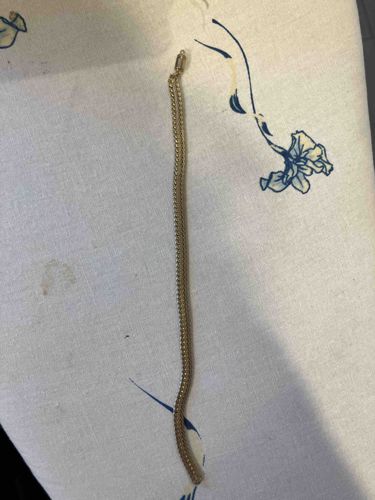
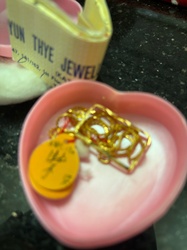
The item is a slender, gold-toned chain, which could function as a necklace or a long bracelet, depending on its overall length (not fully discernible from the image). It features a Byzantine or Foxtail chain link pattern, characterized by its intricate, snake-like appearance, where small round or oval links are woven together to create a dense, smooth, and flexible texture. The material appears to be a polished metal with a bright, reflective yellow-gold color, suggesting either gold plating, gold-filled material, or a base metal alloy. One end of the chain clearly shows a lobster clasp, a common and secure type of fastener for jewelry, indicating its function as an adornment. The chain's construction appears consistent and well-formed, without obvious breaks or deformations in the visible sections. There are no clear identifying marks or signatures visible in the provided image to determine the manufacturer or precise metal composition. The overall condition appears good, with no overt signs of damage, tarnish, or excessive wear on the visible links or clasp. The style of the chain is classic and durable, making it suitable for various fashion periods, but the Byzantine pattern gained significant popularity in the late 20th and early 21st centuries. The craftsmanship seems of reasonable quality for mass-produced jewelry. The item is photographed against a white fabric background with a blue floral pattern, and some light brown staining is visible on the fabric, which is external to the item itself.
AI Appraisal Report
Based on my visual examination of the provided image, I assess this Gold Tone Byzantine Chain. The chain displays a well-executed Byzantine or Foxtail weave, which creates a desirable flexible, snake-like texture. Its bright yellowish-gold color suggests it is likely gold-plated or gold-filled, rather than solid gold, a common characteristic for items of this aesthetic appeal without visible purity marks. The lobster clasp is a functional and secure finding, and its appearance aligns with standard mass-produced jewelry components. The overall condition appears good, with no visible signs of excessive wear, tarnish, or damage such as kinks or broken links. The craftsmanship seems consistent with commercially produced chains.
Market conditions for gold-toned, non-precious metal Byzantine chains are generally stable, with a broad supply. Comparables in the costume or fashion jewelry market typically range depending on the length, brand, and quality of plating. Demand remains consistent for classic chain styles, but this specific type is not rare. Factors significantly impacting value include the actual material composition (which I cannot definitively determine from an image), the quality and thickness of any gold plating, and the length. Without visible hallmarks or identifying maker's marks, it is challenging to attribute it to a specific brand or manufacturer, which often influences value in the secondary market.
Limitations in authenticity verification are significant. Without an in-person examination, I cannot confirm the metal composition (e.g., solid gold, gold-filled, gold-plated over base metal, or merely a gold-toned alloy). A physical inspection would allow for examination of hallmarks, weight assessment, and potentially specific gravity tests or X-ray fluorescence (XRF) analysis to determine metal purity. Documentation of provenance would also be beneficial if claims of precious metal content were made. Based solely on the visual evidence, I am appraising this as a well-made, gold-toned fashion accessory.