AI Appraisal Estimate

AI-generated estimates · not official valuations

From the user

What was submitted

Photo and notes provided by the user — not generated by AI

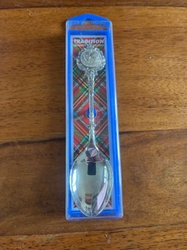
Submitted item photo
Submitted photo · May 27, 2026

User's notes

Bronze spoon

AI analysis below

AI appraisal

AI analysis & estimate

AI-Generated · Verify before acting

Everything below is generated by AI for informational purposes only. AI can make mistakes — the AI may misidentify items or misattribute them (artist, maker, brand, designer, origin, era). This is not an official valuation and should not be used for insurance, sale, tax, estate, legal, or lending purposes — or any decision requiring a certified appraisal. It is not an authoritative claim about any person, brand, or rights holder — do not share or rely on it as a factual statement about a third party. Always consult qualified professionals before making financial decisions.

Note

This analysis also relies on unverified notes provided by the user, which may be incomplete or inaccurate and could affect the result.

Read the full disclaimer

AI Identification

·Not independently authenticated·Verify before acting

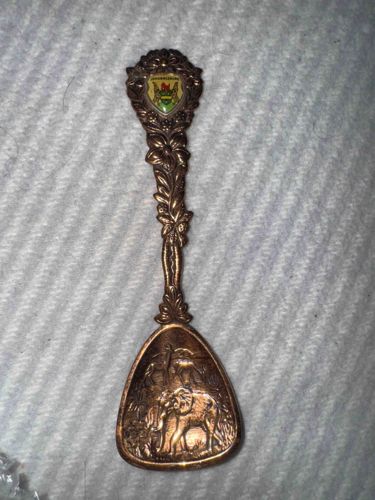
Swaziland Souvenir Bronze Spoon with Elephant Relief

Souvenir Spoon

AI Estimated Value

·Not an official valuation·Verify before acting

$15-30

As of May 27, 2026

AI Item Analysis

·AI can make mistakes·Verify before acting
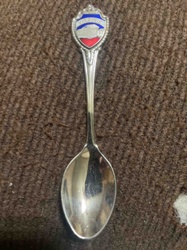
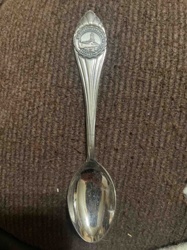
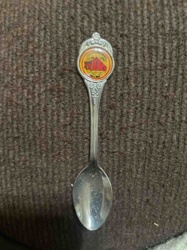
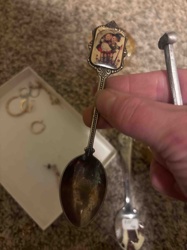
This is a bronze souvenir spoon, likely from the early to mid-20th century, given its style and the apparent patina. The spoon features an ornate design with three distinct sections. The handle terminates in a decorative finial, which appears to be a small shield or crest with an enamel or painted design. Although the details are somewhat obscured by the image quality, the crest displays a colorful emblem, possibly a coat of arms or a national/regional symbol, with the word "SWAZILAND" clearly visible above it. This immediately identifies a geographical origin for the souvenir. The handle itself is slender and adorned with intricate floral or foliate motifs, suggesting a cast or molded construction method, indicative of decent craftsmanship. The bowl of the spoon is not a traditional flat or oval shape but is triangular or spade-shaped with raised edges, giving it a somewhat ornamental rather than functional appearance. Within the bowl, there is a detailed bas-relief scene depicting several elephants in a natural setting, possibly a jungle or savanna, with visible trees and foliage. The elephants appear to be a mother and calf, or a small herd, rendered with a good level of detail for a piece of this size. The entire spoon exhibits an aged bronze color with natural patina, suggesting it has not been heavily polished, preserving its historical character. There are no obvious signs of significant damage like bends, breaks, or major scratches, though minor surface wear consistent with age is likely present. The craftsmanship, particularly the detailed imagery in the bowl and on the handle, indicates a commercially produced souvenir of good quality for its type.
AI Appraisal Report

·AI can make mistakes·Verify before acting
Based on my visual examination of the provided images, this Swaziland souvenir bronze spoon appears to be a well-crafted piece, likely dating from the early to mid-20th century. The condition seems good for its age, with a consistent patina and no apparent significant damage such as breaks or deep scratches. The detailed relief of the elephants in the bowl and the ornate handle indicate a higher quality of production for this type of souvenir. The market for souvenir spoons is generally modest, with value often determined by material, rarity, and subject matter. While bronze is less common than sterling silver, spoons from Swaziland are not exceptionally rare but are desirable to collectors of African memorabilia. The elephant motif is a popular and universally appealing theme, which adds to its marketability. Comparable bronze souvenir spoons with similar levels of detail and from this era typically trade in a niche collector's market. Demand is steady but not high, which moderates the value. It is important to note that this appraisal is based solely on images. A definitive assessment of authenticity and material requires in-person examination. Physical inspection would allow for checking for any maker's marks, verifying the metal composition (confirming it is solid bronze and not plated), and assessing the fine details and wear patterns more accurately. Without physical inspection, I cannot fully rule out the possibility of it being a later reproduction or made of a different material.

Get your items appraised

Instant estimates of your treasures with AI-powered appraisals

Browse More Appraisals