AI estimate as of August 27, 2025 · verify with a professional before acting
AI-Generated · Verify before acting
Everything on this page is generated by AI for informational purposes only. AI can make mistakes — the AI may misidentify items or misattribute them (artist, maker, brand, designer, origin, era). This is not an official valuation and should not be used for insurance, sale, tax, estate, legal, or lending purposes — or any decision requiring a certified appraisal. It is not an authoritative claim about any person, brand, or rights holder — do not share or rely on it as a factual statement about a third party. Always consult qualified professionals before making financial decisions.
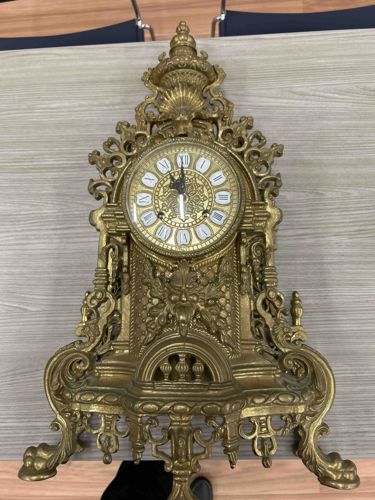
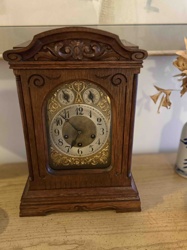
This is an ornate gilt bronze or brass mantel clock, characterized by its elaborate Rococo-style decorative elements. The clock stands on four stylized lion's paw feet, which transition into sweeping, openwork rocaille and acanthus scroll motifs that form the base and extend upwards to frame the central clock face. The overall color is a rich, aged gold, suggesting a natural patina on the metal. At the top, a tiered finial with further scrolling takes center stage above a scallop shell-like motif. Just below the clock dial, a prominent figural mask, possibly depicting a satyr or grotesque face with leafy whiskers, is flanked by intricate floral and foliate carvings. The clock dial itself is circular, white with black Roman numerals for the hours, and features an elaborate, possibly engraved or cast, metallic center with intricate lacework patterns. The hands are black and ornamental. Two small, decorative pendulum-like elements hang on either side of the main body, though their functionality is not clear from the image. The casting appears to be of good quality, showing defined details in the ornamentation. There are no obvious signs of major damage such as breaks or significant dents, and the patina appears consistent with age, suggesting it has been well-preserved or maintained. The intricate craftsmanship and extensive detailing point to a luxury item, likely from the late 19th or early 20th century, a period known for revival styles.
AI Appraisal Report
Upon visual examination of the provided image, I assess this Rococo Style Gilt Metal Mantel Clock to be in very good overall condition. The patination appears consistent with age, suggesting a natural and undisturbed surface. There are no obvious signs of major breaks, repairs, or significant loss to the intricate gilt metalwork. The casting detail is remarkably crisp, particularly in the rocaille, acanthus scrolls, and the figural mask, indicating quality craftsmanship. The white dial with black Roman numerals is legible, and the ornamental hands are intact.
Given the ornate Rococo revival style, extensive detailing, and apparent good condition, I would place this clock’s likely production between the late 19th and early 20th centuries, a period when such revival pieces were highly fashionable. Similar quality gilt bronze or brass mantel clocks from this era, even lacking a prominent maker's mark visible in an image, typically perform well in the current market, especially those with strong decorative appeal. The demand for well-preserved, aesthetically pleasing antique decorative arts remains consistent among collectors and interior designers. While not exceptionally rare, pieces of this quality and condition are not common.
Factors significantly impacting value include the material (gilt bronze generally commanding more than gilt brass), the originality of the movement, and any identifiable maker’s marks. A functional, original movement would enhance value considerably. Without physical inspection, I cannot verify the exact metal composition (bronze vs. brass), the originality or condition of the clock mechanism, or the presence of any hidden marks. A tactile examination would allow me to assess the weight, feel, and precise nature of the metal. Full authentication would require in-person inspection, a detailed assessment of the internal mechanism by a clockmaker, and research into any visible or hidden maker’s marks or provenance documentation.