AI estimate as of November 10, 2025 · verify with a professional before acting
AI-Generated · Verify before acting
Everything on this page is generated by AI for informational purposes only. AI can make mistakes — the AI may misidentify items or misattribute them (artist, maker, brand, designer, origin, era). This is not an official valuation and should not be used for insurance, sale, tax, estate, legal, or lending purposes — or any decision requiring a certified appraisal. It is not an authoritative claim about any person, brand, or rights holder — do not share or rely on it as a factual statement about a third party. Always consult qualified professionals before making financial decisions.
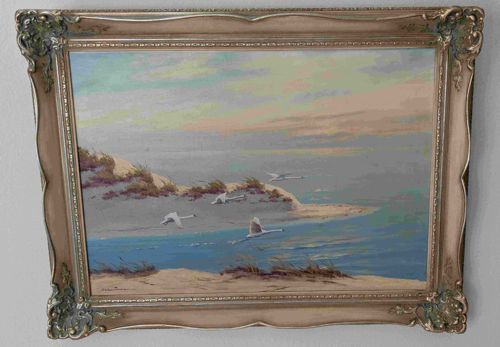
This appears to be an oil painting depicting a serene coastal landscape. The primary subject matter is a body of water, likely the sea, with a sandy shoreline characterized by undulating dunes covered in sparse tufts of grass. Several white swans are gracefully depicted, some in flight over the water and others resting or wading near the shore. The color palette of the painting is somewhat muted, featuring soft blues and grays for the water and sky, with warmer tones of beige and light brown for the sand. The sky shows hints of a pale sunrise or sunset with touches of yellow and pink, suggesting early morning or late evening light. The brushwork appears to be relatively smooth, creating a calm and tranquil atmosphere. The painting is housed within an ornate, possibly gilded or silver-painted, wooden frame. The frame features traditional Rococo-style decorative elements, including scrolling acanthus leaves and floral motifs at the corners and along the edges, suggesting a classic aesthetic. The overall condition of the painting seems good, with no immediately visible damage such as tears or significant paint loss. The frame also appears intact with only minor wear consistent with age. This painting likely dates from the mid-20th century, a period when such idyllic landscapes were popular, and it showcases decent craftsmanship in both the artwork and the framing.
AI Appraisal Report
I have examined the image of the Seascape Painting with Swans by Dunes. The painting depicts a serene coastal landscape with swans, rendered in oil, and housed in an ornate frame. From the visual evidence, the condition of the painting appears good, with no obvious tears or significant paint loss. The frame, with its Rococo-style decorative elements, also seems intact with minor wear consistent with its age, which I estimate to be mid-20th century.
Market comparables for similar idyllic landscape oil paintings from the mid-20th century, especially those by lesser-known artists or without significant provenance, typically fall into the low hundreds. The subject matter is generally appealing and contributes to consistent, albeit modest, demand. However, the absence of a known or prominent artist signifier limits its rarity and, consequently, its value as an investment piece.
Factors significantly impacting value include the artist's identity, the quality of execution beyond what can be discerned from an image, and the originality of the composition. While visually pleasing, without an artist's signature or established provenance, it is challenging to attribute it to a specific, recognized hand.
It is important to note the limitations of authenticity verification from images alone. A physical examination would be crucial to assess the paint layers, brushwork details, and overall structural integrity of both the canvas and the frame. In-person authenticity verification would require examining the verso for any artist's signatures, labels, or inscriptions. Furthermore, provenance documentation, such as sales receipts or exhibition history, would be essential to bolster its authenticity and historical context. Scientific testing, such as pigment analysis, could confirm the age of the materials used, which would aid in confirming its mid-20th-century dating.