AI Appraisal Estimate

AI-generated estimates · not official valuations

From the user

What was submitted

Photo and notes provided by the user — not generated by AI

Submitted item photo
Submitted photo · June 15, 2026

User's notes

Tapestry

AI analysis below

AI appraisal

AI analysis & estimate

AI-Generated · Verify before acting

Everything below is generated by AI for informational purposes only. AI can make mistakes — the AI may misidentify items or misattribute them (artist, maker, brand, designer, origin, era). This is not an official valuation and should not be used for insurance, sale, tax, estate, legal, or lending purposes — or any decision requiring a certified appraisal. It is not an authoritative claim about any person, brand, or rights holder — do not share or rely on it as a factual statement about a third party. Always consult qualified professionals before making financial decisions.

Note

This analysis also relies on unverified notes provided by the user, which may be incomplete or inaccurate and could affect the result.

Read the full disclaimer

AI Identification

·Not independently authenticated·Verify before acting

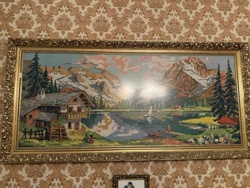
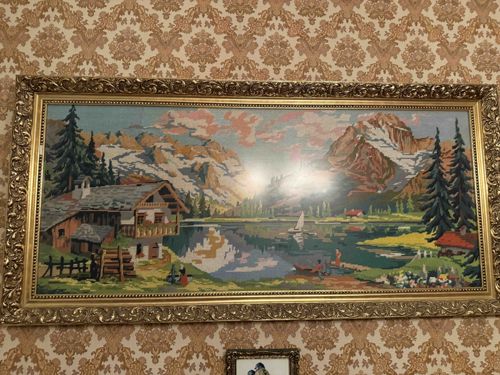
Framed Mid-Century Alpine Landscape Needlepoint Tapestry

Decorative Arts - Textiles & Fiber Arts

AI Estimated Value

·Not an official valuation·Verify before acting

$450 - $650

As of June 15, 2026

AI Item Analysis

·AI can make mistakes·Verify before acting
This item is a large, horizontal rectangular textile artwork featuring a scenic Alpine landscape, likely executed in needlepoint or petit point. The composition depicts a classic European mountain scene with a rustic chalet on the left foreground, a tranquil lake with a sailboat in the center, and jagged snow-capped peaks in the background. The color palette is rich and varied, utilizing shades of powder blue for the sky, earthy siennas and ochres for the mountains, and deep evergreens for the pine trees. The piece is housed in a prominent, highly decorative gilded frame with ornate scrolled acanthus leaf motifs in the Rococo Revival style. The construction suggests a mid-20th-century origin, approximately 1950s-1970s, a period when such handicraft kits were popular home decor items. The textile appears tightly woven with good color retention, showing no immediate signs of significant fading or sagging. The frame displays a bright gold finish with a slight patina in the recessed carvings, which enhances the textural depth. While no maker's mark is visible through the glazing, the precise execution indicates a skilled amateur or commercial production. The overall condition appears excellent, with the frame providing structural integrity and the glass protecting the delicate fiber work from dust and environmental pollutants.
AI Appraisal Report

·AI can make mistakes·Verify before acting
I have completed a visual examination of this Mid-Century Alpine needlepoint tapestry. The work represents a classic example of 1950s-1970s domestic handicraft, likely produced from a commercial kit such as those by Elsa Williams or Dimensions, which were highly popular during the mid-20th-century 'handmade home' movement. The technical execution is exceptional; the tension is uniform, and the petit point transitions in the mountain gradients suggest a high level of skill. The condition appears Excellent, with the textile retaining high color saturation, indicating minimal exposure to UV light. The gilded Rococo Revival frame is of significant value itself, providing substantial 'wall power' and protecting the fibers behind glass. Market demand for textile art has seen a resurgence due to the 'Grandmillennial' design trend, though value is often capped for kit-based subjects compared to original commissions. Comparables for framed landscapes of this scale typically sell in the $300 to $800 range at specialty antique auctions or high-end vintage boutiques. The ornate frame significantly bolsters the value, as custom framing of this magnitude would currently cost several hundred dollars. Limitations of this digital appraisal include the inability to inspect the verso for hallmarkings, insect damage, or acidic backing materials that can degrade wool over time. A full authentication would require an in-person physical inspection to verify the fiber content (wool vs. synthetic) and to check for hidden foxing or dry rot. Documentation such as the original kit pattern or family provenance would further solidify its historical context but is not expected for this category of decorative art.

Get your items appraised

Instant estimates of your treasures with AI-powered appraisals

Browse More Appraisals