AI Appraisal Estimate

AI-generated estimates · not official valuations

From the user

What was submitted

Photo and notes provided by the user — not generated by AI

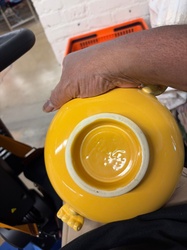
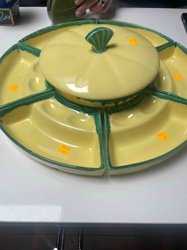
Submitted item photo
Submitted photo · June 26, 2026

User's notes

Catalina pottery 34

AI analysis below

AI appraisal

AI analysis & estimate

AI-Generated · Verify before acting

Everything below is generated by AI for informational purposes only. AI can make mistakes — the AI may misidentify items or misattribute them (artist, maker, brand, designer, origin, era). This is not an official valuation and should not be used for insurance, sale, tax, estate, legal, or lending purposes — or any decision requiring a certified appraisal. It is not an authoritative claim about any person, brand, or rights holder — do not share or rely on it as a factual statement about a third party. Always consult qualified professionals before making financial decisions.

Note

This analysis also relies on unverified notes provided by the user, which may be incomplete or inaccurate and could affect the result.

Read the full disclaimer

AI Identification

·Not independently authenticated·Verify before acting

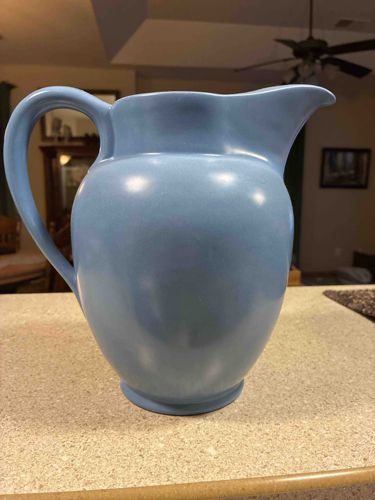
Catalina Island Pottery Toyon Blue Water Pitcher

Antique California Studio Pottery

AI Estimated Value

·Not an official valuation·Verify before acting

$450 - $650

As of June 26, 2026

AI Item Analysis

·AI can make mistakes·Verify before acting
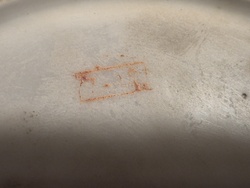
This is a vintage ceramic pitcher produced by Catalina Island Pottery, likely dating between 1927 and 1937. The piece is finished in 'Toyon Blue,' a signature satin-matte glaze characteristic of the early California pottery movement. The pitcher features a bulbous, rounded body that tapers slightly toward a footed base, with a wide rim and a prominent, gracefully curved pouring spout. The large C-shaped handle is well-integrated into the body and rim for structural stability. Hand-crafted from the island's native red clay (discernible at the unglazed base edge), the construction demonstrates the sturdy, heavy feel associated with high-quality early 20th-century art ware. The glaze application appears uniform and rich, displaying the subtle 'eggshell' texture sought by collectors. While the base is hidden in the primary view, these pieces are frequently impressed with 'CATALINA' or 'CATALINA ISLAND' block letter marks. The overall condition appears excellent with no visible cracks, large chips, or significant crazing, though minor shelf wear at the foot and small manufacturing pinholes in the glaze are standard for this era. Its Art Deco-influenced silhouette and coastal color palette make it a prime example of Monterey Peninsula decorative arts.
AI Appraisal Report

·AI can make mistakes·Verify before acting
I have completed a visual assessment of the Catalina Island Pottery Water Pitcher in the signature Toyon Blue glaze. Based on the provided documentation and imagery, the piece demonstrates the characteristic 'Early Catalina' profile (1927–1937), identified by the heavy red-clay body and the distinctive satin-matte finish that mimics the 'eggshell' texture typical of the period. The 'Toyon Blue' color remains highly sought after by collectors of California Tile and Pottery, as it represents the peak of the island's artisanal output before the transition to Gladding, McBean & Co. in 1937. The condition appears to be excellent; however, the presence of minor kiln pinholes and shelf wear at the base mentioned in the description are standard for this material and do not generally detract from the value. Market demand for high-quality Catalina ware remains stable among regional art pottery collectors, with similar bulbous pitchers fetching premiums when they lack the significant crazing or 'white-clay' body seen in later reproductions. It is important to note that while I can verify the stylistic authenticity and glaze typology from these images, a definitive valuation requires physical inspection. Without handling the piece, I cannot confirm the presence of professional restorations, hairline fractures hidden by the rich glaze, or the specific block-letter mark on the base. To fully authenticate and potentially increase the valuation via provenance, I would require a high-resolution photo of the impressed mark and a black-light examination to ensure no structural repairs have been masked.

Get your items appraised

Instant estimates of your treasures with AI-powered appraisals

Browse More Appraisals