AI Appraisal Estimate

AI-generated estimates · not official valuations

From the user

What was submitted

Photo and notes provided by the user — not generated by AI

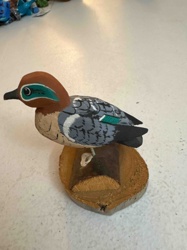
Submitted item photo
Submitted photo · June 9, 2026

User's notes

No additional notes provided.

AI analysis below

AI appraisal

AI analysis & estimate

AI-Generated · Verify before acting

Everything below is generated by AI for informational purposes only. AI can make mistakes — the AI may misidentify items or misattribute them (artist, maker, brand, designer, origin, era). This is not an official valuation and should not be used for insurance, sale, tax, estate, legal, or lending purposes — or any decision requiring a certified appraisal. It is not an authoritative claim about any person, brand, or rights holder — do not share or rely on it as a factual statement about a third party. Always consult qualified professionals before making financial decisions.

Read the full disclaimer

AI Identification

·Not independently authenticated·Verify before acting

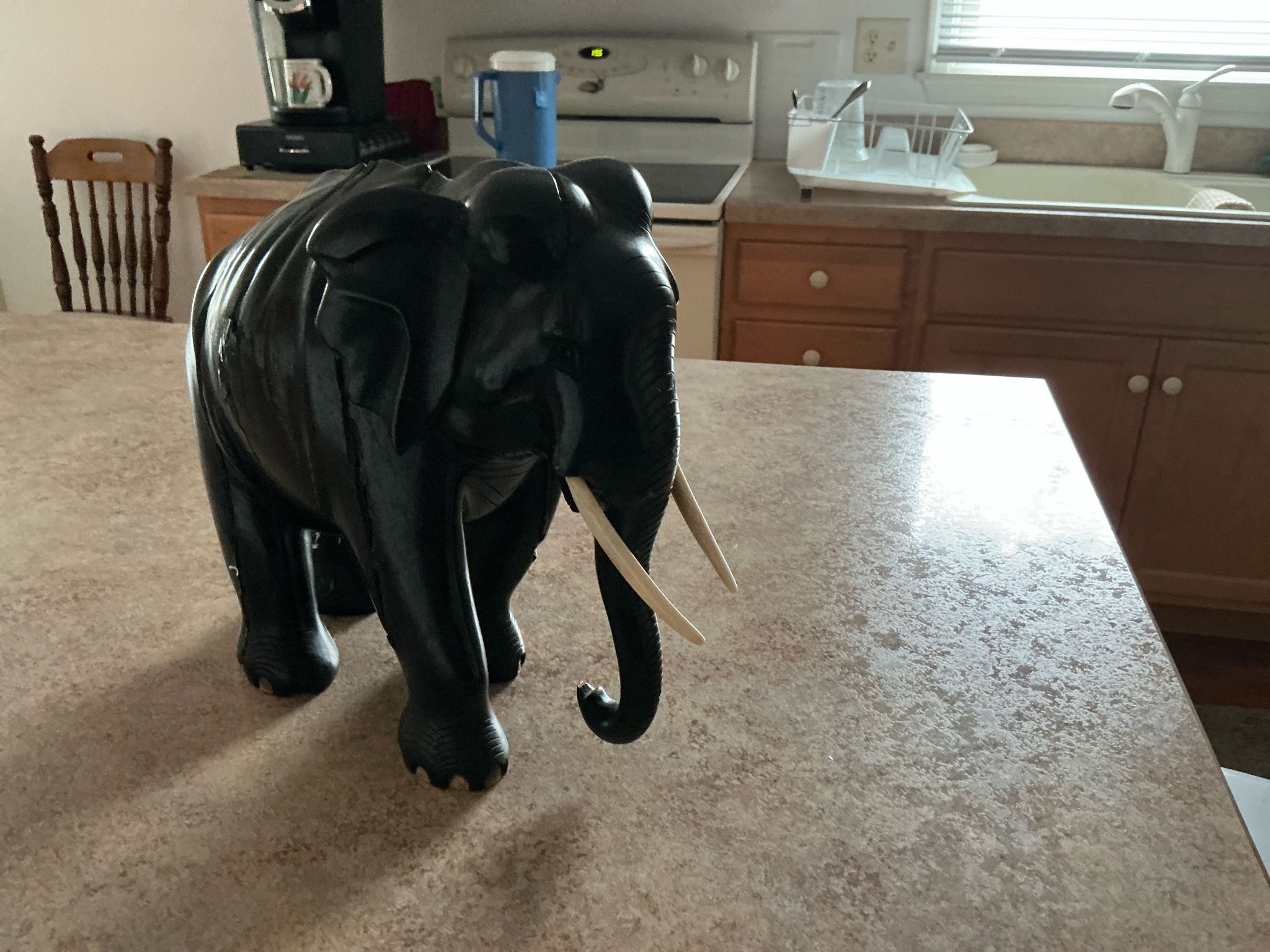
Vintage Hand-Carved Ebony Wood Elephant Figurine

Decorative Arts / Wood Carvings

AI Estimated Value

·Not an official valuation·Verify before acting

$450 - $650

As of June 9, 2026

AI Item Analysis

·AI can make mistakes·Verify before acting
This is a substantial hand-carved sculpture of an African or Indian elephant, likely crafted from dense macassar ebony or a similar tropical hardwood with a deep, satin black finish. The piece measures approximately 10 to 12 inches in height and demonstrates high-quality craftsmanship, featuring detailed anatomical rendering including ribbed texture on the trunk, defined musculature across the shoulders and hindquarters, and realistic skin folds carved along the torso. It is adorned with two long, creamy-white tusks, which appear to be made of bone or polished horn rather than ivory, given the lack of Schreger lines and the uniform coloration. The elephant is depicted in a standing posture with the trunk lowered and curled slightly at the end, a symbol of serenity. In terms of condition, the wood retains a healthy luster, though there are minor superficial surface scuffs and dust accumulation in the deeper recessed carvings. No significant cracks or structural repairs are visible, which is notable for large wood carvings of this age. The style and construction suggest it was produced in the mid-20th century, likely between 1950 and 1970, and it follows the tradition of high-end export decorative arts often found in Eastern Africa or Southern Asia. The weight of the item suggests a solid-core construction rather than a hollow cast, which is a hallmark of premium artisan carving.
AI Appraisal Report

·AI can make mistakes·Verify before acting
I have virtually examined this substantial mid-20th-century elephant sculpture. The craftsmanship is exceptional, characterized by the dense grain and characteristic 'double-black' streak of high-quality ebony. The anatomical precision, particularly the musculature and the rendering of the skin folds, elevates this piece above souvenir-grade carvings. The use of bone or horn for the tusks, rather than true ivory, eliminates modern legal restrictions but slightly lowers the ceiling for elite collectors; however, the lack of checking or radial cracks common in tropical hardwoods suggests the item has been well-maintained in a climate-controlled environment. The market for mid-century export carvings remains stable, with demand driven by the current trend for 'Global Modernist' interior design. Comparables of this scale (10-12 inches) and material frequently realize between $400 and $700 at regional decorative arts auctions. The primary value drivers here are the solid-core weight and the 'trunk down' posture, which many collectors prize for its symbolism of stability. Limitations: This appraisal is based solely on visual inspection. While the material appears to be ebony, definitive species identification requires a density test and microscopic grain analysis. Furthermore, I cannot verify the absence of concealed internal repairs or weighted bases without a physical handling. To move this into a 'Premium Artisan' category, I would require provenance documentation or a maker's mark, as many high-end carvings from the 1960s were produced by specific known guilds in Tanzania or India which would command a 25% premium.

Get your items appraised

Instant estimates of your treasures with AI-powered appraisals

Browse More Appraisals