AI identification & appraisal estimate

Loose Round Brilliant Cut Diamond

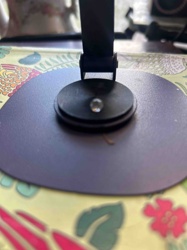
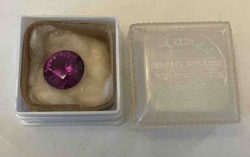
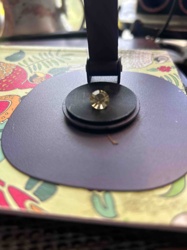
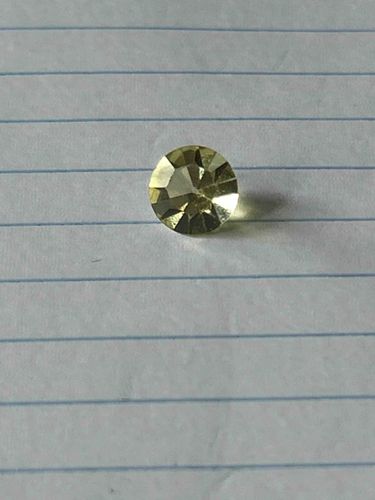
Submitted photo of Loose Round Brilliant Cut Diamond
Photo submitted by the user — not generated by AI

User's notes

Loose diamond

These notes were written by the person who submitted this item. Appraiser.AI has not verified them, and the AI's identification and estimate may rely on them.

AI Estimated Value

Not an official valuation

$600 - $1,100

AI estimate as of December 7, 2025 · verify with a professional before acting

AI-Generated · Verify before acting

Everything on this page is generated by AI for informational purposes only. AI can make mistakes — the AI may misidentify items or misattribute them (artist, maker, brand, designer, origin, era). This is not an official valuation and should not be used for insurance, sale, tax, estate, legal, or lending purposes — or any decision requiring a certified appraisal. It is not an authoritative claim about any person, brand, or rights holder — do not share or rely on it as a factual statement about a third party. Always consult qualified professionals before making financial decisions.

This analysis also relies on unverified notes provided by the user, which may be incomplete or inaccurate and could affect the result.

Read the full disclaimer

AI Item Analysis

The item is a loose gemstone, specifically identified as a round brilliant cut diamond. Its color appears to be in the light yellow to yellowish-brown range, which usually translates to a K-M or even lower color grade on the GIA scale, indicating a noticeable yellow tint. The diamond exhibits the characteristic facet pattern of a standard round brilliant cut, designed to maximize brilliance and fire. Though exact dimensions cannot be determined from the image, it appears to be of a moderate size, suitable for various jewelry settings. The stone is transparent, and while inclusions are not clearly visible due to the image resolution, some haziness or internal characteristics might be present, impacting clarity. The cutting quality appears generally good, with facets reflecting light from various angles, suggesting decent symmetry and polish, though precise evaluation would require closer inspection under magnification. There are no visible chips or significant abrasions on the surface, indicating the stone is in good overall condition. This type of loose diamond is typically purchased for engagement rings, pendants, or other custom jewelry pieces. Without a jeweler's loupe, specific details like clarity grades, fluorescence, and precise cut parameters (table %, depth %) cannot be determined definitively. The lack of any setting indicates it is either a newly cut stone, a stone removed from an existing piece of jewelry for re-setting, or a stone being sold individually for investment or crafting purposes. Its estimated age is difficult to determine without knowledge of its provenance, but the brilliant cut is a timeless style.

AI Appraisal Report

Upon my virtual examination of this loose round brilliant cut diamond, I observe a stone presenting a noticeable light yellow to yellowish-brown hue, characteristic of a K-M or lower color grade on the GIA scale. The brilliant cut facets appear well-defined, suggesting good light return, though precise cut parameters like table and depth percentages, polish, and symmetry cannot be confirmed without specialized tools. Clarity, while not definitively graded, appears to be in the I1-I2 range due to potential haziness, even without clearly visible inclusions in the provided image. The diamond seems to be in good overall condition, with no apparent chips or abrasions. Market conditions for diamonds in this color and clarity range are stable, particularly for loose stones intended for custom jewelry. Comparables generally fall within a broad price spectrum depending heavily on precise carat weight and finalized clarity/color grades. Demand for slightly warmer-toned diamonds has seen an uplift as consumers seek unique and value-driven options. The primary factors impacting its value are its discernible color tint and whatever internal characteristics would define its clarity grade. It is crucial to note that this is a preliminary assessment based solely on photographic evidence. For full authentication and a definitive valuation, an in-person examination would be necessary. This would involve a jeweler's loupe for precise clarity and cut assessments, a spectroscope for color and potential treatment detection, and scientific testing (such as Raman spectroscopy) to confirm natural origin and rule out synthetics or treatments. Provenance documentation, if available, could also significantly aid in authentication and historical context.

Keep exploring

More gemstone appraisals

Get your items appraised

Instant AI-powered appraisal estimates from a photo

Browse More Appraisals