These notes were written by the person who submitted this item. Appraiser.AI has not verified them, and the AI's identification and estimate may rely on them.
AI Estimated Value
Not an official valuation
$700 - $2,200
AI estimate as of June 30, 2025 · verify with a professional before acting
AI-Generated · Verify before acting
Everything on this page is generated by AI for informational purposes only. AI can make mistakes — the AI may misidentify items or misattribute them (artist, maker, brand, designer, origin, era). This is not an official valuation and should not be used for insurance, sale, tax, estate, legal, or lending purposes — or any decision requiring a certified appraisal. It is not an authoritative claim about any person, brand, or rights holder — do not share or rely on it as a factual statement about a third party. Always consult qualified professionals before making financial decisions.
This analysis also relies on unverified notes provided by the user, which may be incomplete or inaccurate and could affect the result.
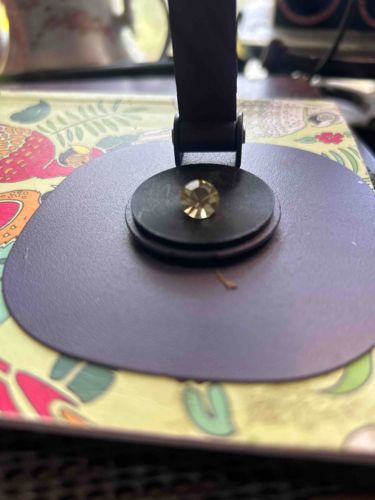
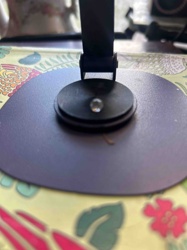
This is a single, loose, faceted gemstone, exhibiting a distinct round brilliant cut. The stone displays a soft, appealing light yellow to champagne color across its body, indicating a possible fancy color diamond or a yellow variety of another gemstone, such as a sapphire or quartz. Its precise faceting, characteristic of the modern brilliant cut, is designed to enhance its brilliance and sparkle, with light appearing to return effectively from its pavilion through the crown. The crown facets and table are well-proportioned, contributing significantly to its optical performance. The girdle, though not fully visible, appears to be consistent around the circumference. Based on the visual appearance, the gemstone seems to be of a smaller to medium size, typical for a single accent or primary stone in jewelry. It presents in excellent observed condition, appearing entirely eye-clean with no readily apparent chips, abrasions, or scratches visible on its surface or edges, which suggests careful handling or recent cutting. No major inclusions are discernible through casual observation. As a loose stone, there are no visible mounting marks or wear from being set in jewelry, nor any discernible manufacturing hallmarks or signatures on the stone itself, which is normal for a cut gemstone. While specific material identification and precise carat weight cannot be determined from the image alone, the quality of the cut and apparent clarity suggest a stone of fine commercial to high quality, likely cut within the last several decades given its modern brilliant faceting.
AI Appraisal Report
Based on my visual examination of the provided image, this is a beautiful faceted round brilliant cut gemstone exhibiting an appealing light yellow to champagne hue. Its modern brilliant facet pattern suggests excellent light performance, with apparent high brilliance. The stone appears eye-clean, free from visible chips, abrasions, or inclusions, indicating excellent condition and careful handling. The cut quality is consistent with contemporary standards, maximizing its optical properties. However, a definitive appraisal is significantly challenged by the inability to identify the gemstone's precise material from the image alone. While it presents characteristics suggestive of a fancy color diamond or a fine yellow sapphire, it could also be a different yellow gemstone like citrine or or even a synthetic material. The primary factor impacting its value is its material identity, followed by its exact carat weight (which cannot be determined visually) and specific color saturation. The market for well-cut yellow gemstones, particularly fancy yellow diamonds and vibrant yellow sapphires, remains strong, driven by their beauty and versatility. Demand for such stones is generally consistent. If this stone proves to be a natural fancy light yellow diamond or a high-quality natural yellow sapphire, its rarity and demand would contribute significantly to its value. For a complete and accurate appraisal, it is imperative to conduct in-person gemological testing, including precise measurements, accurate carat weighing, and tests for refractive index, specific gravity, optical properties, and thermal conductivity to confirm identity, determine natural vs. synthetic origin, and detect any treatments. A detailed microscopic examination is also crucial for confirming internal characteristics. Without these direct tests, this appraisal is provisional and reflects a potential value range.