AI identification & appraisal estimate

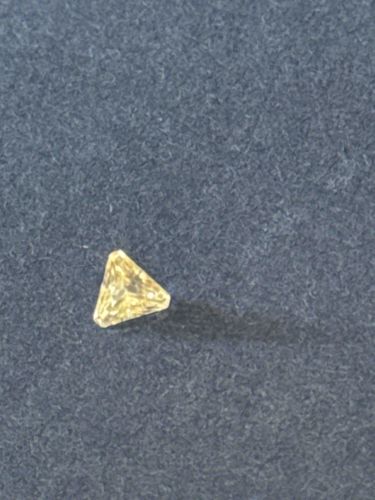
Yellow Trilliant Cut Diamond

Submitted photo of Yellow Trilliant Cut Diamond
Photo submitted by the user — not generated by AI

User's notes

Triangle diamond

These notes were written by the person who submitted this item. Appraiser.AI has not verified them, and the AI's identification and estimate may rely on them.

AI Estimated Value

Not an official valuation

$800 - $1,500

AI estimate as of August 10, 2025 · verify with a professional before acting

AI-Generated · Verify before acting

Everything on this page is generated by AI for informational purposes only. AI can make mistakes — the AI may misidentify items or misattribute them (artist, maker, brand, designer, origin, era). This is not an official valuation and should not be used for insurance, sale, tax, estate, legal, or lending purposes — or any decision requiring a certified appraisal. It is not an authoritative claim about any person, brand, or rights holder — do not share or rely on it as a factual statement about a third party. Always consult qualified professionals before making financial decisions.

This analysis also relies on unverified notes provided by the user, which may be incomplete or inaccurate and could affect the result.

Read the full disclaimer

AI Item Analysis

The item is a loose, faceted diamond, distinguished by its unique triangular shape, specifically a trilliant cut. Its approximate dimensions, based on visual estimation, suggest it is a relatively small to medium-sized stone, likely under 1 carat. The diamond exhibits a warm, yellowish hue, indicating it is likely a fancy yellow diamond or falls within the lower color grades (e.g., K-Z range) of the D-Z scale. The faceting appears to be well-executed, designed to optimize light return and brilliance within its triangular form. Some internal inclusions or growth patterns are visible, particularly towards the center of the stone, appearing as darker specks or cloudiness, which would affect its clarity grade. There are no visible chips, cracks, or significant abrasions on the facets, suggesting good overall condition. The quality of polish and symmetry appear to be decent, contributing to its sparkle. Without specific tools, it's impossible to confirm its precise age or origin, but the trilliant cut gained popularity in the latter half of the 20th century. The natural yellow color suggests a valuable gemstone, though the visible inclusions would be a factor in its appraisal. This cut is often used as a side stone or as a striking center stone in jewelry.

AI Appraisal Report

Upon visual examination of the provided images, this item appears to be a natural, loose diamond with a trilliant cut and a distinct yellowish hue. Based on its appearance, it is likely a fancy yellow diamond or a stone in the lower end of the D-Z color grading scale (e.g., K-Z). The cut is well-proportioned for its triangular shape, contributing to its overall brilliance. The stone's condition seems good, with no readily apparent chips or major surface abrasions. However, several internal inclusions, visible as dark specks or cloudy areas near the center, are noted. These clarity characteristics are the most significant factor limiting its value. The market for fancy colored diamonds remains strong, but value is highly dependent on the intensity and purity of the color, as well as clarity and carat weight. While the trilliant cut is less common than round or princess cuts, it has a niche appeal. Comparable stones of similar size (estimated under 1 carat) with visible inclusions typically trade at a significant discount compared to higher-clarity examples. It is crucial to state the limitations of this appraisal. Without physical inspection and gemological testing, I cannot definitively confirm its authenticity as a natural diamond versus a synthetic or simulant, nor can I verify if the color is natural or treated. A full appraisal would require laboratory analysis to determine precise carat weight, color grade (e.g., Fancy Light Yellow, Fancy Yellow), clarity grade (e.g., SI2, I1), and fluorescence. A GIA or equivalent lab certificate would be necessary to realize its maximum market value.

Keep exploring

More gemstone appraisals

Get your items appraised

Instant AI-powered appraisal estimates from a photo

Browse More Appraisals