AI Appraisal Estimate

AI-generated estimates · not official valuations

From the user

What was submitted

Photo and notes provided by the user — not generated by AI

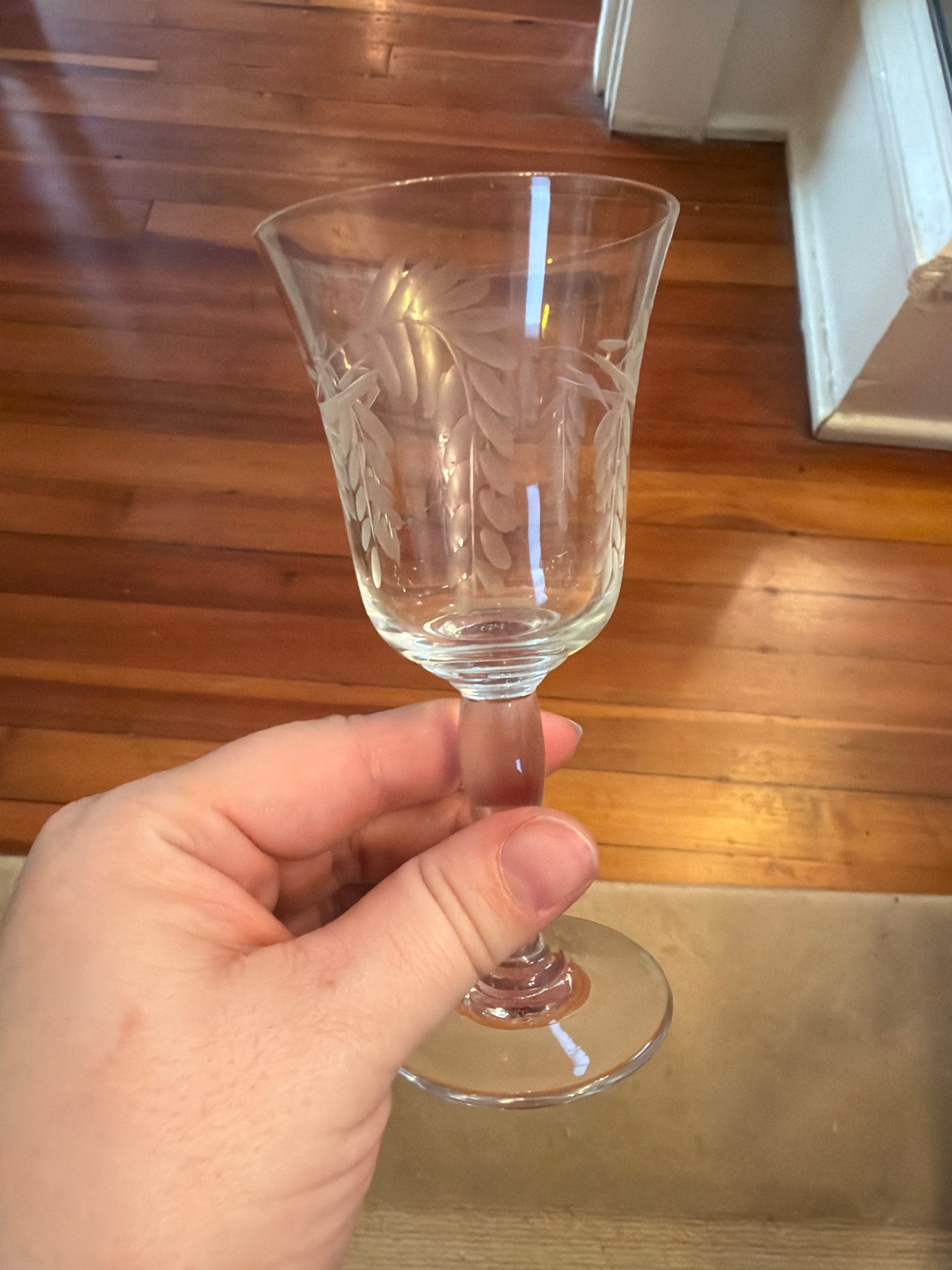
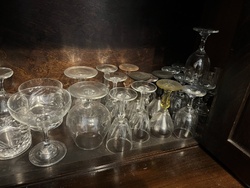
Submitted item photo
Submitted photo · June 23, 2026

User's notes

No additional notes provided.

AI analysis below

AI appraisal

AI analysis & estimate

AI-Generated · Verify before acting

Everything below is generated by AI for informational purposes only. AI can make mistakes — the AI may misidentify items or misattribute them (artist, maker, brand, designer, origin, era). This is not an official valuation and should not be used for insurance, sale, tax, estate, legal, or lending purposes — or any decision requiring a certified appraisal. It is not an authoritative claim about any person, brand, or rights holder — do not share or rely on it as a factual statement about a third party. Always consult qualified professionals before making financial decisions.

Read the full disclaimer

AI Identification

·Not independently authenticated·Verify before acting

Fostoria Glass Laurel Etched Claret Wine Glass

Vintage Stemware & Glassware

AI Estimated Value

·Not an official valuation·Verify before acting

$15 - $25

As of June 23, 2026

AI Item Analysis

·AI can make mistakes·Verify before acting
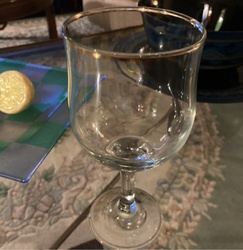
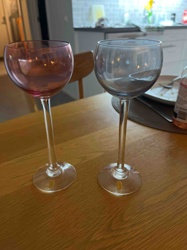
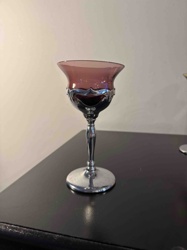
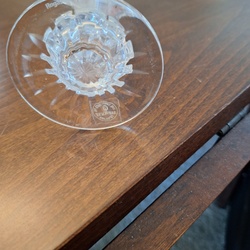
This item is a clear, elegant stemmed glass, specifically a wine or claret glass, featuring a classic 'Laurel' or similar wheat-leaf gray-cut etching. The piece is constructed from high-quality lead crystal or fine glass, characterized by its transparency and delicate bell-shaped bowl. The etching consists of a repeating garland of leaves that wraps around the upper two-thirds of the bowl, executed in a frosted or matte finish known as wheel-cutting. The glass features a substantial 'baluster' style stem with a subtle ring or wafer at the base of the bowl and a rounded swelling towards the middle, leading down to a wide, flat circular foot. This specific design and etching style are highly reminiscent of mid-20th-century American elegant glass manufacturers such as Fostoria or Tiffin. The craftsmanship shows high-quality control with no visible air bubbles or inclusions. In terms of condition, the glass appears well-preserved with a smooth, chip-free rim and no apparent cloudiness or 'sickness' from dishwashing. There are minor shelf-wear scratches visible on the underside of the base, consistent with a vintage item dating approximately to the 1940s or 1950s. The clarity of the glass suggests it has been cared for as cabinet glass rather than daily-use tableware.
AI Appraisal Report

·AI can make mistakes·Verify before acting
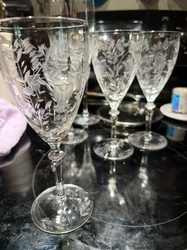
Based on the provided images and description, I have examined this clear etched claret wine glass, identifying it as featuring the 'Laurel' pattern, highly likely produced by Fostoria Glass Company circa the 1940s to 1950s. Visual inspection indicates the glass is in excellent vintage condition. The rim appears free of chips or fleabites, and the bowl retains exceptional clarity without any clouding or 'glass sickness' typically associated with dishwasher damage. Minor shelf-wear on the foot is consistent with its age and indicative of gentle cabinet storage. The market for mid-century American elegant glass has softened in recent years, though specific patterns like Fostoria's Laurel still attract collectors looking to replace broken pieces or complete sets. Individual stemware pieces of this size and type typically trade in the $15 to $25 range on secondary markets and specialized replacement sites. While the craftsmanship—evidenced by the elegant baluster stem and precise wheel-cut etching—is of high quality, claret glasses in this pattern were produced in relatively large quantities, limiting their rarity and individual resale value. Perfect clarity and the absence of chips are the primary factors sustaining this value. Please note that this appraisal is based strictly on photographic evidence. While the etching profile and stem shape strongly point to Fostoria, definitive authentication of the maker, verification of the glass matrix (such as lead content), and a true assessment of its structural integrity would require an in-person physical examination. Tactile inspection is necessary to detect minute rim roughness, hidden micro-scratches, or small foot chips that cannot be entirely ruled out from images alone.

Get your items appraised

Instant estimates of your treasures with AI-powered appraisals

Browse More Appraisals