AI Appraisal Estimate

AI-generated estimates · not official valuations

From the user

What was submitted

Photo and notes provided by the user — not generated by AI

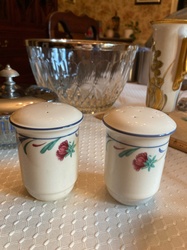
Submitted item photo
Submitted photo · May 17, 2026

User's notes

No additional notes provided.

AI analysis below

AI appraisal

AI analysis & estimate

AI-Generated · Verify before acting

Everything below is generated by AI for informational purposes only. AI can make mistakes — the AI may misidentify items or misattribute them (artist, maker, brand, designer, origin, era). This is not an official valuation and should not be used for insurance, sale, tax, estate, legal, or lending purposes — or any decision requiring a certified appraisal. It is not an authoritative claim about any person, brand, or rights holder — do not share or rely on it as a factual statement about a third party. Always consult qualified professionals before making financial decisions.

Read the full disclaimer

AI Identification

·Not independently authenticated·Verify before acting

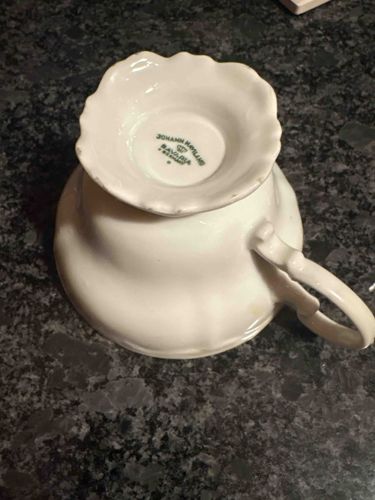
Johann Haviland Bavaria Porcelain Tea Cup

Antique/Vintage Tableware and Ceramics

AI Estimated Value

·Not an official valuation·Verify before acting

$12.00 - $18.00

As of May 17, 2026

AI Item Analysis

·AI can make mistakes·Verify before acting
This is a vintage fine porcelain tea cup produced by the renowned Johann Haviland factory in Bavaria, Germany. The piece is crafted from a high-quality white translucent porcelain with a smooth, glossy glaze finish. A notable physical characteristic is the elegant, scalloped or ruffled footring, which adds a decorative flare to the inverted base. The body of the cup appears to have a subtle fluted or gadrooned texture, leading to a gracefully looped and molded handle with architectural details where it joins the body. The underside bears a clear green backstamp reading 'JOHANN HAVILAND' over a crown insignia, with 'BAVARIA GERMANY' specifically designated below, a mark style typically associated with the mid-20th century (circa 1940s-1960s). This particular piece appears to be part of the 'Blue Garland' or a similar classic white relief pattern. Condition-wise, the porcelain shows a slight yellowish stain or residue near the handle attachment point and some darkening on the unglazed rim of the foot, which is common with age. There are no immediate signs of large chips or cracks visible in this view, though the textured edges of the footring require close inspection for micro-flea bites. The craftsmanship is indicative of German precision ceramics from the Waldershof region.
AI Appraisal Report

·AI can make mistakes·Verify before acting
Based on my visual examination of the Johann Haviland Bavaria porcelain tea cup, I have identified this as a mid-20th-century production piece, likely from the forest-pattern or Blue Garland relief series. The green crown backstamp is consistent with the post-WWII era (c. 1940s–1950s) when the Waldershof factory resumed high-volume exports. The craftsmanship reflects the standard high-quality German porcelain of that period, characterized by clean translucency and intricate molding on the handle and footring. Condition-wise, the cup presents as being in fair to good vintage condition. While the structure remains sound, the presence of localized staining near the handle attachment and darkening on the unglazed footring suggests historical use and moisture absorption into the porous parts of the ceramic. These aesthetic flaws, while minor, slightly depress the value compared to 'mint' specimens. In the current market, Johann Haviland remains highly collectible but widely available; it was produced in large quantities, meaning rarity is low. Similar cups regularly sell on secondary markets and estate auctions for between $10 and $20. Note that this appraisal is based strictly on photographic evidence. A definitive authentication would require a physical 'ring test' to check for hairline fractures not visible to the eye, as well as a tactile inspection of the glaze to ensure no professional repairs have been made. While the backstamp appears consistent with known marks, provenance or original purchase invoices would further solidify its history. Without a physical inspection, I cannot rule out micro-flea bites along the ruffled edges of the footring.

Get your items appraised

Instant estimates of your treasures with AI-powered appraisals

Browse More Appraisals