AI estimate as of November 1, 2025 · verify with a professional before acting
AI-Generated · Verify before acting
Everything on this page is generated by AI for informational purposes only. AI can make mistakes — the AI may misidentify items or misattribute them (artist, maker, brand, designer, origin, era). This is not an official valuation and should not be used for insurance, sale, tax, estate, legal, or lending purposes — or any decision requiring a certified appraisal. It is not an authoritative claim about any person, brand, or rights holder — do not share or rely on it as a factual statement about a third party. Always consult qualified professionals before making financial decisions.
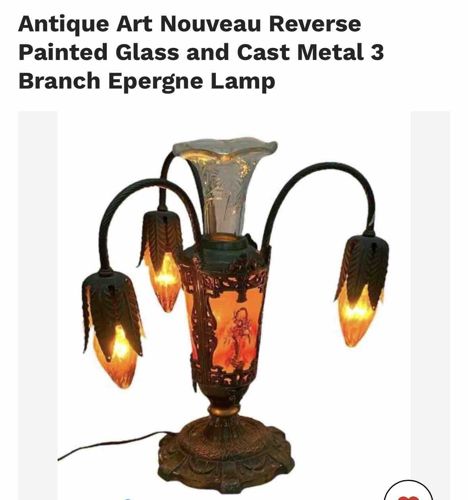
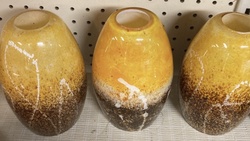
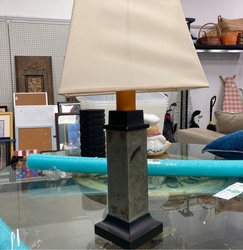
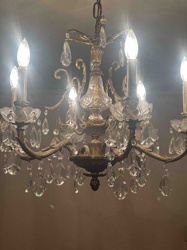
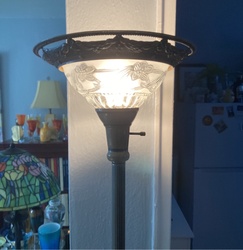
This is an antique Art Nouveau table lamp, featuring a complex design that combines reverse-painted glass and cast metal elements. The lamp is characterized by a central vase-like body made of reverse-painted glass, showcasing a warm, amber-to-orange hue when illuminated. Within the central glass body, a detailed figural scene with a classical or allegorical figure is visible, painted on the interior surface, adding depth and a soft glow. The central glass is cradled within an ornate cast metal fixture, likely brass or bronze with a darkened, possibly patinated finish, displaying intricate scrollwork and floral motifs consistent with the Art Nouveau style. Extending from the central body are three gracefully curved metal arms, each terminating in a downward-facing light fixture with a 'tulip' or 'petal' shaped shade made of amber-colored glass, possibly art glass with a textured surface to diffuse light. These smaller shades appear to be textured or fluted, mimicking flower petals. At the very top, emerging from the central glass, is another clear, fluted glass 'epergne' or vase-like element, likely intended for holding flowers or as a decorative finial. The lamp stands on a substantial, round cast metal base with an ornate, possibly floral or foliate pattern in relief, providing stability and contributing to its overall aesthetic. The visible electrical cord indicates it is a functional lamp. The metal components exhibit a dark, aged patina, suggesting significant age. There are no obvious signs of severe damage such as cracks in the glass or significant breaks in the metalwork, though typical wear and minor surface imperfections consistent with an antique item are to be expected. The craftsmanship appears to be of high quality, with detailed casting and delicate glasswork, indicative of a decorative and functional art piece from the late 19th to early 20th century.
AI Appraisal Report
Based on my visual examination of the provided image, this antique Art Nouveau Reverse Painted Glass and Cast Metal 3-Branch Epergne Lamp presents as a high-quality example of its type. The condition appears to be good, with all primary glass components seemingly intact and free of major cracks or chips, and the metalwork showing a desirable aged patina consistent with its likely late 19th to early 20th-century origin. The intricate cast metal scrollwork and floral motifs, combined with the reverse-painted central glass depicting a figural scene, strongly authenticate its Art Nouveau period styling. The amber-hued 'tulip' shades and the epergne finial further enhance its aesthetic appeal and functionality. The craftsmanship, particularly the detailed casting and delicate glasswork, indicates a piece created for the luxury market of its time. Market conditions for genuine Art Nouveau lighting fixtures remain robust, especially for multi-component pieces with intricate glasswork and well-preserved metal. Comparables in good condition with reverse-painted elements and complex designs typically fall into this upper range. Demand for well-maintained, functional pieces of this style is consistent among collectors and interior designers. The combination of its decorative complexity, apparent good condition, and the highly collectible Art Nouveau period contributes significantly to its value. Factors impacting value positively include the complete set of shades and the central epergne, as well as the unique reverse-painted central element. Limitations in authenticity verification from images alone include the inability to confirm the precise metal composition, detect hairline cracks or repairs not visible in photos, or thoroughly examine the internal wiring for functionality and safety. A physical inspection would allow for tactile assessment of materials, examination under varied lighting, and detailed analysis of any restoration, which could slightly adjust the appraisal.