AI estimate as of December 16, 2025 · verify with a professional before acting
AI-Generated · Verify before acting
Everything on this page is generated by AI for informational purposes only. AI can make mistakes — the AI may misidentify items or misattribute them (artist, maker, brand, designer, origin, era). This is not an official valuation and should not be used for insurance, sale, tax, estate, legal, or lending purposes — or any decision requiring a certified appraisal. It is not an authoritative claim about any person, brand, or rights holder — do not share or rely on it as a factual statement about a third party. Always consult qualified professionals before making financial decisions.
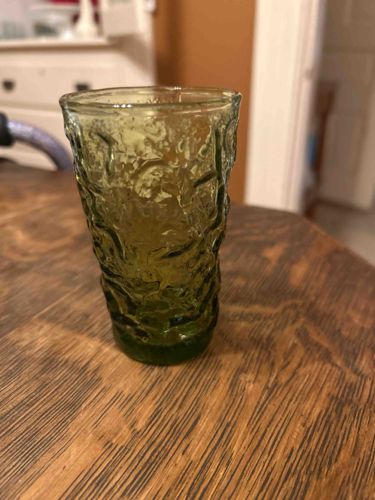
This item is a vintage green textured glass tumbler, likely used for beverages. It has a cylindrical shape, slightly tapering outwards towards the top, with a relatively thick rim. The glass is a distinct olive-green or avocado-green color, consistent with glassware popular in the mid-20th century, particularly the 1960s and 1970s. The most striking feature is its heavily textured exterior, resembling tree bark or abstract organic patterns. This 'crinkled' or 'bark' texture provides both a tactile and visual appeal, offering a good grip and diffusing light in an interesting way. The base of the tumbler is solid and slightly thicker, contributing to its stability and durability. There are no visible chips, cracks, or significant abrasions on the glass, suggesting it is in good, well-preserved condition. The surface appears clean, and the color is uniform throughout, without any obvious fading or discoloration. While no specific maker's marks or signatures are discernible from the provided images, the style strongly suggests it is mass-produced utilitarian glassware from the aforementioned period. The craftsmanship is typical of pressed glass, indicating a robust construction designed for everyday use rather than delicate ornamental purposes. Its unique texture makes it stand out from plain glassware, reflecting a design trend of integrating organic forms into common household items.
AI Appraisal Report
Based on my visual examination of the provided image, this vintage green textured glass tumbler appears to be in very good, well-preserved condition. I do not observe any chips, cracks, or significant abrasions. The color is consistent with olive-green or avocado-green glassware popular in the 1960s and 1970s. The 'crinkled' or 'bark' textured exterior is a signature design element of that era for utilitarian glassware. Its robust construction suggests it would withstand everyday use.
Authenticity, based purely on visual inspection, is limited to dating it within the mid-20th century. Without physical inspection, I cannot confirm specific manufacturing details or makers' marks, which are not discernible in the image. In-person examination would allow for closer inspection of the base for any faint marks, analysis of the glass composition, and better assessment of surface integrity, including minor scratches or wear patterns. Provenance documentation, such as original sales receipts or family history, would significantly aid in definitively authenticating its origin and potential attribution to a specific manufacturer.
Market conditions for vintage utilitarian glass tumblers, even those with distinctive textures, are generally modest. While there is a niche collector's market for specific patterns or manufacturers (e.g., Libbey, Anchor Hocking), these tumblers are typically valued for their nostalgic appeal and aesthetic rather than rarity. Comparables on online marketplaces suggest a value range for individual tumblers of this style between $5 and $15, with sets fetching slightly more per unit. Demand is steady but not high, primarily from individuals looking to complete sets, for retro decor, or daily use. The absence of a specific maker's mark or unique design element that would elevate its status beyond a mass-produced item limits its upper value. Its excellent condition is a positive factor, but the inherent commonality of such items prevents a higher appraisal.