AI Appraisal Estimate

AI-generated estimates · not official valuations

From the user

What was submitted

Photo and notes provided by the user — not generated by AI

Submitted item photo
Submitted photo · June 20, 2026

User's notes

Original Crock from min 100 years

AI analysis below

AI appraisal

AI analysis & estimate

AI-Generated · Verify before acting

Everything below is generated by AI for informational purposes only. AI can make mistakes — the AI may misidentify items or misattribute them (artist, maker, brand, designer, origin, era). This is not an official valuation and should not be used for insurance, sale, tax, estate, legal, or lending purposes — or any decision requiring a certified appraisal. It is not an authoritative claim about any person, brand, or rights holder — do not share or rely on it as a factual statement about a third party. Always consult qualified professionals before making financial decisions.

Note

This analysis also relies on unverified notes provided by the user, which may be incomplete or inaccurate and could affect the result.

Read the full disclaimer

AI Identification

·Not independently authenticated·Verify before acting

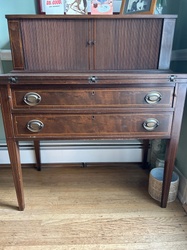
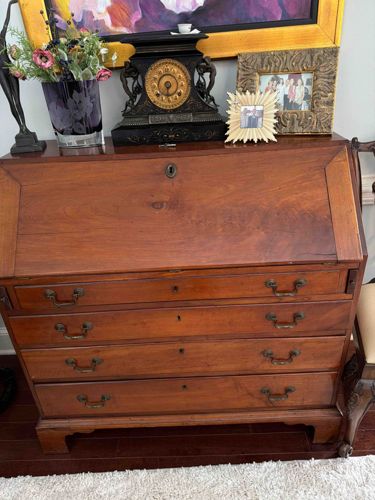
Antique Slant-Front Bureau Desk

Antique Furniture

AI Estimated Value

·Not an official valuation·Verify before acting

$1,800 - $2,800

As of June 20, 2026

AI Item Analysis

·AI can make mistakes·Verify before acting
This is a fine antique slant-front desk, likely dating from the late 18th to the mid-19th century, crafted from a rich, warm-toned wood such as cherry or mahogany. The piece features a traditional fall-front lid that opens to reveal an interior writing surface and likely a series of pigeonholes and small drawers. Below the desk portion are four graduated full-width drawers, providing ample storage. The construction demonstrates high-quality craftsmanship characteristic of the Federal or Hepplewhite periods, featuring original-style brass 'batwing' or bail-and-rosette hardware and an escutcheon on the fall-front. The desk sits on a molded base terminating in bracket feet. Visually, the piece exhibits a beautiful aged patina with a deep luster. There is a visible horizontal crack or seam on the fall-front lid, which is common in solid wood pieces of this age due to seasonal expansion and contraction. Minor surface scratches and professional wear near the base are evident, consistent with its hundred-plus-year history. The joinery appears tight, suggesting it has been well-maintained. While no specific maker's mark is visible in this view, the balanced proportions and refined moldings indicate it was produced by a skilled cabinetmaker of the era.
AI Appraisal Report

·AI can make mistakes·Verify before acting
I have virtually examined this American late-18th-century slant-front bureau desk. The piece demonstrates hallmarks of the Federal period, specifically featuring a four-drawer graduated configuration and a well-proportioned interior. The choice of primary wood, appearing to be cherry or high-grade mahogany, along with the 'batwing' brass hardware, aligns with high-end cabinetmaking standards of the 1790-1820 era. The condition is commendable; the horizontal crack on the fall-front is a typical characteristic of solid wood shrinkage rather than a structural failure. The bracket feet appear original, which is a significant value driver, as these are often replaced or cut down. The market for brown furniture has stabilized, with continued demand for functional, smaller-scale desks that fit modern interiors. Similar desks in cherry with original brasses have recently hammer-priced between $1,500 and $3,200 at regional auctions. Value is slightly tempered by the visible seam on the lid and common surface wear. It is important to note that this appraisal is based on photographic evidence. A definitive authentication would require an in-person inspection to verify secondary woods (such as pine or poplar for drawer linings), examine hand-cut dovetails for consistency, and check for 'marriage' signs where a top and bottom from different pieces are joined. Discovery of a maker's mark or provenance linking it to a specific regional school (like Connecticut or Massachusetts) could significantly increase this valuation.

Get your items appraised

Instant estimates of your treasures with AI-powered appraisals

Browse More Appraisals