AI Appraisal Estimate

AI-generated estimates · not official valuations

From the user

What was submitted

Photo and notes provided by the user — not generated by AI

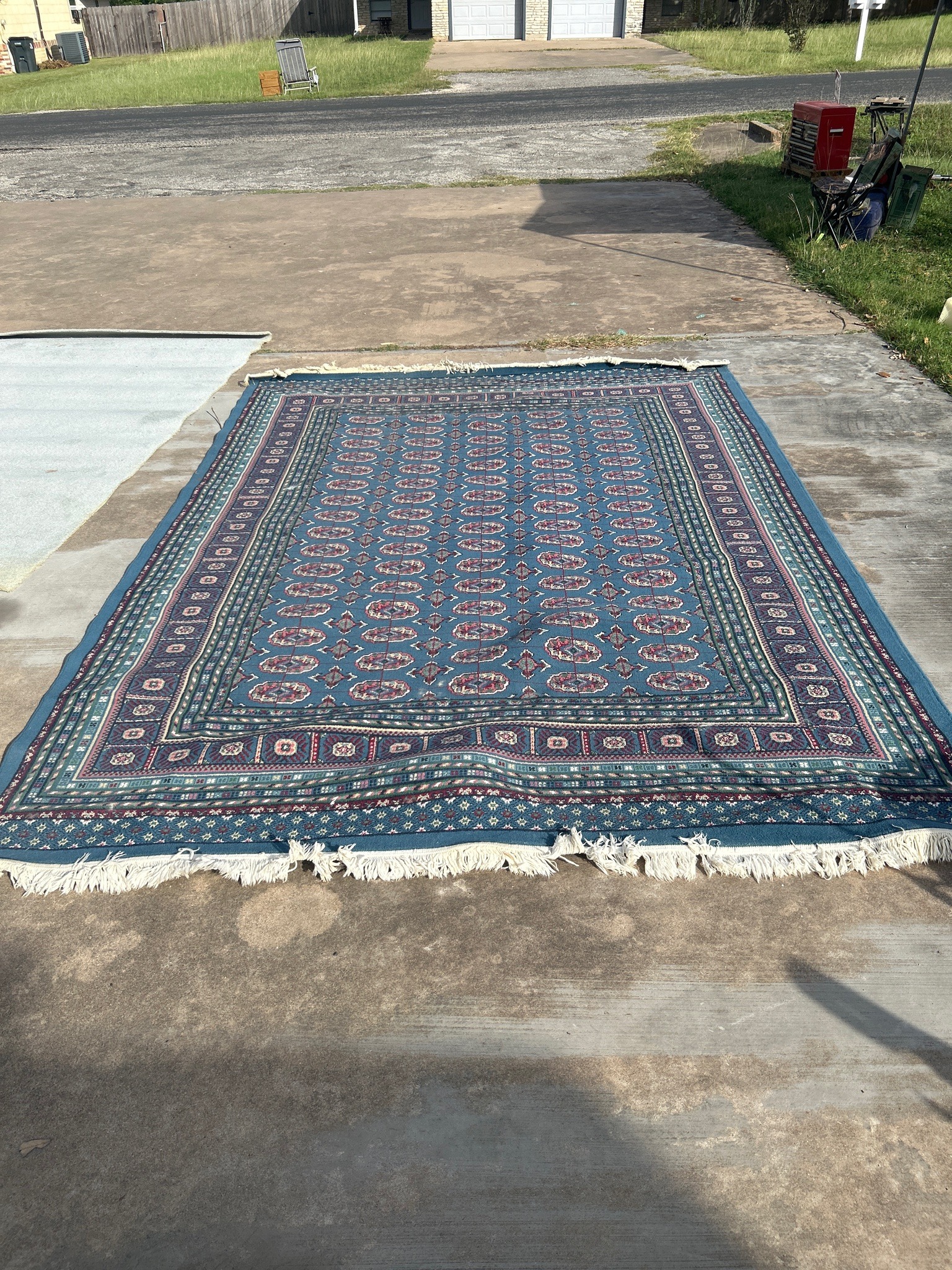
Submitted item photo
Submitted photo · June 17, 2026

User's notes

Oriental weavers of America

AI analysis below

AI appraisal

AI analysis & estimate

AI-Generated · Verify before acting

Everything below is generated by AI for informational purposes only. AI can make mistakes — the AI may misidentify items or misattribute them (artist, maker, brand, designer, origin, era). This is not an official valuation and should not be used for insurance, sale, tax, estate, legal, or lending purposes — or any decision requiring a certified appraisal. It is not an authoritative claim about any person, brand, or rights holder — do not share or rely on it as a factual statement about a third party. Always consult qualified professionals before making financial decisions.

Note

This analysis also relies on unverified notes provided by the user, which may be incomplete or inaccurate and could affect the result.

Read the full disclaimer

AI Identification

·Not independently authenticated·Verify before acting

Large area rug in an Oriental-style Bokhara pattern

Rugs and Floor Coverings

AI Estimated Value

·Not an official valuation·Verify before acting

$50 - $150

As of June 17, 2026

AI Item Analysis

·AI can make mistakes·Verify before acting
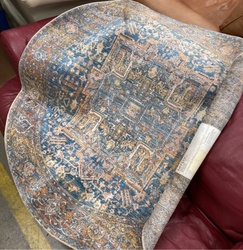
This is a large rectangular area rug featuring a repetitive 'elephant foot' or gul motif, which is stylistically consistent with traditional Central Asian or Turkoman-style Bokhara designs. The primary field color is a muted blue, accented with geometric patterns in shades of wine red, ivory, and deep teal. It features multiple ornamental borders including a prominent geometric primary border and narrower secondary guards. The rug appears to be machine-made based on the uniform pattern execution and the attached white fringe along the widths, though physical inspection would be required to confirm construction and material composition, such as wool or polypropylene. No maker's labels are visible in the provided image. While the user identifies this as being from 'Oriental Weavers of America,' this attribution remains unverified without a visible manufacturer's tag. The rug shows visible rippling and crushing of the pile, suggesting it may have been stored rolled or folded, and it is photographed outdoors on a concrete surface. The overall condition appears used but intact with no immediately apparent large tears or major stains visible from this distance.
AI Appraisal Report

·AI can make mistakes·Verify before acting
Based on the provided images, I observe a large, rectangular area rug featuring a traditional Central Asian Bokhara-style gul motif with a muted blue primary field. The uniform pattern execution and attached white fringe strongly suggest a machine-made construction. The owner identifies this item as being produced by Oriental Weavers of America. However, without a visible manufacturer's tag, I cannot verify this claim from the photo alone, and this attribution serves as a working hypothesis for the valuation. The rug shows visible rippling and crushing of the pile, indicating it was likely stored rolled or folded, and the overall condition appears used. Furthermore, physical inspection would be required to determine the exact material composition—such as whether it is a synthetic fiber like polypropylene or a machine-woven wool—which significantly impacts value. The estimate provided assumes the owner's attribution is correct and reflects the general secondary market for modern, mass-produced machine-woven rugs. Comparable machine-made, Bokhara-style rugs in used condition typically trade in the $50 to $150 range, as they appeal generally to household furnishers rather than specialized collectors. If an in-person examination reveals the rug to be an unbranded, lower-grade synthetic piece, the value would likely fall to the lower end or below this spectrum ($20 to $50). Conversely, if it bears tags indicating higher-end wool construction from a recognized mass-producer, it would lean toward the upper end. An in-person appraisal and inspection of any physical labels would be necessary to substantiate the maker and materials.

Related Tags

Explore similar items and categories

Get your items appraised

Instant estimates of your treasures with AI-powered appraisals

Browse More Appraisals