AI Appraisal Estimate

AI-generated estimates · not official valuations

From the user

What was submitted

Photo and notes provided by the user — not generated by AI

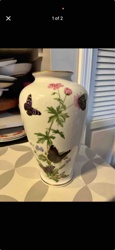
Submitted item photo
Submitted photo · June 26, 2026

User's notes

No additional notes provided.

AI analysis below

AI appraisal

AI analysis & estimate

AI-Generated · Verify before acting

Everything below is generated by AI for informational purposes only. AI can make mistakes — the AI may misidentify items or misattribute them (artist, maker, brand, designer, origin, era). This is not an official valuation and should not be used for insurance, sale, tax, estate, legal, or lending purposes — or any decision requiring a certified appraisal. It is not an authoritative claim about any person, brand, or rights holder — do not share or rely on it as a factual statement about a third party. Always consult qualified professionals before making financial decisions.

Read the full disclaimer

AI Identification

·Not independently authenticated·Verify before acting

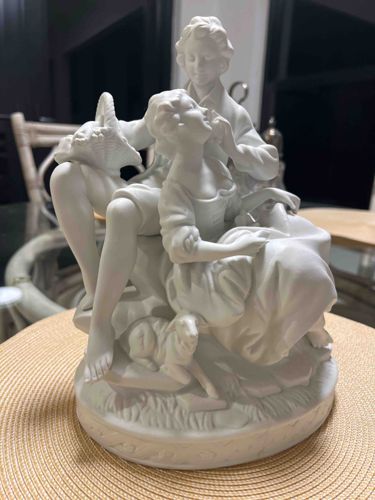
Bisque Porcelain Pastoral Couple Figurine

Antique/Vintage Ceramics & Porcelains

AI Estimated Value

·Not an official valuation·Verify before acting

$400 - $650

As of June 26, 2026

AI Item Analysis

·AI can make mistakes·Verify before acting
This item is a bisque porcelain (biscuit) figurine representing a romantic pastoral or courtly scene, likely inspired by 18th-century Rococo themes. The sculpture features a seated male and female figure in an intimate pose, accompanied by a small dog at their feet and a basket containing flowers or fruit to the side. The material is a matte, unglazed white porcelain which gives the piece a soft, stone-like texture. Physically, the construction shows high levels of detail in the draped fabric of the woman's dress, the naturalistic rocky base, and the delicate facial features. The style is reminiscent of 19th or early 20th-century European manufacturers such as Sèvres or Capodimonte, though modern reproductions in this style are common. The figurine is mounted on an integral circular pedestal base decorated with a low-relief vine or scroll pattern. Regarding condition, the bisque appears to be well-maintained with a clean surface, though these items are highly susceptible to chipping on delicate extremities like fingers or petals; a minor scuff or potential repair may be present on the man's outstretched hand, but overall structural integrity looks good. The craftsmanship is evident in the dynamic composition and the lifelike anatomy of the barefoot man and the reclining woman.
AI Appraisal Report

·AI can make mistakes·Verify before acting
I have examined the provided imagery of the Bisque Porcelain Pastoral Couple Figurine. This piece exhibits characteristic hallmarks of late 19th-century European revivalism, drawing heavily from the Rococo 'fêtes galantes' style popularized by Sèvres and Meissen. The matte 'biscuit' finish is of good quality, providing a velvet texture that highlights the depth of the drapery and the anatomical precision of the figures. The composition is well-balanced, and the inclusion of the dog and floral basket adds desirable narrative detail. While the overall aesthetic is synonymous with Sèvres, the lack of a visible blue interlaced 'L' mark or a specific manufacturer’s stamp suggests a high-quality contemporary competitor or a later 19th-century boutique production. My visual inspection notes some potential blunted detailing on the extremities, which could indicate a later mold or minor professional restoration to the man's hand. Market demand for uncolored bisque remains steady among specialist collectors of decorative arts, though it currently trails behind polychrome (painted) porcelain in the general auction market. The valuation reflects the current secondary market for unmarked high-quality European porcelain. Limitations: A definitive authentication is impossible via digital images alone. A physical inspection is required to check for underglaze marks, verify the weight/porosity of the clay body, and use UV (blacklight) testing to identify hidden repairs or adhesives. Provenance records regarding the item's history of ownership would also be necessary to elevate this piece from a 'style' attribution/decorative object to a museum-quality manufacture.

Get your items appraised

Instant estimates of your treasures with AI-powered appraisals

Browse More Appraisals