AI estimate as of October 30, 2025 · verify with a professional before acting
AI-Generated · Verify before acting
Everything on this page is generated by AI for informational purposes only. AI can make mistakes — the AI may misidentify items or misattribute them (artist, maker, brand, designer, origin, era). This is not an official valuation and should not be used for insurance, sale, tax, estate, legal, or lending purposes — or any decision requiring a certified appraisal. It is not an authoritative claim about any person, brand, or rights holder — do not share or rely on it as a factual statement about a third party. Always consult qualified professionals before making financial decisions.
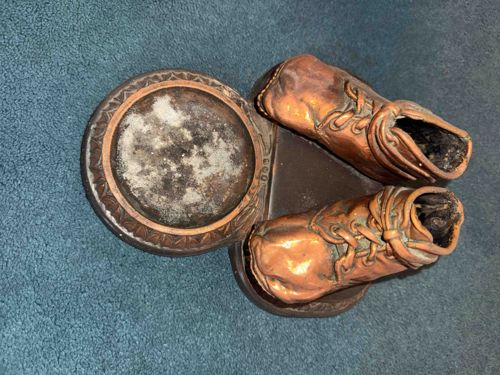
This item appears to be a desktop organizer or decorative piece, predominantly crafted from a bronze-toned metal, possibly copper or brass with a bronze finish, mounted on a darker, possibly wood or bakelite, base. The piece features two miniature 'baby shoes' or 'children's boots,' rendered with considerable detail, including shoelaces that appear tied. These shoes exhibit a rich, aged bronze patina with areas of verdigris or darker oxidation, particularly in the recesses, suggesting some age and natural wear. They possess a realistic, worn texture, indicative of casting from actual shoes or meticulous sculptural work. Between the shoes, and extending to the left, is a circular tray or dish. This dish has a raised, decorative rim with an etched or carved pattern, resembling a braided or geometric motif. The interior of the dish shows significant wear and discoloration, with a prominent white and gray powdery residue, likely from prolonged exposure to moisture, dust, or a chemical reaction with contents previously held within. This residue suggests the dish may have been used frequently as an ashtray or for holding small, possibly metallic, items that reacted with its surface. The overall construction implies a sturdy, substantial piece, likely intended for a masculine desk or study. The finish on the shoes is fairly uniform bronze/copper, with some areas showing lighter highlights from handling, while the base and the dish show more signs of surface degradation. The piece likely dates to the mid-20th century, given its style and apparent materials. Its unique combination of sentimental baby shoes with a functional dish suggests it was a thoughtful gift or commemorative item, perhaps for a father or grandfather. The craftsmanship appears solid, with attention paid to the details of the shoes, enhancing its decorative appeal.
AI Appraisal Report
Based on my visual examination of the provided image, this Bronze Baby Shoes and Trinket Dish Desktop Organizer appears to be a mid-20th-century decorative collectible. The bronze-toned metal, likely brass or a bronze-plated alloy, shows a rich, aged patina, consistent with the described age. The detail in the miniature shoes is notable, suggesting careful casting or sculpting. The circular dish, however, presents significant wear and a prominent white/gray residue, strongly indicating its use as an ashtray or for items that caused chemical reactions. This heavy wear to the dish reduces its aesthetic appeal and, consequently, its value. While a full authenticity verification would require in-person examination to confirm material composition (e.g., specific metal type, base material), and to thoroughly inspect for manufacturer marks or signatures, the overall style and craftsmanship align with period desktop accessories.
Market conditions for such sentimental yet functional items are moderate. Similar bronze or brass desk organizers and decorative pieces from the mid-20th century typically sell in the $30-$100 range, with pieces in excellent condition reaching higher. The unique combination of baby shoes with a trinket dish provides some niche appeal, but widespread demand is limited. Rarity is not particularly high for these types of manufactured sentimental items. The significant discoloration and residue in the dish are the primary factors impacting value negatively, suggesting a lack of proper care or harsh use. An in-person inspection would allow for a precise assessment of the residue for cleaning potential and would uncover any maker's marks vital for full authentication and origin confirmation. Without this, I must value it as a charming, yet moderately condition, vintage desktop accessory.