AI estimate as of September 30, 2025 · verify with a professional before acting
AI-Generated · Verify before acting
Everything on this page is generated by AI for informational purposes only. AI can make mistakes — the AI may misidentify items or misattribute them (artist, maker, brand, designer, origin, era). This is not an official valuation and should not be used for insurance, sale, tax, estate, legal, or lending purposes — or any decision requiring a certified appraisal. It is not an authoritative claim about any person, brand, or rights holder — do not share or rely on it as a factual statement about a third party. Always consult qualified professionals before making financial decisions.
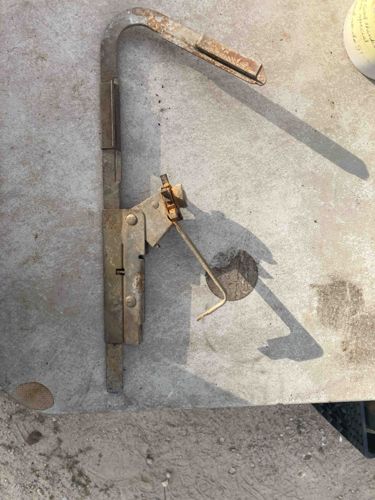
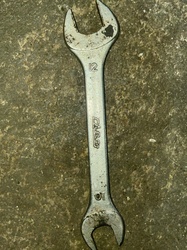
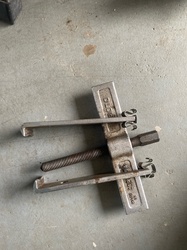
This item appears to be a vintage, manually operated sheet metal folder or bender, constructed primarily from steel. The overall coloration is a muted, oxidized metallic gray with significant areas of reddish-brown rust, indicating prolonged exposure to moisture and air. The construction is robust, featuring several riveted and bolted connections, suggesting a sturdy and utilitarian design intended for industrial or workshop use.
The main body consists of a long, flat bar that forms the base, with an articulated mechanism attached. This mechanism includes a movable jaw that can be clamped down, likely to hold sheet metal in place. The upper half of the device features a prominent curved arm, also made of steel, which has a distinct C-shape or hook at its end. This arm shows considerable rust, particularly on its outer and inner surfaces. A smaller, L-shaped handle or lever is connected to the clamping mechanism, presumably for tightening and loosening the grip on the material. Rivets secure various components of the articulated arm and clamping assembly. These rivets also exhibit signs of corrosion. The tool appears to be made from heavy-gauge steel, indicating its intended purpose for bending or creasing sheet metal. Given the visible wear, rust, and utilitarian design without polished finishes or intricate detailing, it likely dates from the mid-20th century or earlier. There are no discernible manufacturer's marks or signatures visible in the provided images. The overall condition indicates significant age and use, with the rust being the most prominent condition issue, suggesting a need for restoration or at least cleaning and protective treatment.
AI Appraisal Report
Upon visual examination of the provided image, I assess this vintage sheet metal folder/bender. The item's condition is fair to poor due to extensive surface rust across all metal components, including the main base, articulated mechanism, curved arm, and rivets. This indicates significant age and prolonged exposure to environmental elements. The robust, heavy-gauge steel construction and utilitarian design are consistent with an industrial or workshop tool, likely dating from the mid-20th century or earlier. Authenticity as a period sheet metal tool appears genuine based on its construction methods (riveted and bolted connections) and material composition, typical of that era. However, without tactile examination, I cannot comment on the mechanical functionality or structural integrity beneath the rust.
Market conditions for such vintage, unrestored manual sheet metal tools are generally niche. While there's a certain demand from collectors of antique tools, restorers, or hobbyists seeking functional, sturdy equipment, the significant rust negatively impacts its immediate usability and aesthetic appeal. Comparable items in similar condition often fetch modest prices. Restored examples or those in better original condition command higher values. This specific piece lacks any discernible manufacturer's marks, which, if present, could significantly affect value if associated with a historically renowned maker. Without such provenance, it is valued primarily on its inherent utility and historical interest.
Factors impacting value include its heavy corrosion, lack of clear manufacturer identification, and potentially unknown functional issues. The demand for unrestored pieces like this is usually limited to individuals willing to undertake a restoration project. For full authentication and to assess its operational condition, an in-person examination would be crucial to determine the extent of internal corrosion, presence of seized parts, and any hidden structural damage. Proof of provenance or specific historical use would also enhance value. Based on its current appearance and assumed condition, I would place its value in the range of $50 to $100.