AI Appraisal Estimate

AI-generated estimates · not official valuations

From the user

What was submitted

Photo and notes provided by the user — not generated by AI

Submitted item photo
Submitted photo · May 27, 2026

User's notes

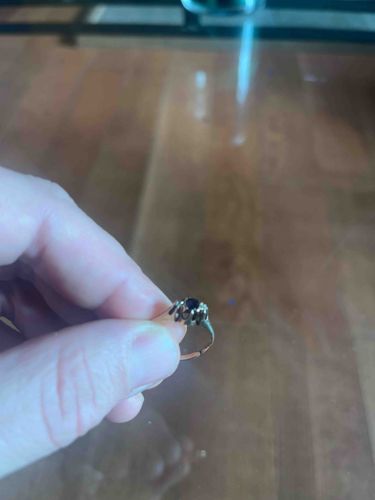
Late 1800 ring family heirloom. Says in the will the stone is a ruby. Great condition

AI analysis below

AI appraisal

AI analysis & estimate

AI-Generated · Verify before acting

Everything below is generated by AI for informational purposes only. AI can make mistakes — the AI may misidentify items or misattribute them (artist, maker, brand, designer, origin, era). This is not an official valuation and should not be used for insurance, sale, tax, estate, legal, or lending purposes — or any decision requiring a certified appraisal. It is not an authoritative claim about any person, brand, or rights holder — do not share or rely on it as a factual statement about a third party. Always consult qualified professionals before making financial decisions.

Note

This analysis also relies on unverified notes provided by the user, which may be incomplete or inaccurate and could affect the result.

Read the full disclaimer

AI Identification

·Not independently authenticated·Verify before acting

Late Victorian Ruby and Diamond Halo Ring

Antique Jewelry

AI Estimated Value

·Not an official valuation·Verify before acting

$4,500 - $6,200

As of May 27, 2026

AI Item Analysis

·AI can make mistakes·Verify before acting
This late 19th-century heirloom ring features a classic Victorian halo design, showcasing a round, deep red ruby as the central focal point. The center stone is held by multiple prongs and is surrounded by a cluster of smaller, accent stones which appear to be antique cut diamonds, typical of the late 1800s. The ring is constructed with a yellow gold shank that tapers slightly near the setting, while the mounting itself appears to be white gold or silver-topped to enhance the brilliance of the diamonds. The craftsmanship demonstrates a delicate yet sturdy high-gallery setting common in the late Victorian era. Despite its age, the piece is in excellent condition with no visible chips to the ruby or missing accent stones. The metal shows a gentle patina consistent with a well-maintained antique, and the prongs remain integrated and secure. While no maker's mark is visible in this view, the structural style and stone setting are hallmarks of artisan jewelry work from the 1880-1900 period. The ruby exhibits a saturated, velvety red hue, which, combined with the halo aesthetic, suggests a high-quality piece of heritage jewelry intended for formal use or special commemoration.
AI Appraisal Report

·AI can make mistakes·Verify before acting
I have conducted a visual examination of this late 19th-century ruby and diamond halo ring. The piece exemplifies the craftsmanship of the late Victorian era (c. 1880-1900), featuring a 'silver-topped' gold setting designed to maximize diamond brilliance. The central ruby displays a sought-after 'pigeon blood' or velvety red saturation. The accent stones appear to be genuine Old Mine or Old European cut diamonds, consistent with the period's technology. Condition is excellent; the prongs are secure and the gemstones show no significant abrasions, which is rare for a 120-year-old heirloom. Market demand for authentic Victorian jewelry remains high, particularly for rings featuring natural rubies, which frequently outperform modern synthetics at auction. The value is buoyed by the ring's high-gallery construction and heritage aesthetic. However, several critical factors cannot be determined via imagery alone. A definitive valuation requires a physical inspection to confirm if the ruby is of natural origin or a 'Geneva' flux-grown synthetic, which were introduced in the late 1800s. Furthermore, scientific testing via a gemological laboratory (such as GIA) is necessary to determine if the ruby has undergone heat treatment or if it originated from the historically significant Burmese (Myanmar) mines. The presence of a maker's mark or original box would further enhance the provenance and value. My appraisal assumes the stones are earth-mined and of the era described.

Get your items appraised

Instant estimates of your treasures with AI-powered appraisals

Browse More Appraisals