AI Appraisal Estimate

AI-generated estimates · not official valuations

From the user

What was submitted

Photo and notes provided by the user — not generated by AI

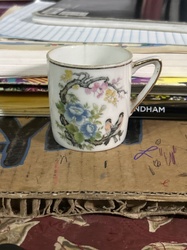
Submitted item photo
Submitted photo · June 4, 2026

User's notes

No additional notes provided.

AI analysis below

AI appraisal

AI analysis & estimate

AI-Generated · Verify before acting

Everything below is generated by AI for informational purposes only. AI can make mistakes — the AI may misidentify items or misattribute them (artist, maker, brand, designer, origin, era). This is not an official valuation and should not be used for insurance, sale, tax, estate, legal, or lending purposes — or any decision requiring a certified appraisal. It is not an authoritative claim about any person, brand, or rights holder — do not share or rely on it as a factual statement about a third party. Always consult qualified professionals before making financial decisions.

Read the full disclaimer

AI Identification

·Not independently authenticated·Verify before acting

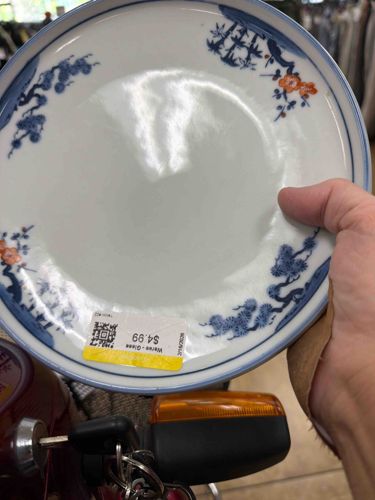
Japanese Blue and White Porcelain Plate with 'Three Friends of Winter' Motif

Asian Decorative Ceramics

AI Estimated Value

·Not an official valuation·Verify before acting

$25.00 - $45.00

As of June 4, 2026

AI Item Analysis

·AI can make mistakes·Verify before acting
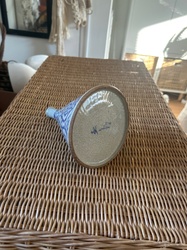
This is a circular porcelain plate featuring a classic East Asian aesthetic, likely of Japanese origin given the specific rendering of the motifs. The plate is constructed from a fine-grained white porcelain with a slightly bluish-white glaze characteristic of certain 20th-century Asian ceramics. The decoration utilizes a traditional underglaze blue technique complemented by small pops of overglaze iron red or orange enamel. The design depicts the 'Three Friends of Winter' (Suihan Sanyou)—pine, bamboo, and plum blossoms—arranged in asymmetrical clusters around the rim. These symbols traditionally represent perseverance and resilience. The rim is finished with a thin double-line border in underglaze blue. In terms of condition, the plate appears structurally sound with no visible cracks or large chips on the rim, though there is light surface scratching consistent with moderate use. A modern retail sticker is affixed to the front, which may leave adhesive residue. The craftsmanship shows mass-produced qualities from the mid-to-late 20th century, typically intended for export or everyday domestic use rather than as a high-art studio piece. The underside is not visible but would likely contain a maker's mark or a 'Made in Japan' stamp.
AI Appraisal Report

·AI can make mistakes·Verify before acting
I have conducted a visual examination of the Japanese blue and white porcelain plate via photographic evidence. The piece features the 'Three Friends of Winter' (Sho Chiku Bai) motif, executed in underglaze cobalt blue with minor overglaze enamel accents. My assessment indicates this is a mid-to-late 20th-century mass-produced item, likely produced in the Arita or Seto regions for the export market. The porcelain body exhibits a bright, cool-toned glaze and uniform thickness characteristic of industrial slip-casting rather than hand-thrown artistry. The condition appears fair to good; while no structural fractures are visible, the surface displays moderate glaze wear and scratching consistent with domestic use. The presence of a modern retail sticker further confirms its recent commercial history and detracts from its aesthetic value. In the current secondary market, such items are common. Comparable pieces frequently appear in local estate auctions and online marketplaces, where they are valued as functional decorative objects rather than rare collectibles. There is low scarcity for this specific pattern and production era. Limitations: This appraisal is based solely on digital images. A physical inspection is required to check for hidden restorations using UV light, evaluate the foot rim for firing characteristics, and inspect the maker's mark for specific kiln identification. Scientific testing (such as XRF) is not recommended as the cost would exceed the item's market value. Provenance documentation, were it to exist, would likely confirm its origin as a common household or giftware export.

Get your items appraised

Instant estimates of your treasures with AI-powered appraisals

Browse More Appraisals