AI Appraisal Estimate

AI-generated estimates · not official valuations

From the user

What was submitted

Photo and notes provided by the user — not generated by AI

Submitted item photo
Submitted photo · June 1, 2026

User's notes

No additional notes provided.

AI analysis below

AI appraisal

AI analysis & estimate

AI-Generated · Verify before acting

Everything below is generated by AI for informational purposes only. AI can make mistakes — the AI may misidentify items or misattribute them (artist, maker, brand, designer, origin, era). This is not an official valuation and should not be used for insurance, sale, tax, estate, legal, or lending purposes — or any decision requiring a certified appraisal. It is not an authoritative claim about any person, brand, or rights holder — do not share or rely on it as a factual statement about a third party. Always consult qualified professionals before making financial decisions.

Read the full disclaimer

AI Identification

·Not independently authenticated·Verify before acting

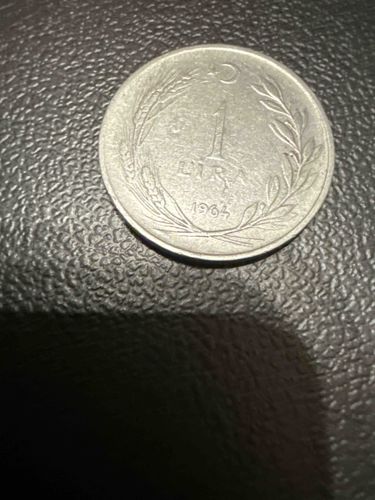
1964 Turkish 1 Lira Coin

Numismatics / Coins

AI Estimated Value

·Not an official valuation·Verify before acting

$1.00 - $3.00

As of June 1, 2026

AI Item Analysis

·AI can make mistakes·Verify before acting
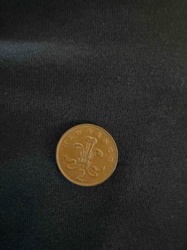
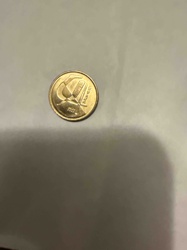
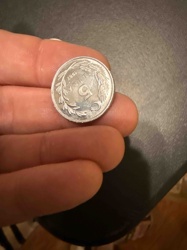
This is a 1964 Turkish 1 Lira coin, a currency piece minted during the Republic of Turkey era. The coin is struck in a silver-colored metal, typically a stainless steel alloy which was standard for this denomination and year. The reverse side, visible in the image, features the large numeral '1' centered above the word 'LIRA'. Below this denomination is the mintage year '1964'. The central design is framed by a wreath consisting of an ear of wheat on the left and an olive branch on the right, joined at the bottom. At the top of the wreath is the Turkish crescent and star symbol. The coin has a smooth rim and appears to have a reeded edge. In terms of condition, the coin shows signs of circulation including numerous surface scratches, small nicks, and 'pocket wear' consistent with its age and use. The details of the wreath and the date remain legible, though the high points have softened. There is a visible matte patina with some darker oxidation or grime in the recessed areas. This specific design was introduced in the late 1950s and represents a period of Turkish numismatic history before the high inflation of later decades necessitated higher denominations. Its craftsmanship is industrial, produced by the Turkish State Mint.
AI Appraisal Report

·AI can make mistakes·Verify before acting
I have carefully examined the provided images of this 1964 Turkish 1 Lira coin. The specimen is struck in stainless steel and displays the iconic acanthus leaf/wheat wreath design with the crescent and star. My assessment of the condition is 'Circulated' (Fine to Very Fine). There is significant surface chatter, numerous micro-scratches, and visible 'pocket wear' on the high points of the wheat stalks and the '1' numeral. The matte patina and accumulation of grime in the recessed lettering are consistent with a coin that saw heavy use in mid-century Turkish commerce. From a numismatic standpoint, this is a very common issue. The Turkish State Mint produced nearly 38 million of these coins in 1964 alone. Because of this high mintage, market demand is generally limited to type-set collectors or those seeking a year-set from the Republic era. Comparable sales on platforms like eBay and specialized numismatic auctions show that circulated examples of this date rarely exceed a few dollars. Significant value is only found in 'Proof' strikes or specimens graded MS-65 and above, which this coin does not meet due to its surface abrasions. Limitations of this digital appraisal: While the coin appears authentic based on its strike characteristics and wear patterns, I cannot verify its magnetic properties, weight (standard 8.0g), or diameter (27mm) via a photograph. A physical examination using a digital scale and calipers, along with a high-magnification loupe to inspect for casting bubbles or 'seam lines' indicative of counterfeiting, would be required for definitive authentication. No provenance was provided, which is typical for low-value currency pieces.

Get your items appraised

Instant estimates of your treasures with AI-powered appraisals

Browse More Appraisals