AI Appraisal Estimate

AI-generated estimates · not official valuations

From the user

What was submitted

Photo and notes provided by the user — not generated by AI

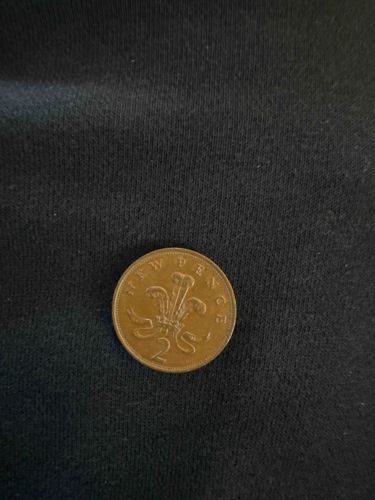
Submitted item photo
Submitted photo · June 28, 2026

User's notes

No additional notes provided.

AI analysis below

AI appraisal

AI analysis & estimate

AI-Generated · Verify before acting

Everything below is generated by AI for informational purposes only. AI can make mistakes — the AI may misidentify items or misattribute them (artist, maker, brand, designer, origin, era). This is not an official valuation and should not be used for insurance, sale, tax, estate, legal, or lending purposes — or any decision requiring a certified appraisal. It is not an authoritative claim about any person, brand, or rights holder — do not share or rely on it as a factual statement about a third party. Always consult qualified professionals before making financial decisions.

Read the full disclaimer

AI Identification

·Not independently authenticated·Verify before acting

British Decimal 2p Coin (New Pence Reverse)

Numismatics / Coins

AI Estimated Value

·Not an official valuation·Verify before acting

$0.03 - $0.10

As of June 28, 2026

AI Item Analysis

·AI can make mistakes·Verify before acting
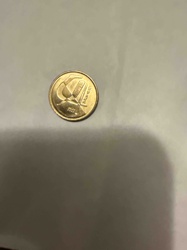
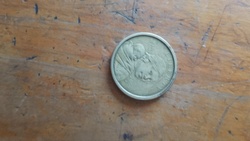
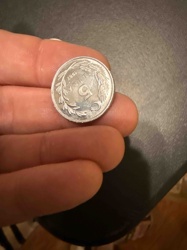
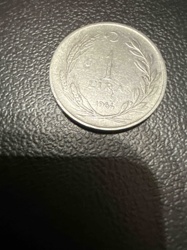
This is a circular bronze-composition coin, specifically the British two-pence piece used during the early decimalization era. The reverse side is visible, featuring the Badge of the Prince of Wales, which consists of three ostrich feathers enfiled by a crown and the motto 'ICH DIEN' (I serve) on a ribbon. Above the crest, the words 'NEW PENCE' are inscribed, and the numeral '2' is centered at the bottom. The coin measures approximately 25.9 mm in diameter with a plain edge and a weight originally intended to be 7.12g. The reddish-brown copper hue suggests a composition of 97% copper, 2.5% zinc, and 0.5% tin. Regarding condition, the coin displays significant signs of circulation including surface abrasions, overall darkening of the metal due to oxidation, and some flattening of the high points in the feather details. There appears to be a consistent patina across the surface with no obvious deep gouges or structural warping. This specific 'NEW PENCE' inscription was minted between 1971 and 1981, and while millions were produced, it remains an iconic piece of British numismatic history marking the shift to a decimal currency system. The craftsmanship reflects industrial minting standards of the Royal Mint from the late 20th century.
AI Appraisal Report

·AI can make mistakes·Verify before acting
I have examined the digital representation of this British decimal two-pence coin. The reverse features the Badge of the Prince of Wales with the 'NEW PENCE' inscription, dated between 1971 and 1981. My assessment indicates a coin in 'Circulated' or 'Fine' condition. There is clear evidence of moderate wear on the high points of the ostrich feathers and the crown’s detailing. The bronze surfaces exhibit natural oxidation and a darkened patina consistent with a copper-rich alloy exposed to the elements over several decades. The authenticity appears consistent with Royal Mint production standards for the era, with correct font alignment and relief depth for a business-strike issue. In terms of market value, this specific variety was minted in the hundreds of millions (over 1.4 billion in 1971 alone), making it one of the most common coins in British numismatic history. Unlike the rare 1983 'NEW PENCE' error, this specimen represents a standard circulation piece. Comparable sales for circulated early 1970s 2p coins typically hover at or near face value unless they possess exceptional mint luster or a rare error. While visually consistent with a genuine 1971-1981 issue, a full authentication would require physical weighing to confirm the 7.12g standard and a microscopic examination of the rim for any signs of casting or tampering. This valuation assumes the coin is a standard common date within the range and lacks any unrecognized mint errors. Without a physical inspection or a visible date on the obverse, this remains a low-value historical curiosity rather than a high-yield investment piece.

Get your items appraised

Instant estimates of your treasures with AI-powered appraisals

Browse More Appraisals