AI estimate as of July 20, 2025 · verify with a professional before acting
AI-Generated · Verify before acting
Everything on this page is generated by AI for informational purposes only. AI can make mistakes — the AI may misidentify items or misattribute them (artist, maker, brand, designer, origin, era). This is not an official valuation and should not be used for insurance, sale, tax, estate, legal, or lending purposes — or any decision requiring a certified appraisal. It is not an authoritative claim about any person, brand, or rights holder — do not share or rely on it as a factual statement about a third party. Always consult qualified professionals before making financial decisions.
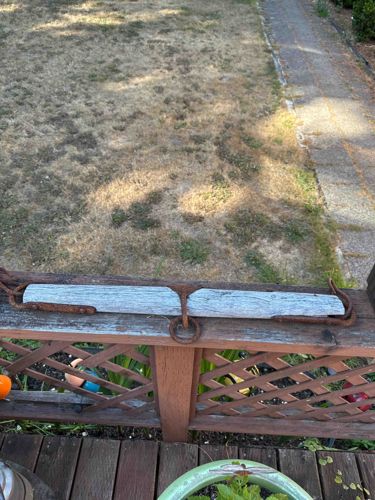
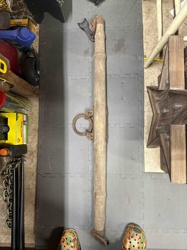
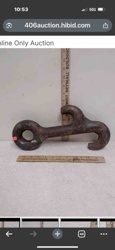
The item is a wooden single ox yoke, a traditional farming implement designed to be placed across the neck of one draft animal, typically an ox, cow, or water buffalo, to harness it for plowing or other agricultural tasks. It consists primarily of a single, roughly rectangular beam of wood, appearing to be weathered and light in color, possibly white-washed or sun-bleached, indicating significant outdoor exposure. The wood shows some texture and minor surface irregularities consistent with age and use, but no major cracks or breaks are immediately apparent. Attached to the wooden beam are three pieces of heavily rusted metal hardware. On one end, a large, U-shaped hook or clevis is present, extending downwards and around the end of the wooden beam. This piece is severely corroded, displaying a deep orange-brown patina of rust. In the center, a large, circular metal ring is affixed to the underside of the wooden beam by what appears to be a metal strap or bracket, also heavily corroded. On the opposite end from the U-shaped hook, another metal piece, possibly a curved hook or a part of a linkage, is attached to the beam and shows similar signs of advanced rust. The robust construction and heavy-gauge metal fittings suggest its original purpose for heavy-duty work. The severe rust on the metal components indicates prolonged exposure to moisture and the elements. Given its rustic appearance, heavy weathering, and traditional design, the yoke likely dates to the late 19th or early to mid-20th century. No discernible maker's marks or signatures are visible, which is common for utilitarian agricultural tools of this period. The overall condition suggests it is no longer functional for its original purpose but serves as a decorative or historical artifact.
AI Appraisal Report
I have examined the provided image of this single ox yoke. Authenticity appears strong given its traditional design, weathered wooden beam, and heavily rusted, robust metal hardware congruent with utilitarian agricultural tools from the late 19th to mid-20th century. The condition, while showing significant wear, rust, and weathering, is consistent with its age and intended heavy use. No major structural damage to the wood is visible, though the severe corrosion of the metal components indicates it is no longer functional for its original purpose.
Market conditions for agricultural implements of this nature are generally stable but niche, often appealing to collectors of Americana, rustic décor enthusiasts, or those interested in farming history. Comparables on online marketplaces and at rural antique shows suggest a modest demand. While not excessively rare, single ox yokes are less common than double yokes. The severity of the rust on the metal, while visually authentic, limits its appeal to some, and the absence of any maker's marks or unique decorative elements means it doesn't stand out among similar items.
Factors significantly impacting value include its good overall structural integrity despite heavy weathering, its clear historical function, and its suitability for decorative display. Limitations in authenticity verification from images alone include the inability to physically inspect the integrity of the wood (e.g., rot, insect damage) or the complete extent of the metal corrosion. Full authentication would benefit from an in-person examination to assess the wood's condition, confirm metal composition, and potentially locate any obscured marks. Provenance documentation, if available, detailing its original use or location would also add significant value and authenticity.